
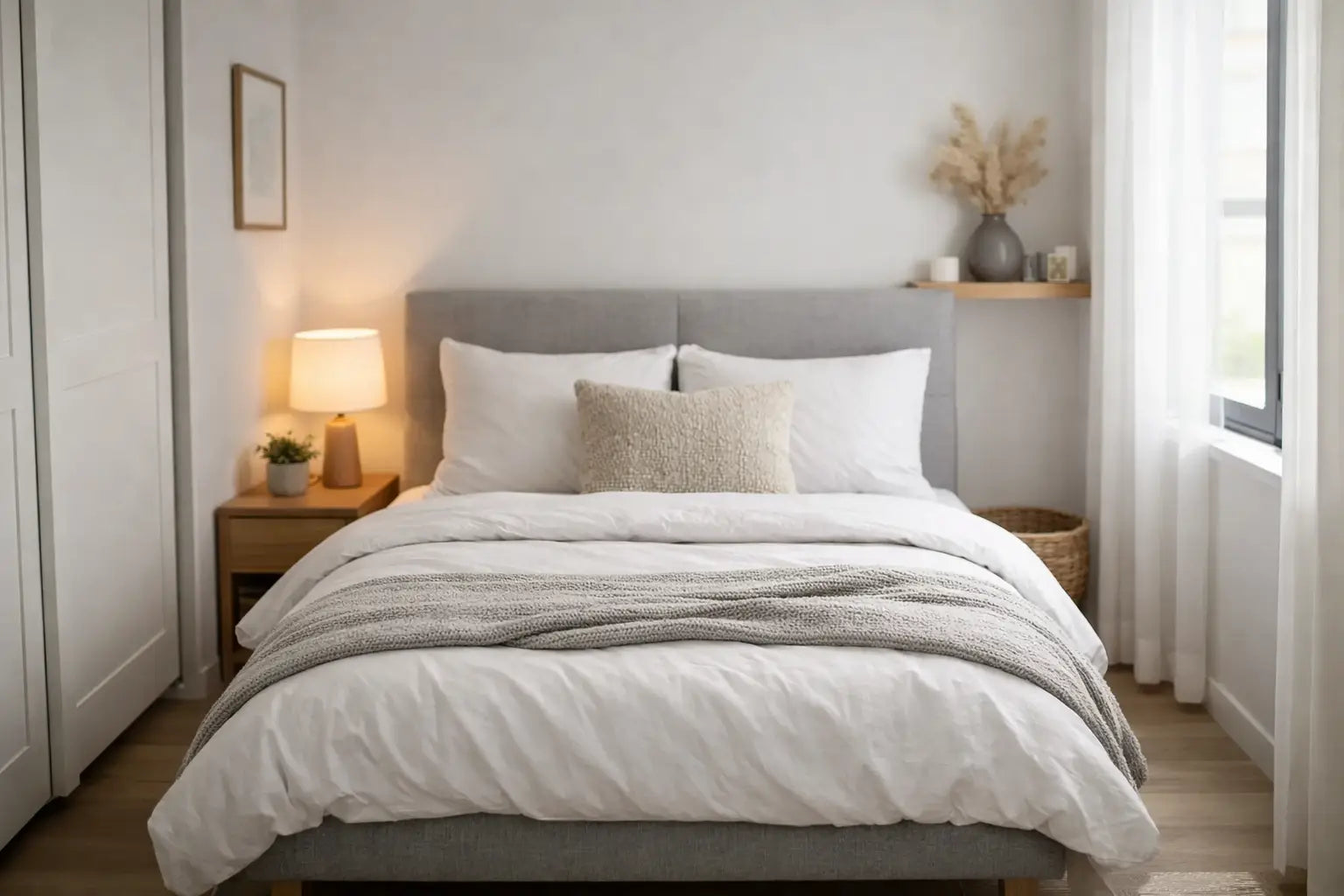
A bedroom can feel cramped long before it is genuinely too small. Often, it is the oversized frame that catches the door, a drawer that cannot open fully, or a bulky headboard that makes the whole room feel crowded. When considering the best bed for small bedroom layouts, the aim is not simply to choose the smallest option. It is to create a beautifully proportioned sleep space with room to move, store the essentials and properly unwind.
The right choice depends on how the room is used. A guest room may suit a refined single or small double, while a main bedroom may deserve a generous mattress and discreet under-bed storage. With careful measurements and a considered design, a compact room can still become a haven of comfort and opulence.
What makes the best bed for a small bedroom?
A smaller bedroom asks more of its furniture. Your bed must offer restorative sleep, complement the décor and, in many homes, take on part of the storage burden too. Start with the room rather than the bed itself: measure the width and length, the door swing, window position, radiator, fitted wardrobes and any awkward alcoves.
You should also measure the route into the bedroom. A bed may fit beautifully once assembled, but a large one-piece headboard or mattress can be difficult to manoeuvre up a narrow staircase or around a tight landing. Made-to-order options can be particularly helpful here, allowing you to consider the proportions of the whole design rather than settling for a standard arrangement.
Leave enough room to live around the bed. As a guide, try to retain a comfortable walking route at the sides and foot of the bed, especially on the side used most often. If space is limited, it is better to have one generously clear side than two narrow gaps that make everyday use feel inconvenient.
Choose the smallest size that still feels luxurious
Mattress size makes the greatest difference to the footprint of a bed. A UK single measures 90cm by 190cm and can work brilliantly in a child’s room, box room or occasional guest room. A small double, at 120cm by 190cm, is often the smart compromise for one sleeper who enjoys extra room, or for a compact guest bedroom where two people may occasionally stay.
A standard double is 135cm by 190cm. It remains a popular choice for couples in smaller rooms, although the additional 15cm compared with a small double can affect bedside access more than expected. A king size gives each sleeper more personal space at 150cm by 200cm, but it needs a room layout that can support it without making every other element feel squeezed in.
Remember that the mattress measurement is not the final bed measurement. An upholstered surround, a deep headboard, a footboard or wide side rails will add to the overall dimensions. Always ask for the external measurements of the precise style you are considering, then mark them out on the floor with masking tape. It is a simple step that makes the decision much easier to picture.
Storage beds turn unused space into calm
In a compact bedroom, visible clutter can undo even the most elegant scheme. A storage bed lets you reclaim the generous space beneath the mattress for spare bedding, seasonal clothing, towels or items that do not need daily access. It can reduce the need for another large chest or cupboard, leaving the room calmer and more open.
An ottoman storage bed is often the most effective choice where floor space is tight. The mattress lifts from the side or foot, revealing the full base area, so you do not need clearance for drawers to slide out. It is especially useful in narrow rooms, bedrooms with furniture close to the bed, or homes where every wardrobe shelf is already spoken for.
Drawer storage suits a different arrangement. It offers easy access to everyday items, but it needs a clear zone beside or at the foot of the bed. If drawers will meet a bedside table, wall or radiator when opened, an ottoman design is likely to be the more practical and polished solution.
A divan base with drawers can be a good middle ground for those who prefer their storage separated into smaller compartments. Consider what you will store before choosing: bulky duvets and pillows usually benefit from an ottoman cavity, while folded clothing may be easier to organise in drawers. The best option is the one that makes your daily routine feel effortless, not the one with the most storage on paper.
Keep the headboard in proportion
A headboard gives a bed its character, and a small bedroom need not mean compromising on a statement finish. The key is proportion. A tall, slim upholstered headboard can draw the eye upwards and make the ceiling feel more generous, while a design with excessive depth may take valuable room away from the mattress area.
Wall-panel headboards are particularly effective for creating a tailored, hotel-inspired look. They bring softness and visual height without the visual weight of a wide, freestanding surround. For rooms with low ceilings, choose panels or upholstery with vertical lines, channel detailing or a gently elongated shape rather than an overly broad silhouette.
Fabric also changes the sense of scale. A soft neutral, warm taupe, pale stone or tonal grey can make a larger bed sit quietly within the room, while textured bouclé, velvet or woven upholstery adds depth without relying on bold pattern. If you love colour, a richly upholstered headboard can still work beautifully when the bed base and surrounding furniture are kept more restrained.
Decide between an open look and concealed storage
Beds raised on slender legs show more floor beneath the frame, which can make a compact bedroom appear airier. They suit rooms where storage is already well planned and where you want the architecture, flooring or a favourite rug to play a stronger role. This style can feel wonderfully light, but it gives up the hidden capacity of an ottoman base.
A floor-standing upholstered bed or divan creates a more grounded, cocooning appearance. It can be the better choice if the bedroom must work hard, particularly in a flat with limited cupboard space. The visual weight is easily balanced with lighter bedside tables, a clear palette and carefully chosen lighting.
There is no universal winner. If your priority is a restful, uncluttered room with fewer freestanding storage pieces, concealed storage will usually be worth more than the extra glimpse of floor. If the room already has excellent built-in storage, an elevated frame may give you the refined, spacious look you prefer.
Do not let the mattress decision become an afterthought
A compact room does not require a compact level of comfort. The mattress should support your body, sleeping position and preferred feel, whether that means a pressure-relieving softer surface or firmer, more structured support. A well-made mattress can transform a smaller bed size into a genuinely restorative place to sleep.
Think about depth as well as width and length. A very deep mattress can make a low frame feel higher and more substantial, which may be helpful for some sleepers but can dominate a small room visually. It can also obscure part of a lower headboard. Check the combined height of base and mattress so the finished bed feels balanced and is comfortable to get in and out of.
For couples sharing a double or small double, pocket springs can be particularly valuable because they respond independently to movement. Breathable fillings and a suitable mattress protector also help maintain a fresher sleep environment, especially in a bedroom where there is less open space around the bed.
Create a layout that feels considered, not compromised
In many small bedrooms, placing the bed centrally against the longest clear wall is the most balanced solution. It provides a natural focal point and can preserve bedside access. But a centred layout is not always the best use of the room. In a very narrow space, placing one side of the bed against a wall may be the only way to allow a wardrobe door to open properly or create a useful dressing area.
Where possible, avoid placing the bed directly beneath a window, particularly if curtains, blinds or draughts will interfere with the headboard. If it is the only sensible position, choose a lower headboard and make the window treatment part of the overall scheme. Likewise, consider plug sockets before committing to the layout - bedside lamps, charging and reading lights are easier to enjoy when planned from the outset.
Keep furniture selective. Two petite bedside tables may work, but one beautifully finished table and a wall-mounted light can sometimes serve the room better. A mirror positioned to reflect daylight, layered bedding in complementary tones and an upholstered bed with an inviting texture can make a compact bedroom feel deliberately designed rather than merely furnished.
Hyder Living’s made-to-order approach allows you to bring these choices together, from bed size and storage configuration to fabric, colour and headboard style. Complimentary fabric swatches can be particularly reassuring when you are balancing the bed with existing flooring, paintwork and curtains.
The most satisfying small bedrooms are not those with the least furniture. They are the rooms where every centimetre has been chosen with care, leaving you with a bed that looks indulgent, stores what you need and welcomes you into a genuinely peaceful night’s sleep.
Share:
How to Order Fabric Swatches for Your Bed
Are TV Beds Worth It for a Luxury Bedroom?