
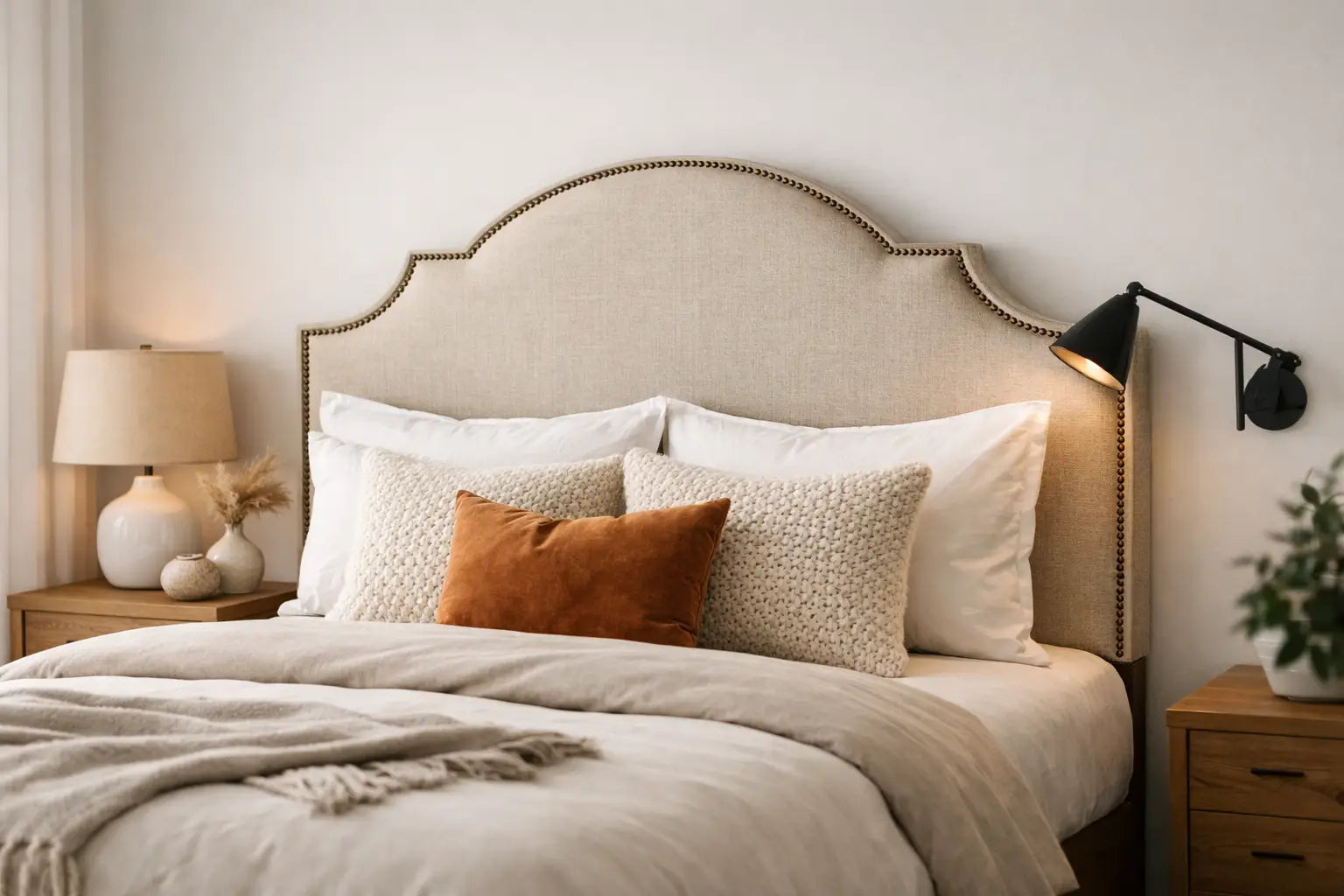
A bed can have the perfect mattress, fresh linen and a beautifully made base, yet still look unfinished without the right backdrop. Headboards bring proportion, softness and personality to the room, turning the area around your bed into a place that feels considered rather than simply furnished.
They also do more practical work than they are often given credit for. A well-chosen headboard offers a comfortable surface for reading, supports the visual scale of a bed, and can protect the wall from everyday scuffs. The key is choosing one that suits both the way you live and the atmosphere you want to come home to.
Why headboards matter to the feel of a room
The bed is usually the largest piece of furniture in a bedroom, so it naturally sets the tone. A headboard gives that focal point presence. In a spacious principal bedroom, a tall, generously upholstered design can create the polished drama of a boutique hotel suite. In a compact room, a slimmer shape or a wall-mounted panel can add character without making the space feel crowded.
Upholstery is especially effective because it brings warmth where bedrooms need it most. Timber, metal and painted surfaces all have their place, but fabric has an inherent softness that makes a bedroom feel more restful. It can also connect the bed to curtains, cushions, a favourite chair or an accent colour elsewhere in the room.
There is no single ‘right’ style. The best choice depends on ceiling height, bed size, wall space, how often you sit up in bed, and whether you want your headboard to blend quietly into the scheme or become its defining feature.
Choose a shape that suits your style
A classic rectangular headboard is wonderfully adaptable. Clean-lined and balanced, it works with both traditional and contemporary interiors, particularly when upholstered in a textured neutral such as oatmeal, stone or soft grey. This is often the most timeless route if you expect to refresh your bedroom décor over the years.
For a more decorative look, consider a winged headboard. The side panels gently frame the bed and give it a more enveloping feel, particularly in a king or super king size. Winged designs are naturally luxurious, although they need sufficient breathing room either side of the bed. In a narrow room, measure carefully so the wings do not intrude on bedside furniture or the natural route around the bed.
Curved and scalloped silhouettes offer a softer alternative to straight edges. An arched headboard can lift a room with high ceilings, while a gently rounded design brings a relaxed, elegant quality to modern interiors. These shapes work particularly well in velvet or plush fabrics, where changes in light reveal the contour of the upholstery.
Buttoned headboards remain a favourite for good reason. Deep buttoning brings texture, depth and a sense of enduring craftsmanship. It suits period homes and more formal schemes, but it can look equally striking when paired with simple bedside tables and crisp white bedding. If you prefer a cleaner aesthetic, channel tufting or vertical fluting provides dimension without the traditional character of buttons.
Getting the height and width right
Scale is where an otherwise beautiful choice can go wrong. A headboard should be wide enough to feel connected to the bed, but not so wide that it overwhelms the wall. Most designs align with the width of the bed base, although wider wall-panel arrangements can make a bed feel more substantial and create a properly tailored finish.
Height has an even greater effect. A low headboard can preserve an airy, understated look, especially beneath a window or in a room with a sloping ceiling. A medium-height design is a flexible choice for most homes, offering visible impact without dominating the room. Tall headboards suit generous walls and larger beds beautifully, creating an opulent centrepiece that draws the eye upwards.
Before ordering, mark the proposed dimensions on the wall with low-tack masking tape. Stand at the bedroom doorway and view it from where you usually wake up. This simple exercise makes it easier to judge whether the design feels balanced with bedside tables, artwork, wall lights and the ceiling line.
Consider the bed size, not just the room
As beds become wider, the headboard needs enough visual weight to match. A petite design that looks charming behind a double can appear lost behind a super king or emperor bed. Conversely, an exceptionally tall, heavily buttoned headboard may feel too formal for a small double in a compact guest room.
If your bedroom has a standard-height ceiling, a headboard that rises confidently above the pillows will usually provide enough presence. In rooms with lofty ceilings, wall-mounted panels can be especially effective, as they allow you to build height without introducing a bulky bed frame.
Fabric and colour: beauty that works in real life
Fabric selection is where a made-to-order headboard becomes truly personal. Velvet offers a rich, light-catching finish and suits bedrooms designed for drama and comfort. Linen-look weaves, bouclé and textured plains feel more relaxed and tactile, bringing interest without relying on a bold colour. Smooth woven fabrics tend to lend themselves to cleaner, contemporary lines.
Colour should be considered at different times of day. A deep navy, forest green or charcoal headboard can feel wonderfully cocooning in evening light, but may make a north-facing room appear darker. Soft taupe, warm ivory, blush and muted sage often make a smaller room feel calmer and more open. If you love stronger shades, balance them with lighter bedding and walls so the bed remains inviting rather than imposing.
Practicality matters too. Homes with children, pets or breakfast-in-bed habits may benefit from a mid-tone, textured fabric that is more forgiving than pale velvet. Requesting fabric swatches before committing is worth the small pause in the process. Place them against the wall, flooring and bedding, then see how they look in daylight and under bedside lamps. At Hyder Living, this is an important part of creating a bed that feels designed for your own home rather than a showroom.
Think about comfort as well as appearance
If you regularly read, watch television or enjoy a slow weekend coffee in bed, cushioning and shape deserve close attention. A deeply padded upholstered headboard is far more comfortable to lean against than a hard surface, while a tall design gives support above the shoulders when pillows inevitably slip down.
The details influence daily comfort. Buttoned finishes have a decorative, tactile quality, whereas a flat-panel design may provide a more even surface for sitting upright. Winged sides can make the bed feel sheltered, but they are best appreciated in rooms where you can step back and enjoy their shape. If comfort is the priority, consider the thickness of the padding alongside the visual design.
Freestanding, strutted or wall-mounted?
The fitting style affects both appearance and flexibility. Strutted headboards attach to the bed base and are a straightforward choice for many divans. They are easier to adjust or replace later, and work well where you want a traditional, neatly finished bed.
Wall-mounted headboards and upholstered wall panels create a more architectural result. They can sit at a chosen height above the mattress and are ideal for building a wider feature behind the bed. This approach is particularly effective when paired with an ottoman storage bed, as the headboard remains visually separate from the lifting base. It does, however, require secure fixing into a suitable wall, so it is sensible to consider wall construction before choosing the design.
Freestanding styles form part of a complete bed frame and can give a bedroom a substantial, furniture-like presence. They are often the best option when you want the bed to feel like one cohesive, statement piece. The trade-off is less flexibility if you later decide to change the headboard alone.
Create a bedroom that feels intentionally yours
The most successful headboards do not simply match the bed. They make the whole room feel calmer, more generous and more personal. Let the proportions of the room guide the height, choose a fabric you will enjoy touching every day, and give yourself time to see colours in your own light.
A beautifully upholstered headboard is a small decision with a lasting effect: it is the last thing you see before sleep and the first detail that welcomes you into the day.
Share:
Emperor Bed Dimensions UK for Spacious Bedrooms
Bed Frames That Make a Bedroom Feel Complete