
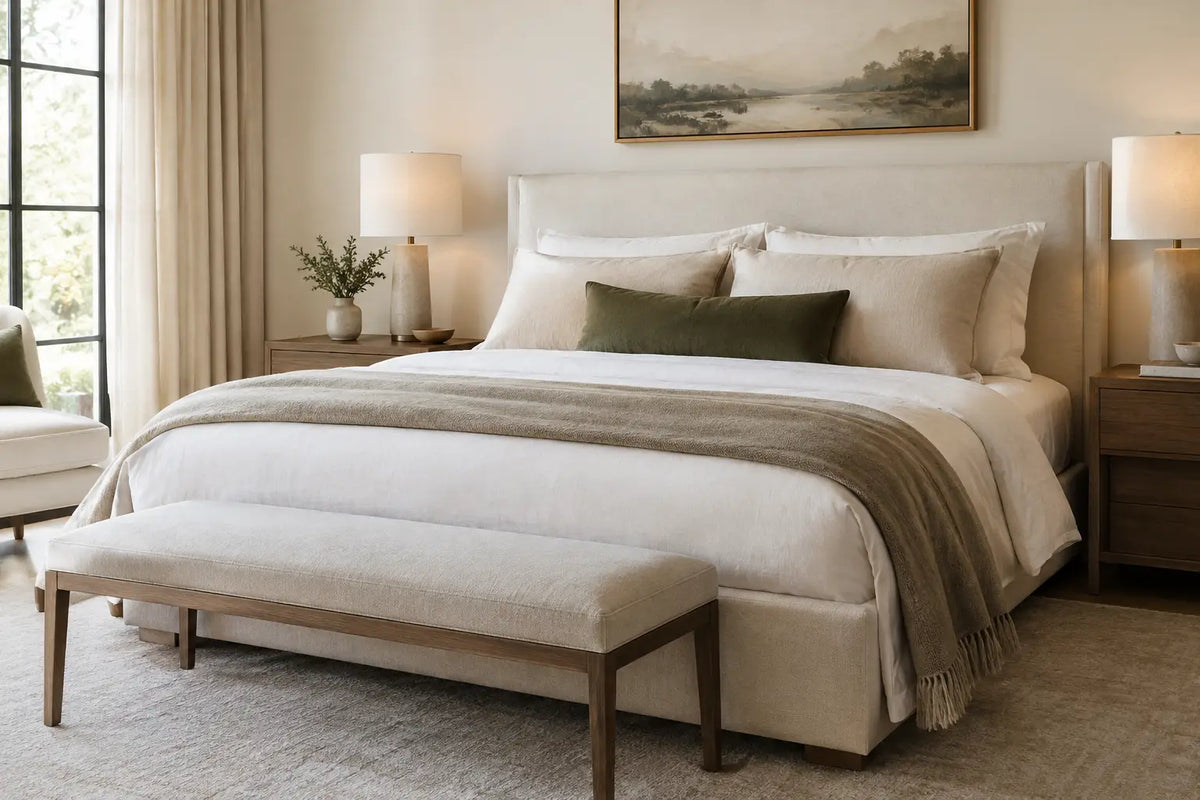
A quiet luxury bedroom is not built around a single statement piece or a room full of recognisable labels. It is the feeling of walking into a beautifully composed suite where every surface is calm, every proportion feels considered, and the bed invites proper, restorative rest. To style quiet luxury bedroom interiors successfully, begin with quality you can see and feel - then allow the details to speak softly.
The appeal lies in restraint. Rather than chasing a fast-moving trend, quiet luxury favours tactile fabrics, balanced silhouettes, muted colour and furniture made to serve the room for years. The result should feel personal and polished, never staged or overly precious.
Start with a bed that gives the room presence
In a bedroom, the bed is naturally the largest visual element. It sets the tone for everything around it, which is why a quiet luxury scheme benefits from an upholstered bed with a generous, tailored profile. Think of it as the architecture of the room rather than simply a place to sleep.
A deep, softly padded headboard in a refined neutral creates immediate warmth. Bouclé, linen-look weaves, brushed velvet and textured chenille can all work beautifully, although the right choice depends on the atmosphere you want. Velvet offers a more formal, cocooning finish, while a woven fabric feels relaxed and timeless. Neither is automatically more luxurious - the quality of the upholstery, the scale of the headboard and the way it sits within the room matter more.
Choose a headboard that feels intentional in relation to ceiling height and bed size. A tall, panelled design can bring a hotel-like sense of grandeur to a master bedroom with generous walls. In a smaller room, a neatly upholstered winged or gently curved headboard may deliver the same comfort without overwhelming the space. A wall-panel headboard is especially effective where you want a bespoke, architectural look, as it carries the eye upwards and makes the bed feel beautifully anchored.
At Hyder Living, made-to-order upholstery allows this central piece to be shaped around your room, from fabric and colour to storage format and headboard design. Requesting fabric swatches before committing is a small but valuable part of the process. View them in morning light, evening lamp light and beside your flooring, rather than deciding from a screen alone.
Choose a restrained colour palette with depth
Quiet luxury is often mistaken for an all-beige room. In reality, the most memorable spaces use a narrow palette with tonal variation. Warm ivory, mushroom, soft taupe, stone, putty, olive-grey and muted mocha offer a composed foundation, but they need contrast in texture and depth to avoid looking flat.
Start with one dominant neutral for the upholstered bed and larger curtains or blinds. Then introduce two related tones through bedding, a rug, bedside tables or a chair. A soft oat-coloured bed might sit beautifully against plaster-toned walls, with darker walnut furniture and bedding in ivory, flax and tobacco. The room remains calm, but it has definition.
Cool greys can still work, particularly in period properties or rooms with strong daylight, but they are best softened with timber, wool and warmer lighting. If your home already has cool-toned flooring or white walls, choose an upholstery fabric with a warm undertone to stop the room feeling austere.
Let materials create the interest
When the palette is quiet, texture does the decorative work. Combine smooth cotton bedding with a heavier wool throw, crisp linen pillowcases and a subtly patterned cushion in a similar shade. The differences should be felt before they are loudly seen.
Natural materials are especially useful here. Timber introduces warmth and permanence; wool adds softness and insulation; stone, ceramic and aged metal offer a grounded finish. Even if you prefer contemporary furniture, a timber bedside table or an antique brass lamp base can keep the room from becoming too sleek.
Avoid buying everything from one range in one finish. Matching bedside tables, bed, drawers and wardrobe can be practical, but too much uniformity can make a room feel like a showroom. Pair an upholstered bed with bedside tables that have character - perhaps dark wood, fluted detail or a honed-stone top - while maintaining a shared tone or proportion.
Make storage part of the design, not an afterthought
A restful bedroom requires visual calm, and visual calm is difficult to maintain when luggage, spare bedding and everyday clutter have nowhere to go. This is where an ottoman storage bed can be one of the most quietly luxurious choices you make.
A well-designed ottoman offers substantial hidden storage without adding another bulky piece of furniture. It is ideal for storing winter duvets, spare pillows, bed linen or items that do not need daily access. For a compact city bedroom or a carefully planned new-build home, this can mean the difference between a room that feels generous and one that feels permanently crowded.
The trade-off is access. Ottoman storage is excellent for larger, less frequently used items, while drawer storage may suit belongings you reach for more often. Consider how you live before choosing. If you want a clean, uninterrupted bed base and maximum capacity, an end-opening ottoman is often the elegant answer. If bedside clearance is limited, check the opening direction and the space needed to lift the mattress comfortably.
Good quiet luxury is rarely about having less for its own sake. It is about making sure what you own has a proper place.
Layer the bed with purpose
The most inviting luxury bedrooms have beds that look effortless, but their comfort is considered in layers. Begin with a supportive mattress suited to your preferred sleep position and body weight. A beautiful bed frame cannot compensate for a mattress that leaves you waking tired, too warm or lacking support.
Pocket springs can offer responsive support, while natural comfort layers such as wool help with breathability and temperature regulation. If you are creating a plush, hotel-inspired sleep experience, a quality mattress topper can add softness and extend the life of the mattress beneath. It is not a substitute for a worn-out mattress, however. If the support core has deteriorated, replacing the mattress is the wiser investment.
Dress the bed with a fitted sheet in breathable cotton, a generous duvet and pillows that suit your sleep style. Two sleeping pillows per person can look wonderfully full on a king or super king bed, but avoid piling on so many decorative cushions that bedtime becomes a performance. A single lumbar cushion, a tailored quilted coverlet and one substantial throw are usually enough.
For a more elevated finish, select bedding in adjacent shades rather than high contrast. White sheets with a soft stone duvet cover and a muted brown wool throw look considered without feeling fussy. The aim is an inviting bed you genuinely want to get into, not one you hesitate to disturb.
Use lighting to create a slower evening mood
Overhead lighting alone rarely flatters a bedroom. Quiet luxury relies on pools of warm light that make the room feel intimate after dark. Bedside lamps should be proportioned to the bed and tables, with shades that diffuse rather than expose the bulb. Wall lights can be particularly elegant where bedside surfaces are limited or where you want a more tailored, hotel-suite effect.
Choose warm bulbs and, where possible, install dimmers. A bright, cool bulb can make even beautiful upholstery look harsh. In contrast, lower, warmer light reveals texture, softens edges and supports the transition from busy day to proper rest.
Symmetry works well around the bed, but it does not have to be rigid. Matching lamps can provide order, while a slightly different chair, artwork or side table elsewhere in the room keeps the scheme from feeling overly formal.
Edit the finishing touches
The final layer is where quiet luxury either holds its nerve or becomes cluttered. Select fewer pieces, but choose them for their material, shape or meaning. A substantial ceramic vase, a framed artwork with tonal depth, a beautifully bound book and a single branch can say more than a crowded shelf of accessories.
Window treatments deserve particular attention. Full-length curtains in a lined fabric add softness, insulation and a more expensive visual finish. If privacy and blackout are priorities, pair them with a discreet blind. The hardware matters too: a well-fitted track or pole, hung high and wide, makes windows appear more generous and allows the curtains to frame rather than obstruct the daylight.
Finally, leave some clear space. Empty bedside surfaces, clear floors and breathing room around furniture are not signs that a room is unfinished. They are part of the luxury. A bedroom should offer relief from visual noise as much as physical comfort.
Quiet luxury is achieved when the room supports the way you want to feel at the end of the day: unhurried, comfortable and entirely at home. Choose the bed first, trust touch as much as appearance, and give every layer a reason to be there.
Share:
Quiet Luxury Bedroom Ideas That Last Beautifully