
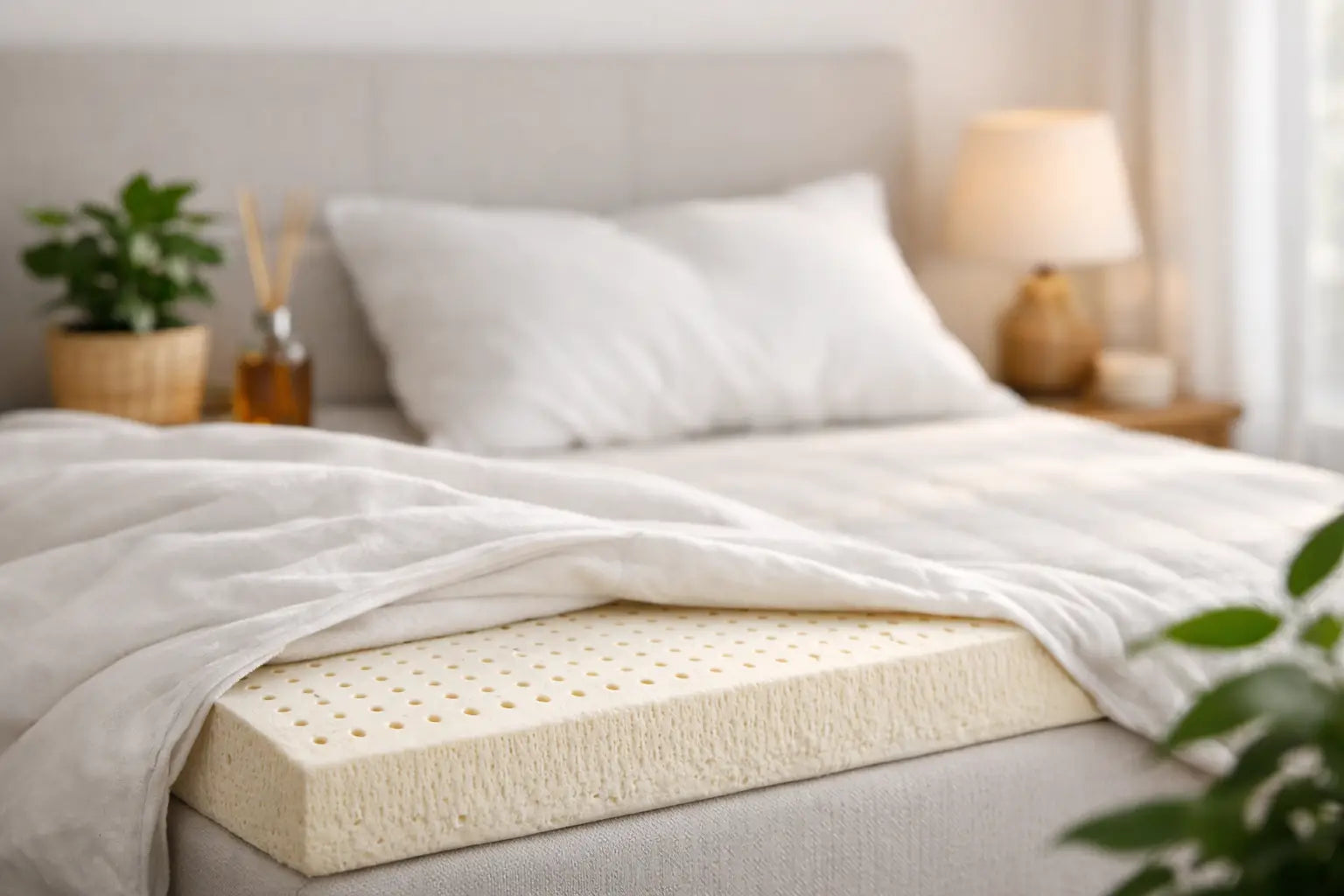
A mattress can look beautifully made, feel soft for five minutes in a showroom and still leave you restless by the end of the week. The most compelling natural latex mattress benefits tend to reveal themselves over time: a buoyant feel that makes changing position easier, consistent support across the bed, and a material that can retain its shape remarkably well when it is properly made.
For a bedroom designed as a genuine place of rest, latex is worth understanding. It is neither automatically the best choice for everyone nor simply a more luxurious version of foam. Its character is distinct, and that matters when you are choosing a mattress to complement a carefully upholstered bed, a statement headboard and the way you actually sleep.
Natural latex mattress benefits at a glance
Natural latex is made from the sap of rubber trees, which is processed into a resilient foam. In a mattress, it is usually used as one or more comfort and support layers, sometimes alongside pocket springs, wool, cotton or other fillings. The result is a sleep surface with spring, rather than the slower sink-in sensation associated with many memory foam mattresses.
One of the principal natural latex mattress benefits is responsive pressure relief. The material gently compresses beneath the shoulders and hips, while supporting the lighter areas of the body. Instead of feeling as though you are lying in the mattress, many sleepers feel more as though they are resting comfortably on it.
That responsive quality can be especially appealing if you turn during the night. A good latex layer recovers quickly as you move, so there is less of the restricted, enveloped feeling that some people experience with denser foams. For combination sleepers, this can make a noticeable difference to comfort.
Support that feels balanced, not rigid
Support is not the same as firmness. A mattress can feel plush at the surface yet still hold the body in a well-aligned position, particularly when it combines latex with a supportive pocket-spring core. The springs provide targeted support, while the latex helps spread pressure more evenly across the surface.
This combination suits many couples because it offers a composed, substantial feel without becoming unyielding. It can also work well on larger king, super king and emperor beds, where a stable surface helps the mattress feel generous and dependable from edge to edge.
Your preferred comfort level still matters. Side sleepers often need enough give around the shoulder and hip, whereas back and front sleepers may prefer a firmer overall feel to avoid the pelvis dipping too deeply. The thickness and density of the latex, the spring unit beneath it and the upholstery above it all affect the finished feel.
Naturally breathable comfort
Latex has an open-cell structure, and many latex mattress cores are formed with small pinholes during manufacture. This allows air to circulate through the material more freely than in some solid foams. When paired with breathable natural upholstery such as wool and cotton, it can help create a fresher, less close-feeling sleep environment.
This is valuable for anyone who finds their mattress holds warmth, although no material can guarantee a cool night in every home or every season. Your duvet, bed linen, room temperature and whether you share a bed all play a part. A breathable mattress is a strong starting point, not a substitute for choosing bedding suited to your own warmth preferences.
Durability with the right care
Quality latex is valued for its resilience. Unlike lower-grade comfort foams that can develop visible body impressions relatively quickly, well-made latex has a natural elasticity that helps it rebound after use. That can make it an excellent investment for a main bedroom, where the mattress is used every night and expected to maintain its poise.
Longevity is never determined by one layer alone. Look at the whole construction: the quality of the pocket springs, the depth of the fillings, the cover, the stitching and whether the mattress is designed to be turned or rotated. Handles, side stitching and air vents may seem like small details, but they are signs that the practical life of the mattress has been considered.
A mattress should also sit on a suitable base. A supportive platform top divan, a properly slatted bed frame with appropriate spacing, or the base recommended by the manufacturer will help it perform as intended. Rotating it at the advised intervals is a simple habit that can support more even wear.
The appeal of a cleaner sleep surface
Latex is often chosen by people who want to reduce the conditions in which dust mites thrive, because its structure is less hospitable to them than some traditional fillings. It is a helpful material consideration for a well-kept bedroom, particularly when combined with a washable mattress protector and regular laundering of bedding.
It should not, however, be described as a cure for allergies. People with a known latex allergy should seek medical advice and avoid assuming that a mattress marketed as natural latex will be suitable. The latex is enclosed within layers and a cover, but individual sensitivities vary. A good retailer should be able to explain the mattress construction clearly so you can make an informed decision.
Natural latex versus synthetic latex
The wording matters. ‘Latex mattress’ does not always mean that the comfort layers are made entirely from natural rubber. Some mattresses use synthetic latex, while others use a blend of natural and synthetic materials. These can still be comfortable and durable, but they may not offer the same material story or feel as a mattress with a high natural-latex content.
When comparing options, ask what percentage of the latex is natural, where it sits in the mattress and how deep the layer is. A thin latex layer over conventional foam will behave differently from a more substantial latex comfort layer over pocket springs. If natural materials are a priority for you, also ask about the cover, fillings and fire-barrier construction rather than judging the mattress by its name alone.
There is a practical trade-off here. Mattresses with generous natural latex layers are often heavier and can carry a higher price than entry-level foam designs. Their weight is usually a reflection of a substantial build, but it does mean turning or moving the mattress is best done with two people. For many buyers, the long-term comfort and resilience justify the investment. For a guest room used only occasionally, a simpler construction may be entirely sufficient.
Choosing the right latex mattress for your bedroom
Begin with how you sleep, then consider how the mattress will live within the room. If your bedroom is warm, a pocket-sprung mattress with latex, wool and breathable fabric may be especially appealing. If you share a bed with a partner who moves frequently, look for individually pocketed springs and a comfort layer that responds without feeling overly soft.
The bed itself deserves equal attention. A high, deeply upholstered headboard and layered cushions can create a haven of opulence, while an ottoman storage bed can make room for spare linen, seasonal bedding and the practical details of everyday life. Neither feature changes the mattress feel, but choosing the bed and mattress together helps ensure the final room is both polished and genuinely restful.
Before ordering, confirm the mattress depth against your bed frame and fitted sheets. Consider whether you need a standard double, king or super king, and whether the mattress can be delivered comfortably through your property. Made-to-order bedroom furniture is an opportunity to create a more personal space, but careful measurements protect that investment.
Hyder Living approaches bedroom comfort as part of the whole design: considered support beneath you, tailored upholstery around you and practical choices that make the room easier to enjoy. The best mattress is the one that meets your comfort needs night after night, while allowing the bedroom to feel as calm, inviting and considered as it looks.
Share:
Divan vs Ottoman Bed: Which Suits Your Bedroom?
Hotel Contract Beds UK for Better Guest Sleep