
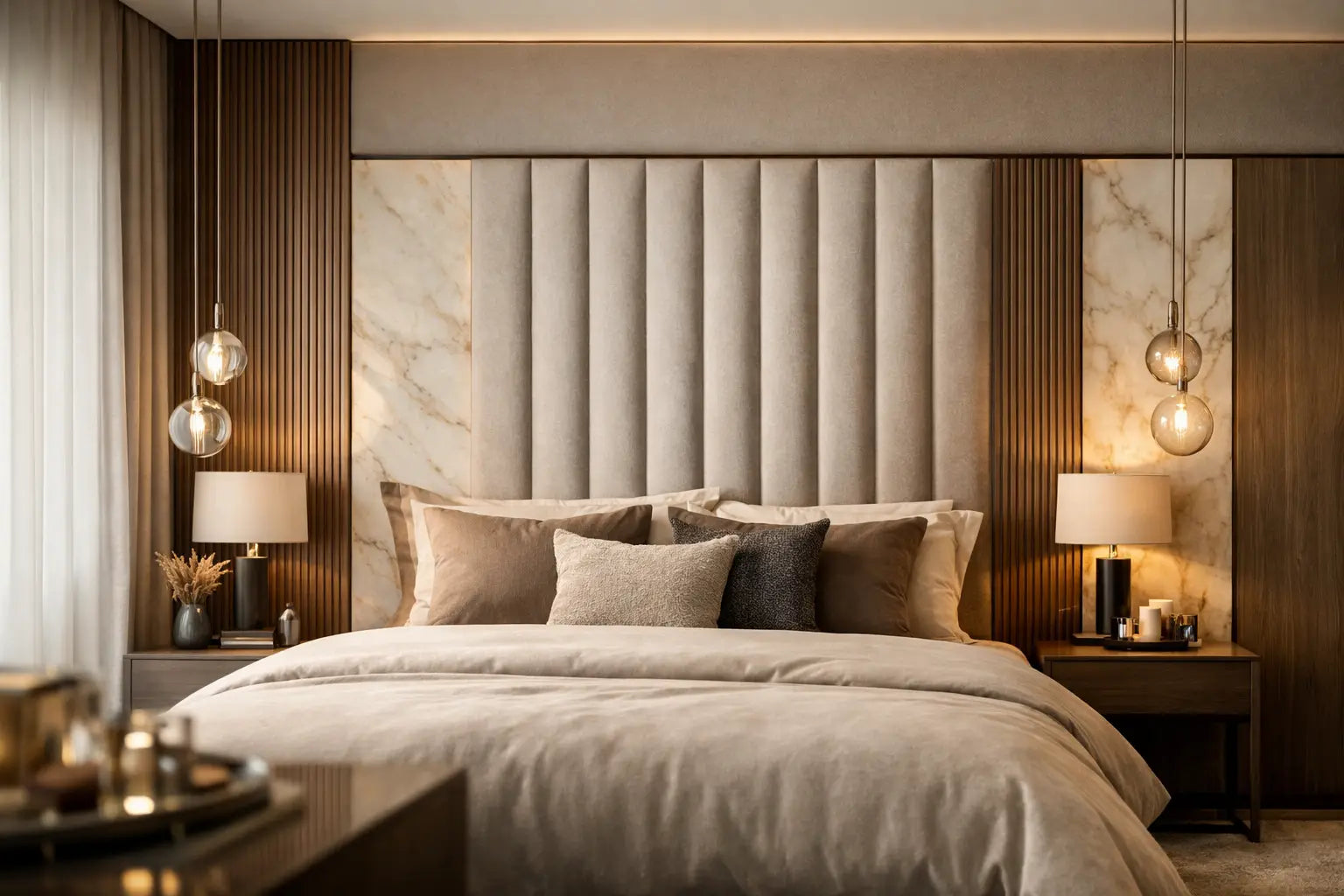
A beautifully upholstered wall-panel headboard can change the entire mood of a bedroom before you have even chosen the bedding. The most successful wall panel headboard ideas do more than fill an empty wall: they create a sense of arrival, soften the room acoustically and frame the bed as the centrepiece of a genuinely restful retreat.
Unlike a standard headboard, wall panels give you freedom over height, width, shape and finish. That makes them particularly rewarding in rooms where proportions feel awkward, ceilings are high, or a bed needs to look considered against a large blank wall. The result can feel wonderfully hotel-like, but it should still be designed around how you live, read, relax and sleep.
Wall Panel Headboard Ideas That Feel Made for the Room
The appeal of a wall-panel design lies in its tailored appearance. Panels can sit just behind the bed, extend to the bedside tables, or run almost wall to wall for a more enveloping look. There is no single right approach. A compact bedroom may benefit from calm, vertical panels that draw the eye upwards, while a generous primary suite can carry a wide, deeply padded arrangement with real presence.
Create a full-width upholstered backdrop
Taking the panels beyond the width of the mattress is one of the most refined ways to make a bed look purpose-built. Extending them behind bedside tables gives the room a balanced, architectural finish and avoids the disconnected look of a small headboard against a broad wall.
For a king or super king bed, consider a panelled backdrop that reaches around 20 to 40 centimetres beyond each side of the bed. This leaves enough visual breathing room while creating a generous frame for bedside lighting and occasional furniture. In a larger room, a wall-to-wall arrangement can be especially striking, provided the fabric and colour are restful rather than overly busy.
Use vertical channels to add height
Tall, slim channels are a superb choice for bedrooms with lower ceilings or rooms that need more structure. The repeated vertical lines lead the eye upwards, helping the wall feel taller and the bed more commanding without adding visual clutter.
This look suits contemporary homes, elegant townhouses and new-build bedrooms equally well. Choose channels with a modest width for a crisp, tailored result, or wider panels where you want a softer, more relaxed feel. A plush velvet or textured boucle makes the geometry feel warmer, ensuring the effect remains inviting rather than stark.
Choose wide panels for a quieter, more modern look
Wide rectangular panels have a composed, understated quality. With fewer seams, they allow the fabric to take centre stage and work beautifully in bedrooms where the scheme already includes patterned curtains, artwork or statement lighting.
A set of three or five wide panels often feels more luxurious than a busy grid. The odd-numbered rhythm naturally centres the composition behind the bed. For an emperor bed, wider panels prevent the design from looking fussy and give the headboard the scale such a generous mattress deserves.
Add a curved silhouette for softness
Not every panelled headboard needs sharp lines. Scalloped tops, gentle arches and rounded outer panels introduce softness while retaining the made-to-measure appeal of an upholstered wall. These shapes are particularly effective in period homes, romantic interiors and bedrooms with traditional detailing.
A curved design pairs beautifully with muted rose, warm ivory, stone or soft sage upholstery. If the rest of the room is quite linear - fitted wardrobes, square bedside tables and straight-edged blinds - a curved panel arrangement can stop the scheme from feeling too formal.
Build in a practical bedside zone
The most thoughtful wall panel headboard ideas consider the evening routine as carefully as the finished photograph. If you read in bed, ensure the padded section is high enough to support you comfortably when sitting upright. If you use wall lights, plan their position before panels are fitted, allowing room for switches, cables and a pleasing pool of light.
Some homeowners choose panels behind the bed and narrow upholstered sections behind each bedside table. This creates an intentional place for lighting while protecting the wall from everyday knocks. It is also a polished solution for rental properties where you want a substantial look without undertaking a full room renovation, subject to your landlord's approval and the chosen fixing method.
Getting the Scale Right Before You Choose Fabric
A wall-panel headboard should relate to the room, not simply the mattress size. Start by measuring the available wall width, ceiling height, bed width and the depth of any bedside tables. Then decide whether you want the panels to frame the bed alone or form an entire feature wall.
As a general guide, the upholstered area should begin just above the mattress and rise high enough to feel deliberate. A low arrangement can look like an ordinary headboard that has been enlarged slightly. A taller design, often reaching well above seated shoulder height, creates the cocooning quality that makes panels so appealing.
Do not overlook practical clearances. Leave space for plug sockets, radiators, picture rails, windows and wardrobes. If bedside tables sit in front of the panels, think about how drawers will open and whether the upholstery will be exposed to frequent contact. In a narrow room, keeping the panels flush and streamlined preserves precious floor space.
Fabric and Colour: Where Comfort Meets Character
Fabric decides whether your panelled wall feels serene, dramatic, classic or contemporary. Velvet offers depth of colour and a softly opulent finish, especially in rich olive, midnight blue, mocha or wine tones. It catches the light beautifully, though it may show pressure marks and shading more readily than a flat weave.
For a more relaxed luxury, consider linen-look upholstery, brushed weaves or tactile boucles. These finishes bring texture without demanding attention, making them ideal for neutral bedrooms. A warm greige, oatmeal, mushroom or putty shade can make a large panelled wall feel light and calm while still looking far more considered than painted plaster.
Darker colours are not reserved for large bedrooms. A deep charcoal, forest green or inky navy can make a smaller room feel intimate and restorative when balanced with pale bedding, warm lamps and a considered mirror. The trade-off is that darker upholstery absorbs light, so it benefits from layered lighting rather than one central ceiling fitting.
Before committing, view fabric swatches in the room itself. Morning light, evening lamps and the direction of the window can alter how a colour appears. At Hyder Living, complimentary fabric swatches make it easier to compare tone, texture and undertone alongside your flooring, paint and bed linen before a made-to-order choice is finalised.
Pairing Panels with the Right Bed Base
Wall panels can work with an upholstered bed frame, a storage divan or an ottoman bed, but the proportions should be coordinated. A low, sleek base allows the panelled wall to feel more dramatic. A taller divan or a mattress with a deep pillow top may call for panels that start slightly higher, so the visible upholstered section remains generous.
If storage is a priority, an ottoman bed offers a discreet answer without interrupting the clean lines of the design. The key is to choose a fabric that either matches the wall panels exactly or complements them intentionally. Matching fabric creates a calm, wrapped-in-upholstery effect; contrasting fabric can add depth, but needs a confident eye for colour.
For a more layered bedroom, use a standard headboard in front of the wall panels. This approach introduces dimension and gives you a chance to combine finishes, perhaps a channelled panel backdrop with a gently curved headboard. Keep the palette closely related so the effect reads as luxurious rather than overly decorated.
Details That Make the Design Feel Complete
The finishing touches determine whether the wall feels genuinely tailored. Consider the panel spacing, the alignment with bedside tables and whether the top edge sits in harmony with curtain poles, artwork or joinery. Even a simple rectangular layout looks exceptional when its lines are precise.
Bedside pendants or wall-mounted reading lights are often more elegant than table lamps against a panelled backdrop, particularly where surface space is limited. Brass, aged bronze and soft nickel all work well, depending on the room's hardware. Position lights so they illuminate a book without casting harsh shadows across the pillows.
Finally, let the bedding provide contrast. Crisp white cotton gives darker panels a five-star hotel finish, while layered throws and cushions can introduce gentle pattern against a neutral backdrop. Avoid covering every inch of the bed with decorative cushions - the purpose of a beautiful headboard is to be seen and enjoyed.
A wall-panel headboard is worth approaching as part of your nightly comfort, not merely a decorative addition. Choose a scale that welcomes you into the room, a fabric you will enjoy touching, and proportions that make settling down at the end of the day feel effortlessly special.
Share:
Ottoman Bed Storage Capacity for Your Bedroom
Divan vs Ottoman Bed: Which Suits Your Bedroom?