
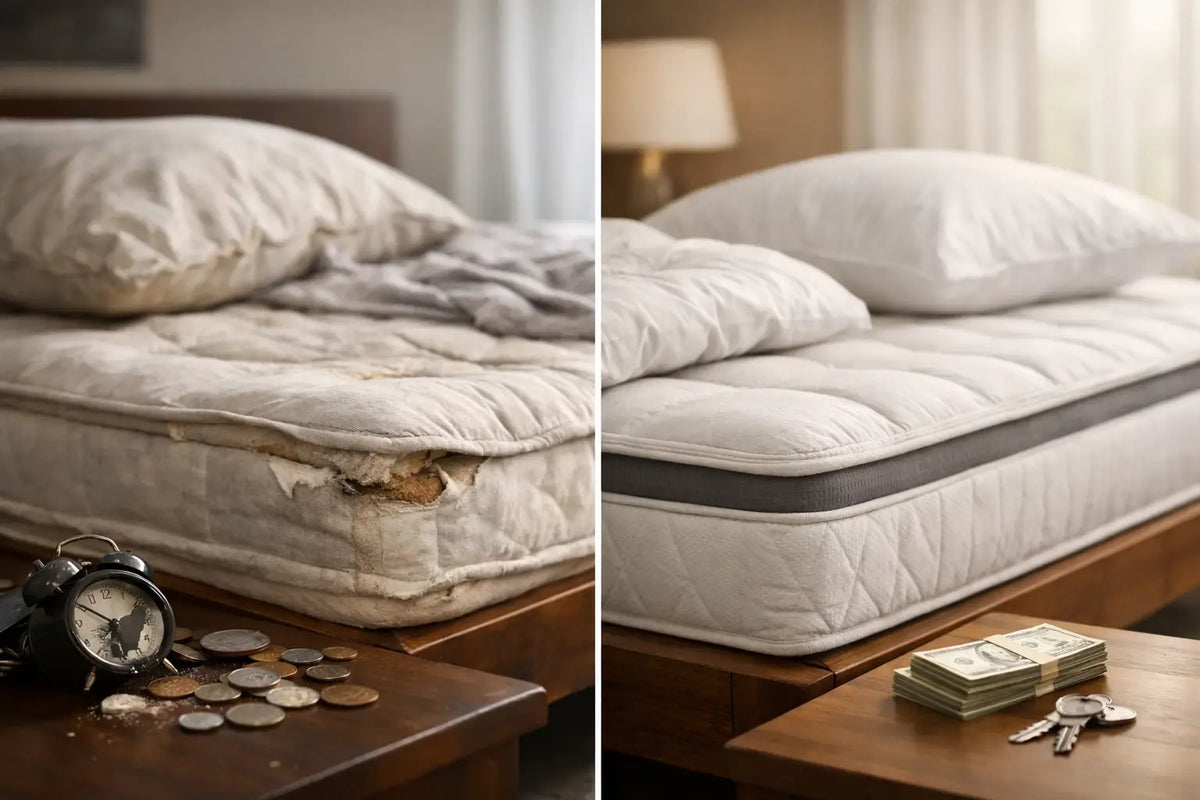
The lower price can feel persuasive when a bedroom is taking shape and there are curtains, lighting and furniture still to consider. Yet why being cheap costs more in the long run for beds becomes clear remarkably quickly when a frame starts to creak, upholstery loses its finish, or a mattress no longer gives your body the support it needs. A bed is not a decorative purchase you glance at occasionally. It is the foundation of every night's rest, and it is used more intensively than almost any other piece of furniture in the home.
A considered bed need not mean choosing the most expensive option available. It means understanding where quality matters, selecting specifications that suit your room and sleep preferences, and buying for the years ahead rather than the first few months. The result is a bedroom that looks composed, feels deeply comfortable and remains a pleasure to come home to.
A cheap bed often has a shorter working life
The initial saving on a budget bed can disappear if it needs replacing after only a few years. Low-cost frames are commonly made with lighter materials, thinner fixings and limited central support. Under the repeated movement of sleeping, sitting up and changing bedding, those small compromises can lead to loosened joints, bowed slats and unwelcome noise.
Upholstered beds deserve particular attention. The appearance of a grand headboard or soft fabric frame tells only part of the story. What sits beneath the fabric matters just as much: the strength of the timber structure, the density of the padding, the quality of the fixings and the way the upholstery has been applied. A beautifully made upholstered bed should retain its shape and presence, rather than becoming slack or uneven with everyday use.
Replacement also has a cost beyond the receipt. There is the disruption of arranging delivery, disposing of the old bed, taking time away from a busy schedule and redesigning a room around a new piece. Choosing a durable, made-to-order bed can therefore be the more economical decision, even where its upfront price is higher.
Why being cheap costs more in the long run for beds
A bed should support both the person sleeping on it and the mattress placed above it. When either element is poorly specified, the other can suffer. A weak base may allow a mattress to flex unevenly, affecting its feel and potentially shortening its useful life. In the same way, an unsupportive mattress can leave sleepers waking stiff, restless or tired despite spending enough hours in bed.
This is where the true cost of a bargain becomes less visible but more significant. Poor sleep can affect concentration, mood, recovery after exercise and the simple enjoyment of daily life. No bed guarantees perfect sleep, of course. Room temperature, routine, stress and individual needs all play a part. But a stable base and an appropriate mattress remove two major obstacles to restorative rest.
For couples, compromising on size is another false economy. A double may suit a compact guest room, but it can feel restrictive for two adults who share a bed every night. Moving to king size or super king, where the room allows, gives each sleeper more personal space and can reduce disturbance from turning during the night. The extra investment is felt every evening, not just on delivery day.
The details that separate lasting quality from a short-term buy
Quality is often found in components that are easy to overlook in a showroom photograph. A strong bed frame requires a dependable internal structure, carefully positioned support and fittings designed to remain secure. A well-made divan should offer a solid platform for the mattress, while an ottoman bed needs a mechanism capable of lifting smoothly and safely over years of regular use.
Storage beds are a particularly good example of why specification matters. They can transform a bedroom by creating a discreet place for spare bedding, seasonal clothing or luggage. However, insufficiently supported lifting mechanisms, awkward access or poorly aligned bases can make storage frustrating rather than effortless. The best option depends on the layout of the room: side-opening ottomans can be practical in narrow spaces, while end-opening designs may suit a room with clear space at the foot of the bed.
Mattresses also reward careful comparison. Pocket springs can provide responsive, individualised support, while layers such as wool, cotton, latex or quality fillings influence pressure relief, temperature regulation and surface comfort. A dual-sided mattress may offer the benefit of regular turning, helping it wear more evenly. A no-turn model can be ideal for convenience, provided it is rotated as recommended and has the construction to sustain that use.
None of these features should be treated as a checklist for everyone. A person who prefers a firmer, more supportive feel will make a different choice from someone seeking gentle cushioning around the shoulders and hips. The aim is not to buy the most elaborate specification. It is to invest in the specifications that genuinely serve your sleep.
Design should endure as well as function
A bed is usually the visual centrepiece of the bedroom. Choosing solely on price can mean settling for a style, fabric or proportion that never quite feels right. That can be an expensive compromise when the room is meant to be a private retreat.
Made-to-order upholstery allows a bed to belong to the space rather than merely occupy it. The right fabric colour can soften a bright contemporary room, add depth to a neutral scheme or complement existing joinery and flooring. Headboard height and profile also make a material difference. A tall, channelled design can bring hotel-style drama to a generous bedroom, while a more restrained silhouette may preserve a sense of calm in a smaller room.
There is value, too, in requesting fabric swatches before committing. Light changes throughout the day, and a colour seen on a screen can appear entirely different beside your own paintwork, curtains and carpet. Taking a little time at this stage helps prevent an avoidable disappointment and supports a more polished final result.
Paying for the right bed is not the same as overpaying
It is sensible to have a budget. A more expensive bed is not automatically better, and premium pricing should be supported by clear craftsmanship, materials, service and useful options. The question is whether the product is designed to deliver enduring value rather than a temporary impression.
Consider the total picture: the expected lifespan of the frame and mattress, the quality of the sleep they can support, the practicality of storage, the suitability of the dimensions, and whether the design will continue to suit your home. Finance options can be useful when they allow you to choose the right specification without compromising on essentials, but they should make a well-considered purchase more manageable, not encourage a choice beyond your comfort.
Service is part of value as well. Clear advice on sizing, fabric selection, access and mattress care can prevent costly errors before they happen. For a substantial upholstered bed or an ottoman design, it is worth checking measurements carefully, including stairways, landings and doorways. A beautiful bed that cannot reach the bedroom is not a luxury experience.
How to buy with long-term comfort in mind
Start with how the bed will be used. Is it for two adults every night, a growing child, a guest bedroom or a property welcoming regular visitors? Then consider the room itself: available floor space, opening doors, storage needs and the visual scale of the headboard.
Next, place your budget around the elements that affect longevity and sleep. Prioritise a properly built frame or divan base, the correct mattress support and a size that gives you room to rest. Decorative details matter because they shape how you feel in the room, but they should sit on a sound foundation.
Finally, care for the investment. Rotate a mattress according to its guidance, use a breathable protector, avoid jumping on the bed, and check that frame fittings remain secure from time to time. These small habits can preserve comfort and appearance for longer.
A bedroom should offer more than somewhere to switch off at the end of the day. Give yourself the pleasure of choosing a bed that supports your sleep, suits your home and feels quietly exceptional every time you enter the room.
Share:
Best Fabrics for Upholstered Beds at Home
How to Improve Hotel Sleep Before Your Stay