
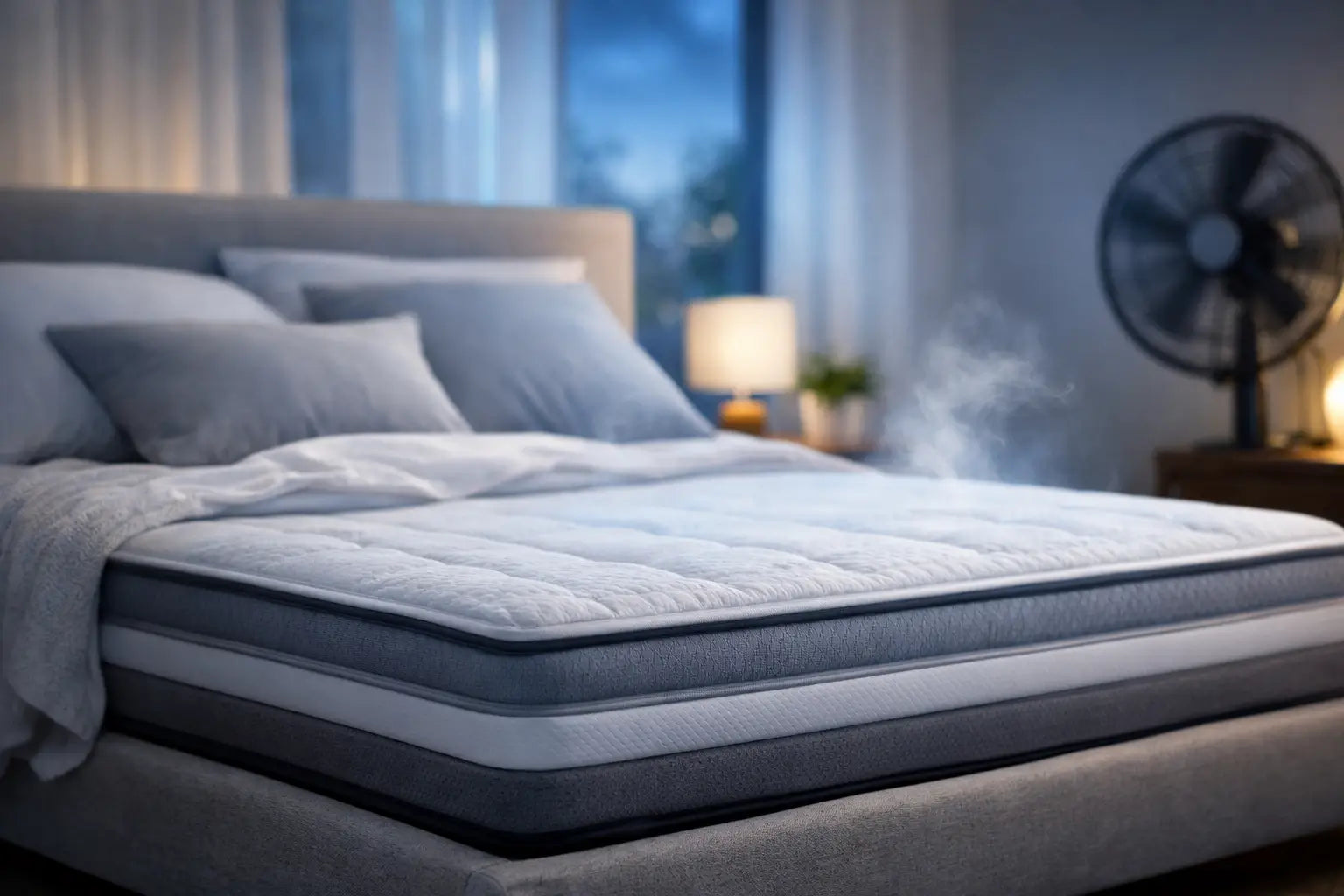
Waking at 3am because the bed feels stuffy can make even the most beautifully designed bedroom feel less restful. The best mattress for hot sleepers is not simply the one labelled ‘cooling’. It is the one that lets heat and moisture move away from your body while giving you the support, pressure relief and enduring comfort your sleep deserves.
For many people, the answer lies in the whole sleep system: a breathable mattress, sensible bedding and a bed base that allows air to circulate. The right choice creates a fresher, more inviting place to unwind, without compromising on the sumptuous comfort of a premium mattress.
What makes a mattress sleep cooler?
Your body temperature naturally changes through the night. A mattress that holds onto heat or traps humidity can interfere with this process, leaving you tossing back the duvet rather than settling into deep sleep. Materials, construction and cover fabrics each play a part.
Open, breathable fillings allow air to pass through the mattress rather than locking warmth around the sleeper. Natural fibres such as wool, cotton and cashmere have long been valued in luxury mattresses because they help manage moisture as well as feeling wonderfully soft. Wool is particularly useful: it can absorb moisture vapour without feeling damp, helping to create a drier, more balanced sleep surface through changing seasons.
Mattress construction matters just as much. Individually wrapped pocket springs create spaces for air to move within the mattress, unlike dense, solid foam designs that can feel warmer. Side vents can also encourage airflow, while a breathable cotton or woven cover offers a cooler first point of contact than a synthetic, tightly knit fabric.
The best mattress for hot sleepers depends on feel
There is no single construction that suits every warm sleeper. Your preferred firmness, sleeping position and sensitivity to movement should guide the decision as much as temperature control.
Pocket spring mattresses for airflow and tailored support
A quality pocket spring mattress is often an excellent starting point for hot sleepers. Each spring responds independently to your weight, supporting the body with less motion transfer when you share a bed. The open structure around the springs also promotes ventilation.
Look for pocket springs paired with breathable comfort layers, particularly wool, cotton or other natural fibres. This combination offers a composed, supportive feel with a cooler, more traditional luxury finish. It can be especially appealing if you prefer the gently buoyant sensation of a sprung mattress rather than the close contouring of foam.
Spring count alone should not decide the purchase. More springs can offer more refined support, but the quality of the springs, the depth of the comfort layers and the overall construction are equally significant. A well-made mattress should feel balanced from edge to edge, not merely impressive on a specification sheet.
Natural-fibre mattresses for year-round comfort
Natural fillings are a considered choice for sleepers who find synthetic materials clammy. Wool, cotton, horsehair and cashmere are often used in higher-end mattress construction for their breathability, resilience and comfortable temperature regulation.
They do involve a trade-off. Natural-filled mattresses may feel firmer initially than deep foam models, and some need regular turning or rotating to preserve their even, supportive finish. For many, that small amount of care is worthwhile for a mattress that feels fresh and inviting over many years.
Memory foam can work, but choose carefully
Traditional memory foam has a reputation for retaining warmth because it moulds closely around the body. For someone who regularly wakes feeling overheated, a thick layer of standard foam is rarely the most reassuring option.
That does not rule out foam entirely. Modern open-cell and gel-infused foams are designed to improve airflow, while hybrid mattresses combine foam comfort layers with pocket springs beneath. A hybrid can offer excellent pressure relief for side sleepers, but it is wise to check how much foam sits closest to the surface. The deeper and denser the foam layer, the warmer the mattress may feel.
Latex for responsive, airy comfort
Latex is naturally responsive and often more breathable than traditional memory foam, particularly when it has a perforated structure. It gently cushions pressure points without the slow-sinking sensation some sleepers find too warm or restrictive.
Latex can be a premium investment, and its distinctive buoyant feel is not for everyone. If you enjoy turning easily in bed and prefer a mattress that supports rather than envelops you, it is well worth considering. Those who want an especially plush, cloud-like feel may prefer a pocket spring mattress with generous natural upholstery instead.
Match the firmness to your sleeping position
A cooler mattress still needs to support your posture properly. Discomfort causes restless movement, and restless movement can make a warm night feel even longer.
Side sleepers usually need enough cushioning around the shoulders and hips to keep the spine aligned. A medium or medium-soft mattress with breathable natural layers or a modest comfort layer of cooling foam can work beautifully. Back sleepers often benefit from medium to medium-firm support, particularly through the lower back. Front sleepers generally need a firmer, flatter surface to prevent the hips from dipping too deeply.
If you share a bed, consider both body weights and sleep styles. A mattress that is ideal for one person can be too soft or too firm for the other. Pocket springs are helpful here because they respond locally, making it easier for each sleeper to settle comfortably without constant disturbance.
Do not overlook the mattress cover and bed base
Even the finest cooling mattress can feel warmer beneath an impermeable protector or a heavy synthetic sheet. Choose a breathable mattress protector designed to guard against spills and everyday wear without creating a plastic-like barrier. Cotton sheets, linen and lightweight wool bedding are equally valuable allies when your room runs warm.
Your bed base also deserves attention. A solid platform can slightly limit airflow beneath the mattress, whereas a sprung or slatted base may encourage more ventilation, provided it is compatible with the mattress manufacturer’s guidance. Storage beds remain a practical and elegant choice for bedrooms where every inch counts, but ensure the mattress itself has suitable side ventilation and is not covered by non-breathable layers underneath.
A larger bed can make a meaningful difference, too. Moving from a double to a king size gives each person more room and reduces the amount of shared body heat in the middle of the bed. For couples with the space, a super king can turn a warm, restless night into a far more indulgent experience.
Questions to ask before you buy
Rather than relying on a cooling label, ask what the mattress is made from and how it has been constructed. Find out whether the comfort layers are natural, synthetic or blended; whether the mattress has vents; and whether it needs turning, flipping or simply rotating. These details reveal far more about its likely long-term comfort.
It is also sensible to consider the bedroom itself. South-facing rooms, top-floor bedrooms and well-insulated modern homes can hold significant warmth after sunset. In these spaces, a highly breathable spring-and-natural-fibre mattress may be a more dependable choice than a foam-heavy design, even if that foam includes cooling technology.
At Hyder Living, the most satisfying bedroom choices begin with how you want the room to feel as well as how it should look. A carefully selected mattress, paired with an upholstered bed that suits your space and a breathable layer of bedding, can make your bedroom feel like a genuine haven of calm.
Care helps a cool mattress stay comfortable
Rotate your mattress at the intervals recommended for its construction, usually every few months. This encourages even wear and prevents body impressions from becoming concentrated in one area. If your mattress is dual-sided, turning it as directed can extend its supportive life further.
Air the bed each morning by folding back the duvet for a short while, particularly after warm nights. This gives overnight moisture an opportunity to disperse before the bed is made. Regularly washing bedding and using a suitable breathable protector will also help preserve a clean, fresh sleeping environment.
The most luxurious choice is ultimately the mattress that allows you to fall asleep comfortably and wake feeling restored. Prioritise breathable materials, supportive construction and a feel that suits your body, then finish the bed with light, natural bedding. Cooler sleep need not mean sacrificing the deep comfort and opulent finish your bedroom deserves.
Share:
Are TV Beds Worth It for a Luxury Bedroom?
Pocket Sprung vs Memory Foam Mattress Explained