
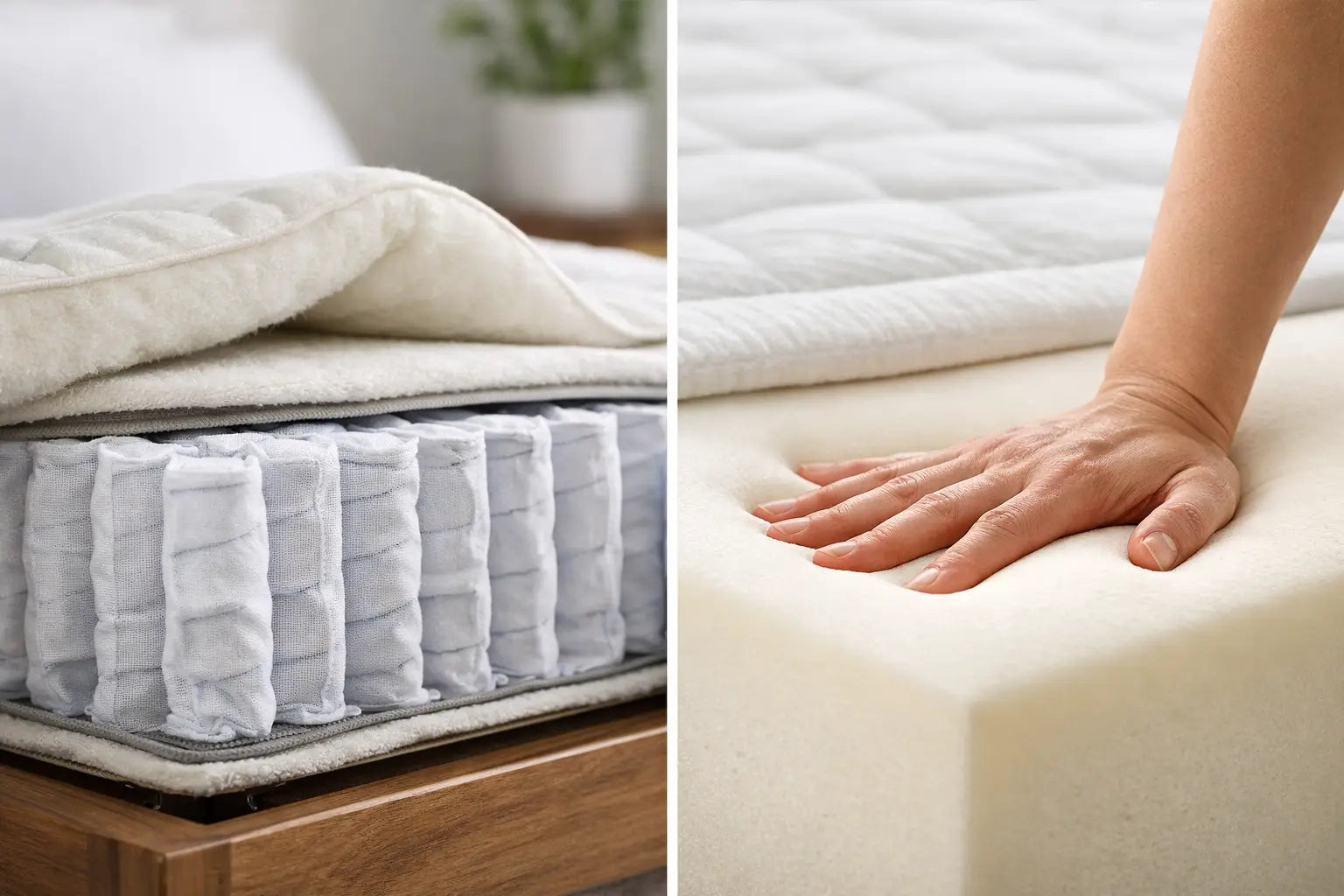
The mattress is the part of your bed you feel long after the fabric, headboard and storage have made their first impression. When choosing a pocket sprung vs memory foam mattress, the right answer is less about which is ‘best’ and more about how you sleep, how warm you run and the kind of comfort that makes your bedroom feel like a true retreat.
A beautifully upholstered bed deserves a mattress that supports it just as thoughtfully. Whether you prefer the responsive lift of springs or the close, cushioned feel of foam, understanding the construction beneath the cover will help you choose with confidence.
Pocket Sprung vs Memory Foam Mattress: The Essential Difference
A pocket sprung mattress contains hundreds, and often thousands, of individual springs. Each spring sits in its own fabric pocket and responds independently when weight is applied. Rather than moving as one large unit, the mattress adapts across its surface, giving targeted support to your shoulders, hips and lower back.
A memory foam mattress uses viscoelastic foam that softens with body heat and pressure. It slowly moulds around your shape, distributing weight across a larger area. The result is a distinctive, enveloping sensation that many sleepers describe as being gently cradled rather than resting on top of the mattress.
Neither construction is inherently more luxurious. The better choice depends on the feeling you want at bedtime and the practical performance you need through the night.
How Pocket Springs Feel
Pocket springs offer a responsive, buoyant sleep surface. When you change position, the mattress adjusts quickly, making it easier to turn over without feeling held in place. This is particularly appealing for combination sleepers who move between their side, back and front during the night.
Because each spring works independently, pocket sprung mattresses can provide excellent zoning and body support. A well-made model may use firmer springs or additional reinforcement through the centre, where the heaviest part of the body rests. Quality comfort layers above the springs - such as wool, cotton, natural fibres or resilient fillings - refine the feel, adding softness without losing support.
Pocket springs also encourage airflow. The gaps around the spring unit allow heat and moisture to move more freely than in a solid foam core. For anyone who finds themselves throwing off the duvet at 3am, this naturally ventilated construction can be a meaningful advantage.
The trade-off is that the final feel varies considerably. Spring count matters, but it is not the only measure of quality. The calibre of the springs, the depth and composition of the fillings, and whether the mattress is single- or double-sided all affect comfort and longevity. A higher spring count alone does not guarantee a more sumptuous night’s sleep.
How Memory Foam Feels
Memory foam is known for pressure relief. It contours around prominent areas such as the shoulders and hips, which can be especially comfortable for side sleepers. By spreading pressure more evenly, it can reduce the concentrated ‘push back’ some people notice on firmer spring mattresses.
It also performs very well at motion isolation. If you share a bed with someone who turns frequently, gets up earlier or has a different sleep routine, the foam absorbs much of that movement before it travels across the mattress. This can make a king or super king bed feel particularly calm and undisturbed.
However, the close contouring effect is not for everyone. Some sleepers enjoy the secure, cocooning sensation; others feel it makes changing position more effortful. Traditional memory foam may also retain more warmth, although modern mattresses often address this with open-cell foam, gel-infused layers, breathable covers or air channels.
Density and depth make a considerable difference here. A thin layer of memory foam over a supportive base has a very different character from a deep, all-foam mattress. It is worth looking beyond the phrase ‘memory foam’ and considering the full construction, including the support core beneath it.
Support for Your Preferred Sleeping Position
Your usual sleeping position offers a useful starting point, although it should not override personal preference.
Side sleepers often benefit from the pressure-relieving contour of memory foam, particularly around the shoulder and hip. A medium or medium-firm feel can allow enough give to keep the spine aligned without letting the hips sink too far. A pocket sprung mattress with generous comfort layers can achieve a similarly accommodating feel while offering more bounce.
Back sleepers usually need balanced support across the lumbar area. Both constructions can work beautifully. A medium-firm pocket sprung mattress tends to provide responsive support and easier movement, while a medium-firm foam mattress can suit those who value close contouring and a quieter sleep surface.
Front sleepers generally need a firmer, flatter surface to avoid excessive dipping through the pelvis, which can place strain on the lower back. This often points towards a firmer pocket sprung mattress or a carefully chosen firmer foam design. In either case, avoid choosing softness simply because it feels indulgent for the first few minutes in a showroom.
For couples with different builds or comfort preferences, pocket springs can be especially useful because they adapt individually to weight. Memory foam has the edge when limiting movement from one sleeper to the other. There is no universal winner - consider which of these benefits will matter more on an ordinary Tuesday night.
Temperature, Movement and Edge Support
Comfort is shaped by more than firmness. If you sleep warm, pocket springs are often the natural first choice because of their open structure and breathability. Natural fillings such as wool can further help to manage moisture and maintain a comfortable microclimate through changing seasons.
If a peaceful bed is your priority, memory foam is difficult to overlook. Its ability to absorb movement is one of its defining strengths. This may be valuable in households with different working hours, young children who occasionally climb in after a bad dream, or anyone with a restless sleeping partner.
Edge support deserves attention too, particularly when choosing a larger bed, sitting on the side to dress, or making the most of every inch of the sleep surface. Pocket sprung mattresses with reinforced edges often feel more supportive at the perimeter. Foam mattresses can also offer good edge stability, but this depends on the density and design of the outer support layers.
Do You Want a Traditional or Contouring Feel?
The simplest way to decide is to think about the sensation you enjoy when you lie down. Pocket springs give a more traditional mattress feel: supported, responsive and lightly cushioned, with a sense of sleeping on the surface. Memory foam gives a more modern, body-hugging feel: quieter, pressure-relieving and more immersive.
This distinction matters when pairing a mattress with an elevated upholstered bed or a practical ottoman base. A substantial, supportive mattress can complete the inviting, hotel-inspired look of the room, but it must also suit the way you move, sleep and relax in bed. Consider mattress depth alongside your chosen headboard height, bedding style and ease of getting in and out of bed.
Is a Hybrid Mattress the Best of Both?
A hybrid mattress combines pocket springs with one or more foam comfort layers, often including memory foam. It can be an excellent middle ground for sleepers who want the responsive support and airflow of springs, with added contouring at pressure points.
That said, ‘hybrid’ is a broad label, not a guarantee of a particular feel. One hybrid may feel spring-led and breathable with only a shallow foam layer; another may offer a much deeper, more cocooning foam sensation. Look at the spring system, the foam depth, the stated firmness and the materials used in the upper layers rather than relying on the category alone.
Choosing a Mattress That Will Keep Its Comfort
A mattress should feel considered after years of use, not merely impressive on its first night. Check whether it is designed to be rotated regularly, or flipped as well as rotated. Double-sided pocket sprung mattresses can offer excellent longevity because both sleeping surfaces are used over time, while most memory foam mattresses are designed to be rotated only.
Use a suitable base that gives the mattress even support, and follow its care guidance from the beginning. A breathable mattress protector can help keep the sleep surface fresh without changing the feel you chose so carefully. Allowing a new mattress time to settle is sensible too, especially with memory foam, which may take a little while to reach its intended shape and feel.
The most satisfying choice is the one that lets you wake rested, move comfortably and look forward to returning to bed. Start with how you sleep, be honest about warmth and movement, then choose the construction that turns your own bedroom into a more restorative place to end the day.
Share:
Best Mattress for Hot Sleepers for Cooler Nights
How Often to Rotate a Mattress for Better Sleep