
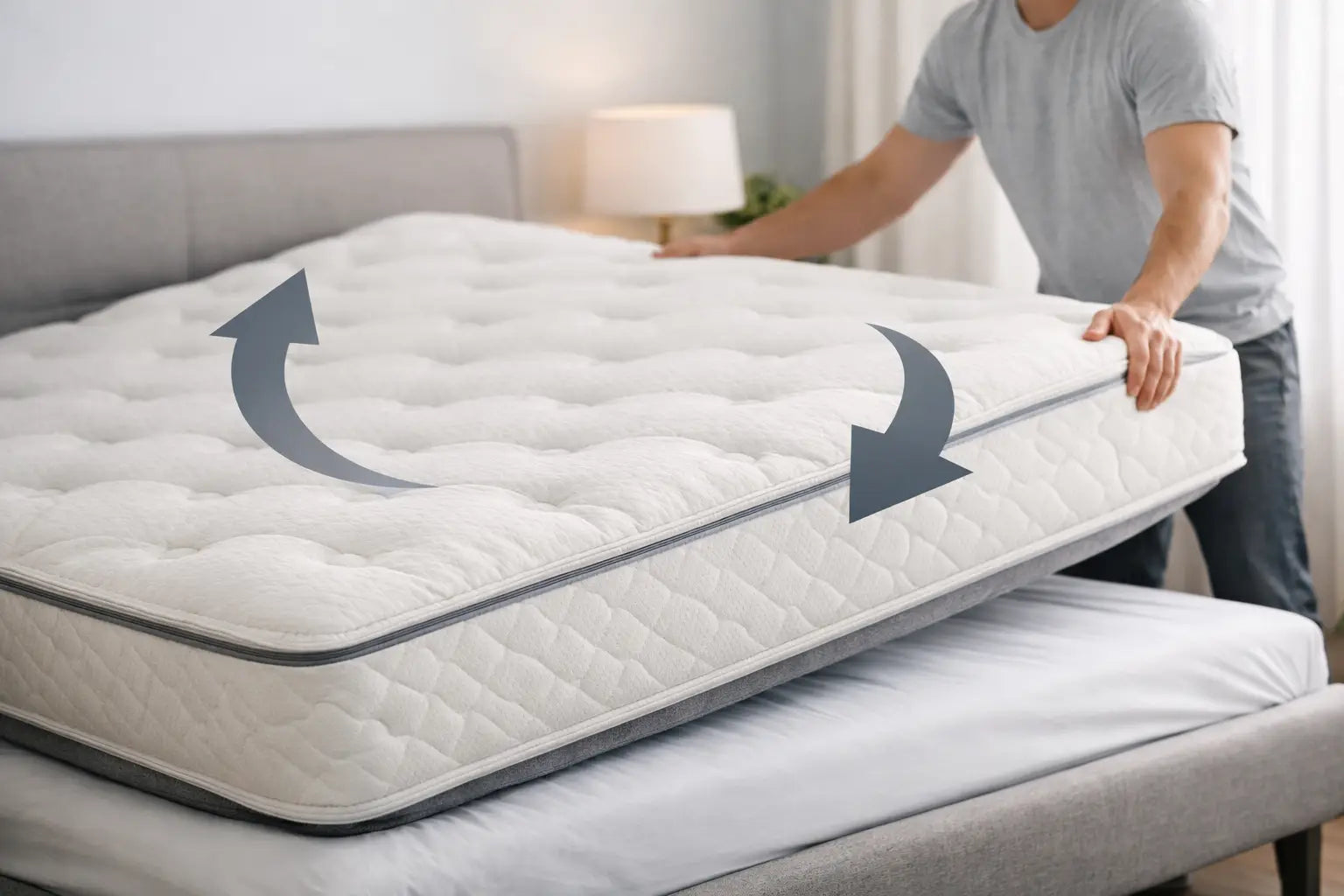
A beautifully dressed bed can still lose its inviting feel if the mattress beneath it is carrying years of pressure in the same places. If you are asking, “how often rotate a mattress?”, the short answer is usually every three to six months. The better answer depends on its construction, how it is used and whether it is designed to be turned as well as rotated.
Regular rotation is a small piece of mattress care that can make a meaningful difference to comfort. It helps distribute the load placed on the areas beneath your shoulders, hips and legs, allowing fillings and springs to settle more evenly over time. For a mattress chosen to bring restorative sleep to a carefully designed bedroom, it is a worthwhile habit.
How often should you rotate a mattress?
For most modern mattresses, rotating every three months is a sensible starting point, particularly during the first year. New fillings have a settling-in period, and early rotation helps prevent one area from taking all the pressure night after night.
Once the mattress has settled, many households can move to a six-monthly routine. An easy approach is to rotate it when the clocks change in spring and autumn. This gives your mattress attention twice a year without adding another task to an already busy household calendar.
There are exceptions. A mattress used every night by two adults, a heavier sleeper, or a household with children who enjoy weekend mornings in bed may benefit from quarterly rotation for longer. A lightly used guest-room mattress may only need rotating once or twice a year. The product care label and manufacturer guidance should always take priority, as the internal construction determines what is safe and beneficial.
Rotation and flipping are not the same thing
Rotating means turning the mattress through 180 degrees so that the head end becomes the foot end. The sleeping surface stays facing upwards. Most single-sided mattresses, including many memory foam, hybrid and pillow-top designs, should only be rotated.
Flipping means turning the mattress over, so the underside becomes the sleep surface. This is only suitable for a double-sided mattress, where both sides have been deliberately built for sleeping. A traditional double-sided pocket spring mattress may be designed to be both turned and rotated regularly, often every three months, to share wear across both sides.
Never assume a mattress can be flipped simply because it feels substantial. A single-sided mattress may have carefully arranged comfort layers, such as memory foam, natural wool or pressure-relieving fillings, above its spring unit. Turning it upside down could leave you sleeping on a firmer, non-comfort base and may affect its performance. If there are handles, they are useful for positioning rather than evidence that a mattress must be flipped.
A practical care schedule by mattress type
Memory foam mattresses should normally be rotated every three to six months, but not flipped. Foam adapts to warmth and pressure, so rotation gives it the best chance to recover evenly across the surface.
Pocket spring mattresses are often rotated every three to six months. If yours is double-sided, it may also need flipping on the same schedule. Individual springs provide responsive support, but the comfort fillings above them still benefit from being used evenly.
Hybrid mattresses, which combine springs with foam or other comfort layers, are usually single-sided. Rotate them every three to six months unless their individual care instructions say otherwise.
Latex mattresses are naturally resilient, yet they should still be rotated around every six months. This helps maintain an even feel, especially on larger king size, super king or emperor mattresses where partners may favour their own side.
Pillow-top mattresses generally require rotation only. Their plush upper layer is not intended to be placed underneath, so flipping can damage the feel you selected for your bedroom.
Why regular rotation protects comfort
Mattresses are designed to contour gently around the body, but permanent body impressions are different from normal settling. When the same person sleeps in the same position in the same area every night, the upper layers gradually compress more on that section. Rotation spreads this use across the full length of the mattress.
It can also help preserve a more balanced sleep surface for couples. One partner may be taller, heavier or simply more restless than the other. Rotating the mattress means that neither side remains under exactly the same pressure at the shoulder and hip zones for its entire life.
There is a practical aesthetic benefit too. A bed should feel as considered as it looks. Whether it sits beneath a statement upholstered headboard or within a quieter, classic scheme, a supportive and level mattress helps the whole sleep space retain its sense of comfort and calm.
How to rotate a mattress safely
A mattress can be awkward rather than genuinely heavy, especially in king size and above, so this is best done with two people. Clear bedside furniture, lamps and anything fragile from the immediate area before you start. Strip the bed, remove blankets and pillows, then place clean bedding somewhere dry and out of the way.
Lift rather than drag where possible. Dragging can strain the fabric, catch on a bed frame or mark the floor. Use the side handles only to guide the mattress into position, rather than relying on them to take its full weight. Rotate it by 180 degrees, lower it carefully and make sure it sits squarely on the bed base.
If your mattress is double-sided and due to be flipped, rotate it first, then turn it over with your helper. This reduces twisting and makes the manoeuvre more controlled. Take a moment to check that the mattress has settled evenly, particularly on a slatted frame. Slats should be secure, evenly spaced and supportive across the width of the bed.
For a heavy super king or emperor mattress, do not force the job in a tight room. Moving furniture temporarily or asking for help is preferable to damaging the mattress, bed frame or your back. A premium mattress deserves careful handling, but so do you.
Signs your mattress needs attention sooner
A calendar reminder is useful, but the mattress itself can tell you when it needs rotating. Noticeable dips where you usually sleep, a less supportive feeling on one side, or a change in comfort after a long period without rotation are all good reasons to turn it around.
Before assuming the mattress is at fault, check the foundation beneath it. A warped slat, damaged divan base or insufficient central support can cause uneven wear that rotation alone cannot resolve. The mattress and bed base work as one sleep system, so both need to be in good condition.
If a mattress has developed deep, persistent indentations, protruding springs, torn fabric or a clear loss of support, rotation will not restore it. Mattresses have a finite lifespan, and replacing one at the right time can be as transformative as upgrading the bed itself.
Small habits that make rotation more effective
A quality mattress protector is one of the simplest ways to keep the sleep surface fresher between rotations. It guards against spills, body oils and everyday moisture while allowing the mattress cover to remain in better condition. Choose a breathable protector that suits the mattress type, especially if you prefer a cooler sleep environment.
Air the bed for a short time each morning before making it. Pull back the duvet, allow moisture to disperse and keep the room well ventilated where possible. Vacuum the mattress surface gently when changing bedding, using an upholstery attachment, rather than soaking it with cleaning products.
It is also wise to keep a note of the last rotation date. A small label inside the linen cupboard or a reminder on your phone is enough. Consistent care is more valuable than a perfect but forgotten routine.
A mattress should quietly support your best nights, not demand constant attention. Rotate it at the interval suited to its design, treat it gently when moving it and give it a well-made foundation. Those simple acts help preserve the comfort, poise and restorative quality that make returning to bed feel like a genuine pleasure.
Share:
Pocket Sprung vs Memory Foam Mattress Explained
Choosing the Right Kids Bed with Storage Drawers