
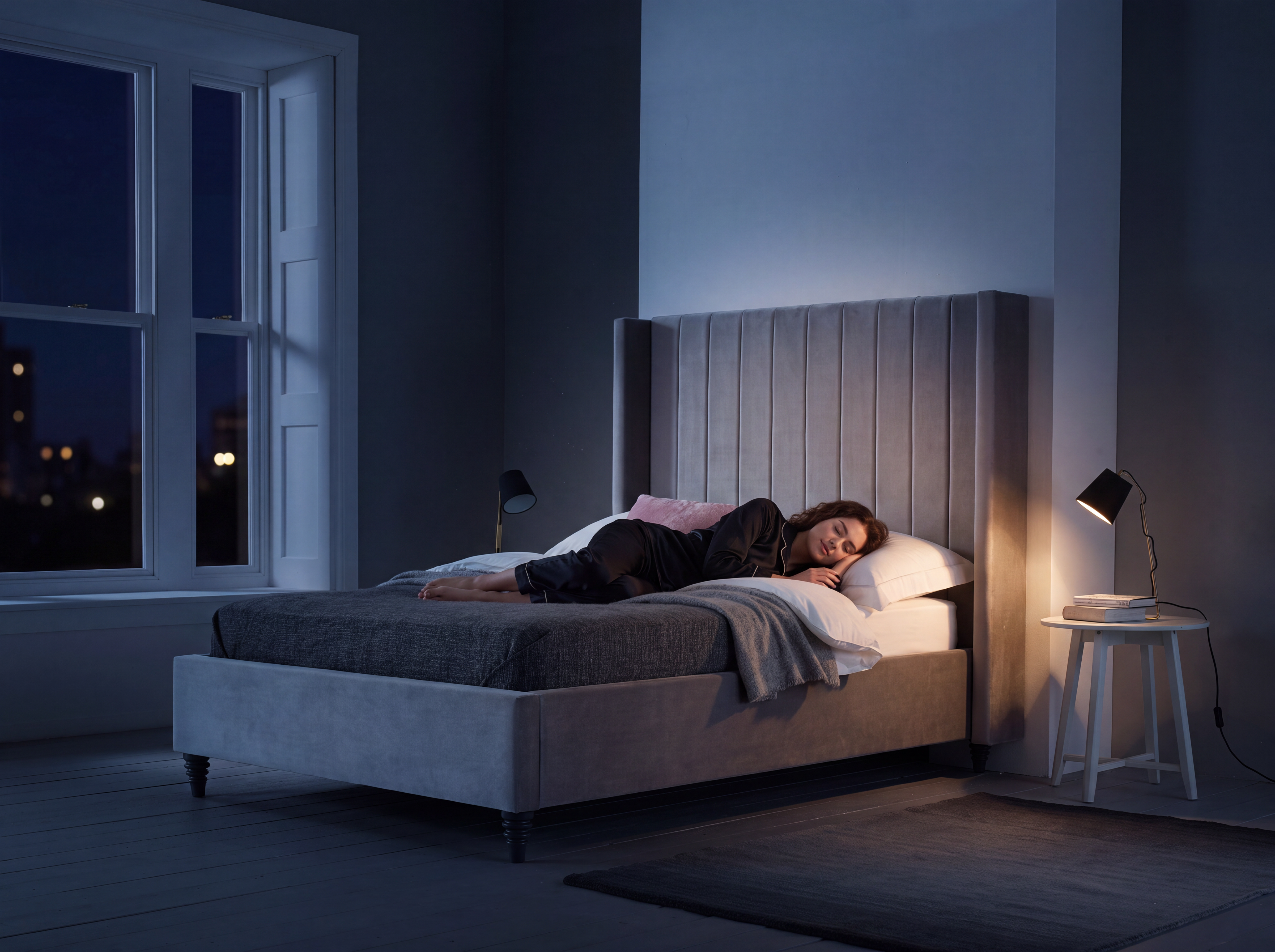
Improve your sleep tonight with practical advice on bedroom temperature, lighting, routines and choosing a supportive handmade mattress by Hyder Living.
A better night’s sleep is rarely achieved through one dramatic change. More often, it comes from correcting several smaller issues that affect how quickly you settle, how often you wake and how comfortable you feel throughout the night.
Your bedroom environment, evening routine and mattress all contribute to sleep quality. The following five changes are practical enough to apply immediately and can help create more favourable conditions for consistent rest.
1. Reduce Bright Light Before Bed
Light is one of the main signals used by the body to regulate its sleep-wake cycle. Bright evening lighting can encourage alertness when your body should be preparing for rest.
Research has found that exposure to normal room light before bedtime can suppress melatonin and delay its natural evening rise.
During the final hour before bed:
- Dim overhead lights.
- Use warm bedside lamps rather than bright ceiling lighting.
- Reduce screen brightness.
- Avoid working from a brightly lit bedroom.
- Use blackout curtains where outdoor lighting enters the room.
The aim is not to sit in complete darkness. It is to create a gradual transition between daytime activity and sleep.
A calmer lighting scheme also changes how the bedroom feels. Warm, indirect light reflects softly across upholstered furniture, particularly fabrics such as plush velvet, bouclé and woven cotton, making the room appear more comfortable and less clinical.
2. Keep the Bedroom Comfortable, Not Excessively Warm
Temperature affects the body’s ability to settle into sleep. A room that feels stuffy or overheated can cause restlessness, while an excessively cold bedroom may be equally disruptive.
Studies examining bedroom conditions have linked higher temperatures, poor ventilation, noise and increased carbon dioxide levels with poorer sleep outcomes. The ideal temperature varies between individuals, bedding choices and seasons, so comfort should take priority over following a rigid number.
Practical adjustments include:
- Opening the bedroom window before bed.
- Using breathable bedding.
- Switching to a lighter duvet during warmer months.
- Keeping radiators lower overnight.
- Allowing air to circulate around the mattress.
- Choosing a bed base that supports the mattress correctly.
Different mattress materials can also influence how warm the sleep surface feels. Memory foam provides close body contouring but may feel warmer to some sleepers. Pocket-sprung, cooling foam, gel, latex and hybrid constructions offer different balances of airflow, responsiveness and pressure relief.
H Living’s current mattress selection includes pocket-sprung, memory foam, hybrid and latex options, together with reflex, gel, cooling and other comfort-layer variations.
3. Create a Repeatable Wind-Down Routine
A consistent routine helps separate the active part of the day from the resting part.
The routine does not need to be complicated. It needs to be repeatable. Choose a small number of actions that can be followed on most evenings:
- Prepare clothes for the following morning.
- Lower the lighting.
- Put your phone away.
- Read for 15 to 20 minutes.
- Take a warm shower.
- Write down unfinished tasks.
- Go to bed at a broadly consistent time.
Caffeine timing also matters. A systematic review found that caffeine can reduce total sleep time and sleep efficiency when consumed too close to bedtime. Sensitivity varies, but late-afternoon and evening caffeine may be worth reducing when sleep is inconsistent.
Avoid turning the routine into another performance target. Its purpose is simply to reduce stimulation and repetition of unfinished thoughts.
4. Remove Sources of Physical and Visual Disruption
A bedroom can be quiet without feeling restful. Visible clutter, flashing chargers, work equipment and piles of clothing continue to compete for attention.
Clear the immediate area around the bed first. This usually creates the largest visual improvement with the least effort.
Store away:
- Seasonal bedding.
- Spare pillows.
- Suitcases.
- Shoes that are not used daily.
- Out-of-season clothing.
- Towels and guest linen.
A divan or ottoman bed can place this storage beneath the mattress rather than adding another wardrobe or chest of drawers. H Living’s current custom divan storage options include two-drawer and four-drawer bases, front-opening ottomans and side-opening ottomans.
The room will not physically become larger, but the visible floor area and circulation routes can become considerably clearer.
5. Sleep on a Mattress That Supports Your Body Properly
An attractive bedroom cannot compensate for a mattress that has lost its support.
Older spring mattresses often use interconnected springs. When one area compresses, movement may travel across a larger section of the mattress. Ageing fillings can also become uneven, creating dips around the hips or shoulders.
Modern pocket-sprung mattresses work differently. Each spring is contained separately, allowing it to respond more independently to pressure. This can provide more targeted support and reduce movement spreading across the sleep surface.
Memory foam works by contouring around the body. It can reduce concentrated pressure around areas such as the shoulders and hips, although the final feel depends on foam depth, density, mattress construction and the base beneath it.
Research does not support the idea that the firmest mattress is automatically the healthiest. A major controlled trial found that medium-firm mattresses produced better outcomes than firm mattresses for participants with chronic non-specific lower-back pain.
A supportive handmade mattress should:
- Allow the shoulders and hips to settle appropriately.
- Prevent the waist or lower back from being left unsupported.
- Avoid excessive sinking.
- Respond consistently across the sleeping area.
- Suit the sleeper’s weight, position and comfort preference.
- Work correctly with the bed base.
Handmade construction does not simply mean that a product has been assembled manually. It allows the spring system, comfort layers, edge support and finish to be considered as one complete structure.
H Living manufactures made-to-order beds and mattresses in Yorkshire and offers different constructions rather than treating every sleeper as requiring the same surface.
Better Sleep Begins with the Complete Sleep Environment
Start with the changes that can be made tonight: dim the lights, ventilate the room, clear the space around the bed and follow a calmer routine.
Then assess the surface beneath you. Persistent pressure, visible dipping, excessive movement or regular morning discomfort may indicate that the mattress is no longer providing suitable support.
A well-designed bedroom prepares the mind for rest. A properly constructed mattress supports the body once sleep begins.
Share:
Why Your Mattress Makes All the Difference