
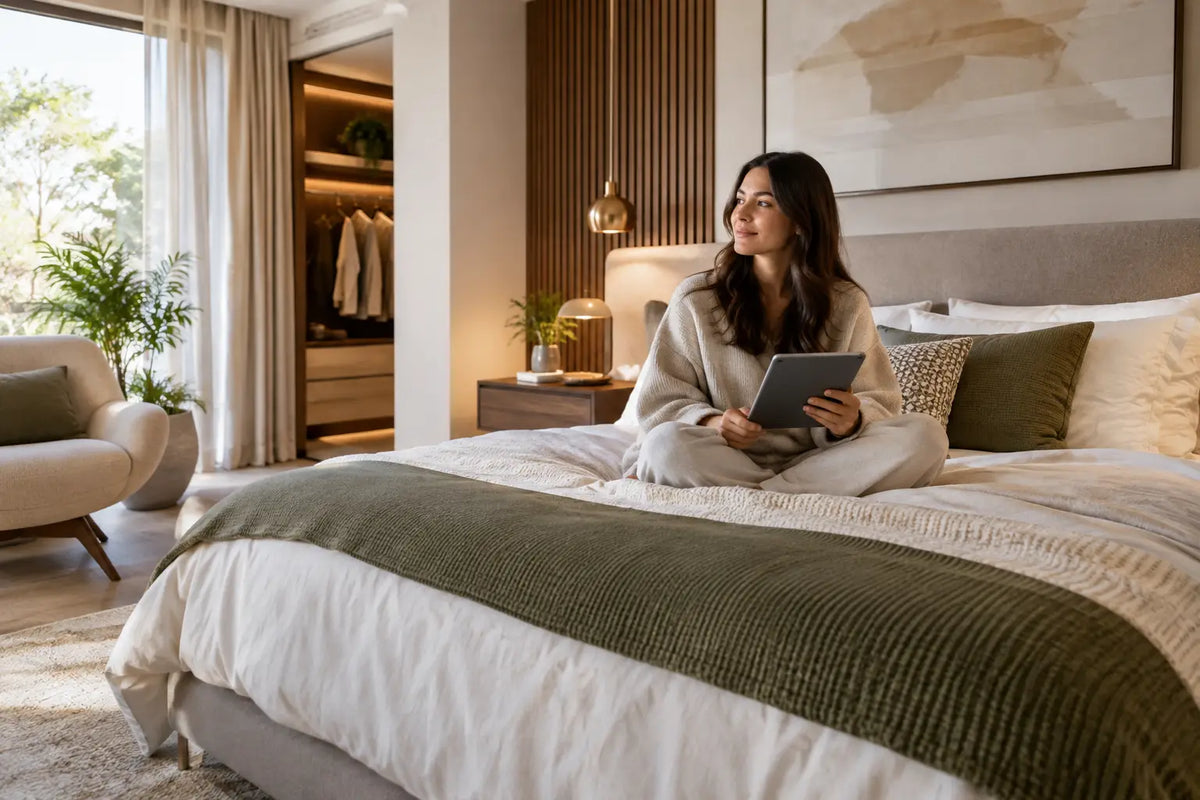
A bedroom is no longer simply the room in which a bed happens to sit. For discerning homeowners, it has become the most personal room in the house: a place for proper rest, quiet reading, unhurried mornings and a final moment of calm at night. The future of bedroom design reflects that shift, bringing together tailored furniture, sleep-led comfort and considered technology without sacrificing the warmth that makes a bedroom feel genuinely private.
The most compelling bedrooms will not look like showrooms or technology suites. They will feel composed, highly individual and effortless to use. Behind that ease, however, will be better planning: furniture made to fit the room, upholstery chosen for its texture as much as its tone, and a sleep system selected with the same care as a fine sofa or dining table.
The Future of Bedroom Design Begins With Personal Proportion
For years, the standard bed was treated as a fixed object with limited choices. That approach is becoming less appealing, particularly in period homes, new-build properties and city flats where proportions vary so widely. A king size bed may suit one room perfectly, while a super king or emperor bed can turn another into a true retreat. The key is not simply choosing the largest possible bed, but allowing enough circulation around it for the room to feel gracious rather than crowded.
Made-to-order design is therefore becoming central to luxury bedrooms. Headboard height, wing depth, base style, storage format and fabric choice all affect the finished atmosphere. A tall, channel-stitched headboard can give a room architectural presence, while a softly curved silhouette offers a gentler, more cocooning effect. Neither is inherently more luxurious. The right choice depends on ceiling height, existing joinery, bedside furniture and the feeling you want on entering the room.
Colour is becoming more nuanced too. Rather than relying on one statement shade, future-facing schemes use layers of related tones: warm ivory against oat, mushroom with aged bronze, or deep forest green softened by textured linen-look upholstery. These palettes are restful because they have depth. They also allow a bed to remain relevant as cushions, artwork and accessories change around it.
Headboards Will Do More Than Frame the Bed
The headboard is evolving into a defining interior feature. Upholstered wall panels, for example, can create the visual scale of a boutique hotel suite while adding softness and acoustic comfort. They are especially effective behind a wider bed, where a conventional headboard may feel too narrow or isolated.
Practical detail matters here. Consider where bedside lights, switches and charging points will sit before finalising panel widths. A beautifully upholstered wall is far more satisfying when the reading light falls correctly and the bedside tables remain easy to reach. In a smaller room, a full wall of panels may be excessive; a generous bed-width headboard with integrated visual height can provide a similarly considered result with less visual weight.
Storage Will Become More Discreet and More Valuable
The future bedroom has less tolerance for clutter. That does not mean every surface must be bare or that the room should feel austere. It means belongings need a proper home, particularly in properties where wardrobe space is under pressure.
Ottoman storage beds are likely to remain one of the most practical luxuries in modern bedroom design. The entire area beneath the mattress can accommodate spare bedding, seasonal duvets, luggage or less frequently used items, leaving wardrobes for the pieces needed day to day. A front-opening or side-opening mechanism should be chosen according to the room layout. If the foot of the bed faces a bench or a chest of drawers, side opening may make more sense. Where there is clear space at the end of the bed, an end-opening ottoman can be especially convenient.
This is a good example of where design and engineering must work together. A storage bed should lift smoothly, hold securely and remain straightforward to use with the mattress in place. Upholstery, handles and mechanism quality may seem like small specifications, yet they define the daily experience over many years.
Sleep Will Be Treated as Part of Interior Design
A beautiful bedroom cannot compensate for a mattress that leaves you restless or unsupported. Increasingly, people are approaching sleep as an essential part of how they live, work and recover. This is changing the way beds are specified.
The best mattress is not automatically the firmest, deepest or most expensive. Body weight, preferred sleep position, temperature and whether the bed is shared all matter. Pocket springs remain valued because they can respond independently to movement, making them a thoughtful option for couples. Natural fillings such as wool can help with breathability and temperature regulation, while carefully selected comfort layers add pressure relief without creating an overly soft, unstable feel.
There is also renewed interest in mattresses designed for a long service life. Dual-sided models that can be turned and rotated may appeal to buyers who value even wear and a more traditional approach to mattress care. Single-sided mattresses can be easier to manage, particularly in larger sizes, but should still be rotated as recommended. The better choice depends on how much hands-on maintenance feels realistic for your household.
A mattress protector is another quiet investment in longevity. It helps shield the mattress from spills, perspiration and everyday wear while preserving the clean, inviting feel expected of a premium sleep space. The future of luxury is not only about initial appearance. It is about how beautifully a room performs after years of use.
Technology Will Become Quieter
Bedrooms will certainly gain more technology, but the most successful examples will be almost invisible. Adjustable lighting, discreet charging, dimmable reading lamps and television beds can make the room more enjoyable without turning it into an extension of the living room.
A TV bed is ideal for those who enjoy a film or weekend lie-in, especially when the screen retracts fully from view. Yet it is not right for everyone. If your aim is to create a room devoted solely to rest, a television can be counterproductive. The more considered approach is to decide how you genuinely use the bedroom, then choose technology that supports those habits rather than dictating them.
Lighting deserves particular attention. Use a combination of soft ambient light, focused bedside light and gentle wardrobe or dressing-area illumination. Harsh overhead lighting can flatten even the most elegant scheme. Warm, layered lighting makes textured fabrics, timber finishes and panelled headboards feel richer at night, while helping the mind settle before sleep.
Craftsmanship Will Matter More Than Novelty
As interiors become more personalised, provenance is becoming part of the appeal. There is real reassurance in knowing how a bed is made, what sits beneath the upholstery and who can advise if a detail needs clarifying. A handmade upholstered bed is not merely an object to photograph well on delivery day. It is a central piece of furniture expected to support nightly use and remain a pleasure to live with.
For this reason, future choices will favour considered construction over short-lived trends. Look beyond the fabric swatch and ask about frame strength, slat support, mattress compatibility, storage mechanism, upholstery finish and delivery access. A grand headboard may need careful planning for stairs, landings and ceiling heights. An emperor bed creates a wonderful sense of indulgence, but only when the room can accommodate it without compromising movement or bedside proportions.
British manufacturing also gives buyers the opportunity to make more informed decisions before production begins. At Hyder Living, this approach allows a bed to be configured around the details that shape daily comfort, from fabric and colour through to storage and headboard design. Complimentary swatches are particularly useful because fabric changes character throughout the day. A shade that feels cool in a north-facing room may look entirely different in evening lamplight.
A Bedroom Should Feel Better With Time
The most enduring future trend is not a colour, a gadget or a particular headboard profile. It is the move away from disposable, one-size-fits-all furniture towards bedrooms that are designed around the people who use them. A well-chosen bed should earn its place every evening, offering physical support, visual calm and enough practical storage to keep the room feeling ordered.
Start with how you want to wake up, not just how you want the room to look in a photograph. When the bed, mattress, lighting and storage all answer that question well, the result is more than an attractive scheme. It becomes a private haven that restores you, night after night.
Share:
UK Bed Sizes for a Beautifully Balanced Bedroom