
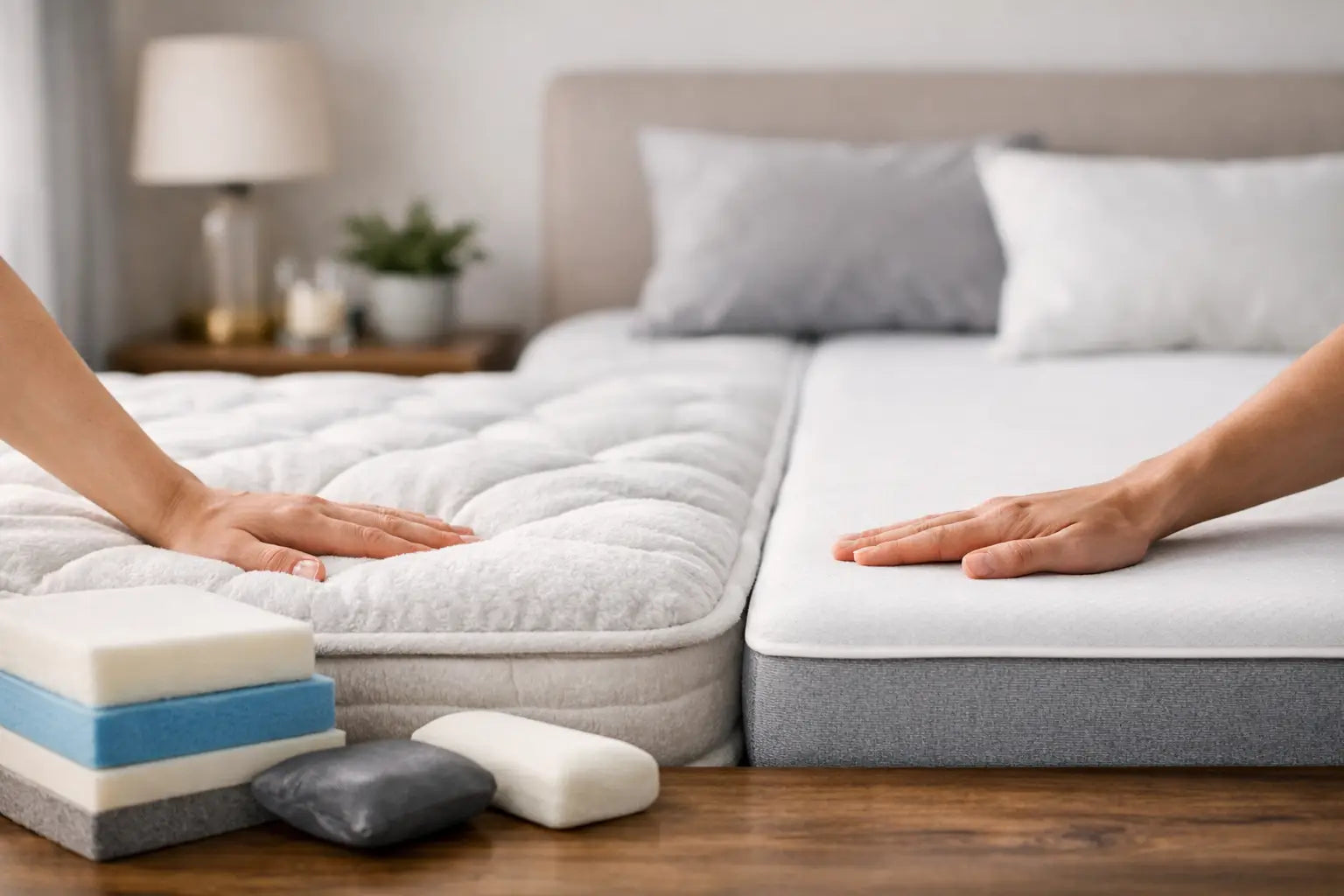
A beautifully dressed bed can transform a bedroom, but the mattress beneath the linen is what determines whether you wake restored or restless. Knowing how to choose mattress firmness starts with a simple principle: the right feel should keep your body comfortably aligned, not merely feel soft when you first lie down.
Firmness is personal. Your preferred sleeping position, body shape, existing aches and the way you share the bed all influence what will feel supportive night after night. The aim is not to find the firmest mattress available, but one that lets your shoulders, hips and lower back settle into a naturally supported position.
What mattress firmness actually means
Mattress firmness describes the immediate feel of a mattress when you lie on it. It is often expressed on a scale from soft to firm, although there is no single industry-wide measurement. One brand’s medium can feel closer to another brand’s medium-firm, particularly when fillings, springs and upholstery layers differ.
Support, meanwhile, is about how effectively a mattress holds your spine in alignment. A soft mattress can still be supportive if it has a well-made spring system and responsive comfort layers. Equally, a very firm mattress may feel uncomfortable and create pressure points if it does not allow enough give around the shoulders and hips.
This distinction matters when choosing a luxury mattress. Do not assume that firmer means better for your back, or that plush means less durable. Quality construction, including pocket springs, natural fillings, breathable fabrics and carefully layered upholstery, has as much influence on comfort as the firmness label.
How to choose mattress firmness for your sleeping position
Your usual sleeping position is one of the clearest guides because each position places pressure on different areas of the body. Think about where you wake up most often, rather than the position you are in when you first fall asleep.
Side sleepers usually need cushioning at the shoulders
Side sleeping creates pronounced pressure at the shoulder and hip. A soft to medium mattress often suits side sleepers because it lets these wider points settle slightly while supporting the waist and keeping the spine level.
If you wake with a numb arm, a sore shoulder or tenderness around the hips, your mattress may be too firm. That said, very soft options are not automatically the answer. A side sleeper with a larger build may need medium-firm support beneath the surface comfort, so the hips do not sink too deeply.
Back sleepers benefit from balanced support
Back sleepers generally fare well with a medium to medium-firm mattress. This level of firmness supports the natural curve of the lower back while allowing the shoulders and hips enough contact with the surface.
A mattress that is too soft can allow the pelvis to drop, which may leave the lower back feeling strained. One that is excessively firm may leave a gap at the lumbar area, creating a sense of tension rather than support. A responsive pocket-sprung mattress with generous upholstery often provides a particularly balanced feel.
Front sleepers need to avoid excessive sinkage
Front sleeping places the greatest demand on the lower back, particularly if the hips dip lower than the chest. Medium-firm to firm mattresses are often the most suitable choice, as they help maintain a flatter, more stable posture.
Comfort still counts. A hard, unyielding surface can put pressure on the ribs and pelvis, so look for a mattress that has supportive depth with a lightly cushioned top. Front sleepers may also find that a lower-profile pillow helps keep the neck in a more comfortable position.
Combination sleepers need responsive materials
If you change position through the night, choose a medium or medium-firm mattress with responsive springs or fillings. You need enough pressure relief for side sleeping, but also sufficient stability when you turn onto your back or front.
Pocket springs are especially useful here. Each spring moves more independently, helping the mattress respond to your body rather than making you feel as though you are rolling into one fixed position.
Consider body weight and body shape
Body weight changes how far you settle into a mattress. Someone lighter may experience a medium mattress as firm because they do not compress the comfort layers as deeply. Someone heavier may find the same mattress too soft if they sink through the upper layers without enough support underneath.
As a broad starting point, lighter sleepers often enjoy soft to medium comfort, average-weight sleepers tend to suit medium or medium-firm, and heavier sleepers may prefer medium-firm to firm. These are guides rather than rules. A person with broad shoulders who sleeps on their side may need more cushioning than their weight alone suggests.
Pay attention to your body’s pressure points. A mattress should contour gently, not create a hammock effect. When you lie down, your spine should look broadly straight from the side if you sleep on your side, and preserve its natural curve when you sleep on your back.
Think about aches, pains and your existing mattress
A new mattress should not be chosen solely as a remedy for back pain, as discomfort can have many causes. However, the way you feel on waking can reveal whether your current mattress is working against you.
Morning stiffness that eases as you move may point to a mattress that has lost support. Tingling shoulders and hips can suggest that the surface is too firm. A feeling of being folded or dipped through the middle can mean that the mattress is too soft, worn, or no longer providing even support.
If you have a diagnosed back, joint or health condition, speak to a relevant healthcare professional alongside considering mattress comfort. A mattress can support better sleep, but it should not be presented as a medical treatment.
Choose a feel that works for both sleepers
Sharing a bed does not mean one person has to compromise entirely. When partners have different preferences, a medium-firm mattress is often a sensible middle ground, especially in a king size or super king size where each sleeper has more personal space.
Look for pocket springs to reduce motion transfer. Unlike a traditional connected spring unit, individually nested springs help limit the movement felt when your partner turns, gets up early or settles back into bed. This can be a small detail with a considerable effect on undisturbed sleep.
For very different comfort needs, consider a zip-and-link arrangement or compatible mattress options designed for separate sides of the bed. It can deliver individual comfort without losing the refined look and generous proportions of one considered sleep space.
Do not overlook fillings and temperature
Firmness is shaped by what sits above the springs. Wool is naturally breathable and can offer a gently resilient feel, helping with temperature regulation across the seasons. Cotton adds softness and airflow, while recycled polyester fillings can create a plush, cushioned surface. Memory foam tends to contour more closely, which some sleepers love for pressure relief, though others prefer the easier movement and fresher feel of natural upholstery.
Warm sleepers should pay particular attention to breathability. A mattress with ventilated sides, natural fibres and an air-circulating spring system may feel more comfortable than a dense foam-heavy option, even at a similar firmness level. Your bedroom temperature, duvet and mattress protector also play their part.
Test the mattress in a realistic way
If possible, lie on a mattress in your usual position for more than a few moments. Initial softness can be appealing in a showroom, but long-term comfort comes from alignment and pressure relief. Give your body time to settle and notice whether your shoulders relax, whether your hips feel supported and whether it is easy to change position.
When shopping online, read the construction details rather than relying only on labels such as ‘orthopaedic’ or ‘luxury’. Consider spring count and type, filling materials, mattress depth, whether it is turnable or single-sided, and the recommended care routine. A well-crafted dual-sided mattress can offer excellent longevity when turned and rotated as advised.
At Hyder Living, choosing a mattress can sit alongside the wider pleasure of designing your bedroom - from an upholstered bed frame and statement headboard to fabrics and storage that suit your room. The most opulent scheme still needs a sleep surface that feels right for you.
Give your body time to adjust
A new mattress can feel unfamiliar at first, particularly if you are replacing one that has softened over years of use. Allow a short adjustment period, while following any care guidance on airing, rotating or turning. This helps the fillings settle evenly and supports the mattress’s long-term performance.
Your ideal firmness should make bedtime feel inviting and morning feel easier. Choose the surface that supports your natural posture, suits the way you sleep and gives your bedroom the restorative comfort it is meant to provide.
Share:
How to Choose the Perfect Upholstery Fabric for Your Bedroom Aesthetic
Is a Made to Measure Upholstered Bed Worth It?