
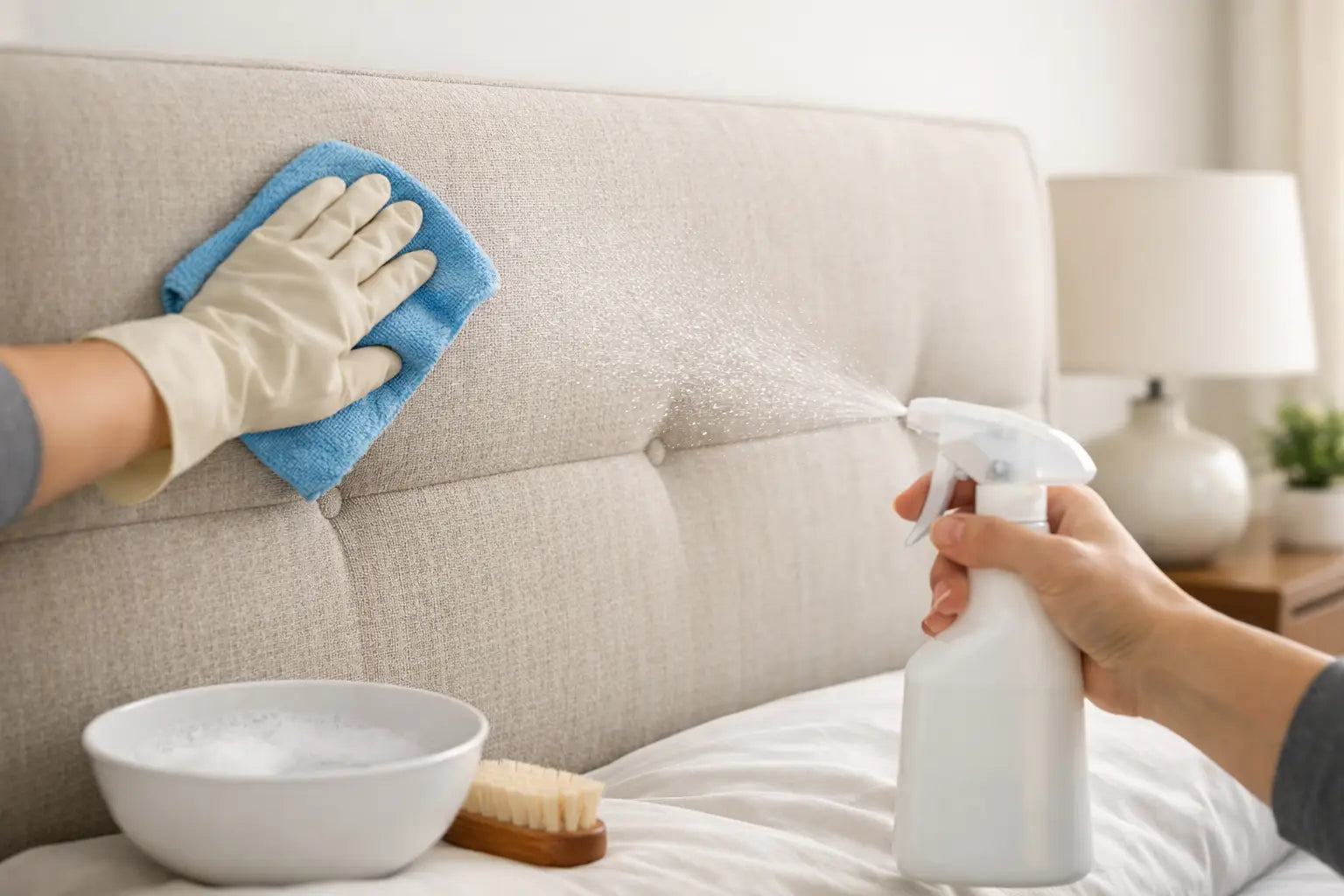
A beautifully upholstered headboard gives a bedroom its sense of comfort: the soft surface behind your pillows, the tailored silhouette that frames the bed, and the fabric that brings colour and texture into the room. Knowing how to clean upholstered headboard fabric properly helps preserve that considered finish without leaving water rings, flattening the pile or spreading a small mark into a larger one.
The gentlest approach is nearly always the best one. Upholstery is not designed to be soaked, and a headboard’s padding, timber frame and decorative details all need a little more care than a removable cushion cover. With regular light cleaning and a calm response to spills, it can remain a luxurious part of your bedroom for years.
Before cleaning an upholstered headboard, check the fabric
Start with the care label or the information supplied with your bed. Different fabrics react very differently to moisture and cleaning products. Velvet, boucle, linen-look weaves, chenille and wool-blend fabrics may all be used on upholstered beds, but they should not be treated as interchangeable.
If a cleaning code is provided, use it as your guide. W means water-based upholstery cleaner is usually suitable; S indicates a solvent-based upholstery cleaner; WS means either may be used; and X means vacuum only or professional cleaning. If no code is available, avoid assuming that a household stain remover is safe. A discreet patch test is essential.
Choose a hidden area, such as the lower back edge or behind the side of the bed, and test the mildest suitable product. Let it dry fully before checking for a change in colour, texture or pile direction. This small pause can prevent irreversible damage to a made-to-order headboard.
What you need for gentle, effective cleaning
For routine care, there is no need for a cupboard full of specialist products. A soft upholstery brush attachment, a clean white microfibre cloth and a soft-bristled clothes brush will handle most jobs. For a fresh spill, keep a dry white absorbent cloth or unprinted kitchen roll to hand.
Where your fabric permits water-based cleaning, use a very small amount of mild upholstery cleaner or a weak solution of clear washing-up liquid and lukewarm water. The cloth should be barely damp, never wet enough to drip. Distilled water can be helpful in hard-water areas, as it reduces the chance of mineral marks on paler fabrics.
Avoid coloured cloths, strongly fragranced sprays, bleach, disinfectant, carpet shampoo and aerosol foam unless the manufacturer explicitly approves them. These can leave residue, alter the fabric’s colour or make a soft fabric feel stiff once dry.
How to clean an upholstered headboard step by step
Remove dust before it settles into the weave
Vacuum the headboard every few weeks using the upholstery attachment on a low setting. Work from top to bottom with light, overlapping passes. Pay particular attention to buttoning, piping, winged edges and the narrow space where the mattress meets the headboard, as these areas collect dust and hair surprisingly quickly.
Do not press the nozzle hard against the fabric. The aim is to lift surface dust, not pull at fibres or snag decorative trims. If the headboard has a deep buttoned design, use a soft brush to loosen dust from the folds before vacuuming it away.
Deal with a fresh spill by blotting, not rubbing
A drink spill or a small splash of night cream does not have to become a permanent feature of the bedroom. Act promptly and blot from the outside of the mark towards the centre with a clean, dry white cloth. This contains the spill rather than pushing it further through the fabric.
Resist rubbing, even if the mark seems stubborn. Rubbing can distort the weave, damage velvet pile and create a visibly lighter patch. Once you have absorbed as much as possible, follow the recommended cleaning method for the fabric. If water-based cleaning is suitable, dab with a barely damp cloth, then blot again with a dry cloth.
Clean a localised mark with minimal moisture
For a small mark on a W or WS-coded fabric, apply the cleaning solution to the cloth rather than directly to the headboard. Dab gently, working a little beyond the edge of the stain so there is no obvious clean circle once it dries.
Use a second cloth dampened only with clean water to remove any remaining cleaner, then blot dry. Keep the treatment localised and use as little liquid as possible. Repeating a gentle process is safer than saturating the fabric in an attempt to solve the stain in one go.
Allow the headboard to dry naturally
Leave the room well ventilated and keep pillows away from the damp area until it is completely dry. Open a window if conditions allow, or use gentle airflow from a fan positioned across the room. Do not use a hairdryer, place a heater close to the fabric or remake the bed immediately.
Heat can set some stains, shrink natural fibres and affect adhesives used within upholstered furniture. As the fabric dries, lightly brush the area in one direction if the material has a pile, such as velvet or velour. This helps restore an even, elegant appearance.
Caring for velvet, boucle and textured fabrics
Velvet needs particular restraint. Vacuum only with a soft brush attachment and always move in the direction of the pile. A faint flattened area may respond to gentle brushing once dry, but avoid aggressive brushing or steam at close range. Steam can leave water marks and may affect the fabric backing.
Boucle and chunky woven fabrics invite a softer approach too. Their loops can catch on rings, jewellery and abrasive brushes, so blot stains carefully and do not scrub. For both styles, professional upholstery cleaning is often the wisest option for oil, ink, make-up or an old, widespread stain.
Linen-look and flat woven fabrics can show tide marks if they are over-wetted. Treat a small area at a time, blend the edge with a barely damp cloth where appropriate, and allow the whole treated section to dry evenly. Pale fabrics are especially worth treating with patience.
When household cleaning is not the right answer
Some marks call for professional help from the outset. Ink, nail varnish, strong dye transfer from dark clothing, blood, pet accidents and greasy food can all need specialist methods. Trying several products in quick succession may fix the stain into the fibres or strip colour from the upholstery.
The same applies if a headboard smells damp, has extensive staining, or has been affected by mould. Upholstered furniture needs to be properly assessed in these circumstances, particularly where moisture may have reached the inner padding or frame.
For a valuable fabric headboard, a professional cleaner experienced in fine upholstery is an investment in its longevity. Tell them the fabric type, the age of the stain and every product already used. Accurate information gives them the best chance of an even result.
Keep your headboard fresher between cleans
Regular bedroom care reduces the need for stain treatment. Keep pillows slightly forward rather than continually pressing them against the fabric, especially if you apply hair products or skincare before bed. A gentle monthly vacuum and a light brush of the upholstery will prevent dust settling into textured finishes.
It also helps to keep the bed a little clear of direct sunlight where possible. Prolonged strong sun can fade fabric unevenly, particularly on headboards positioned beneath a window. If you enjoy breakfast or a cup of tea in bed, a tray is a small addition that protects a much-loved focal point.
An upholstered headboard is made to make everyday rest feel more indulgent, not to demand anxious maintenance. Treat marks early, use less moisture than you think you need, and call on a specialist when the fabric deserves more than a home remedy. That measured care keeps the place where you unwind looking as inviting as the day it was chosen.
Share:
Durable Mattresses for Hotels That Guests Trust
Do Mattress Protectors Work? The Honest Answer