
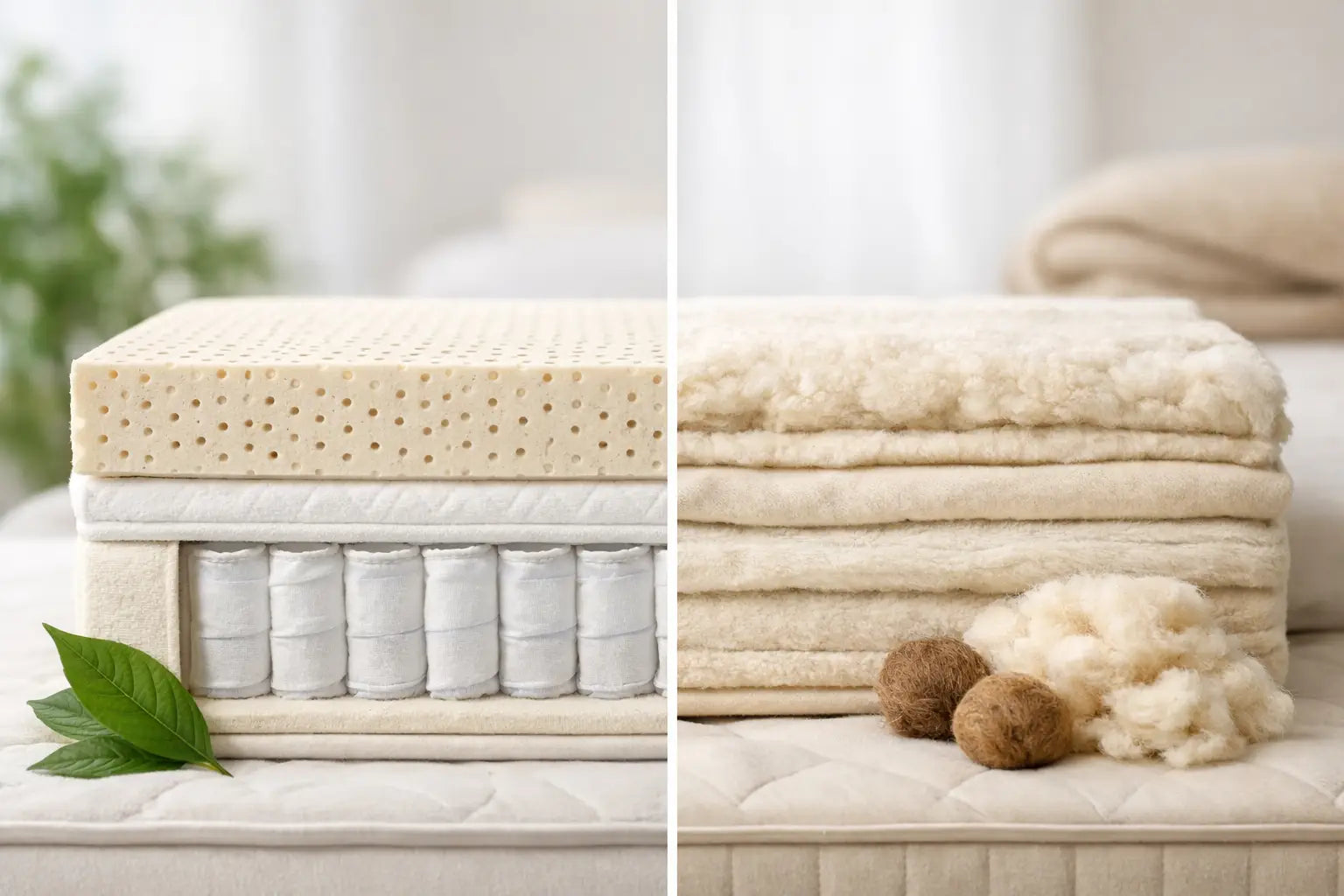
A beautifully dressed bed can transform a room, but the materials beneath the sheets determine how restored you feel the following morning. When considering latex versus wool, the better choice is not simply the one with the grander reputation. It is the one that suits your preferred sleep temperature, body shape, support needs and the character of comfort you enjoy most.
Both materials are associated with a more considered, premium sleep experience. Yet they create it in very different ways. Latex offers buoyant, responsive support, while wool brings a naturally breathable, softly cushioned feel. Understanding that distinction can make choosing a mattress, topper or layered sleep system feel far more straightforward.
Latex versus wool: the essential difference
Latex is a resilient material, usually produced from the sap of rubber trees or made synthetically. In a mattress it forms a supportive comfort layer that gently contours around the body, then quickly returns to shape when you turn. The sensation is often described as buoyant rather than deeply enveloping. You sleep on latex more than in it.
Wool is a natural fibre used in upholstery layers, mattress fillings and toppers. It creates a softer, more traditional kind of luxury: lightly springy, breathable and wonderfully tactile. It can be blended with other natural fibres, such as cotton, silk or cashmere, to build a sumptuous mattress with a refined surface feel.
The choice is therefore less about one material being universally superior. Latex tends to appeal to sleepers who want consistent pressure relief with a responsive finish. Wool suits those who value natural climate regulation and a gently cushioned, crafted feel.
How latex feels through the night
A good latex layer adapts to your shoulders, hips and lower back without the slower response associated with some memory foams. This can be particularly appealing if you change position during the night. The material moves with you, so there is less of the feeling of being held in one place.
For side sleepers, latex can offer welcome pressure relief around the shoulder and hip, provided the mattress has the right overall tension. Back sleepers often appreciate its even support and subtle lift through the lumbar area. For couples, latex can also reduce some motion transfer, although the result depends on the spring unit and the rest of the mattress construction.
Latex is commonly paired with pocket springs. This combination creates a poised, supportive sleep surface: the springs respond individually to body weight, while the latex brings cushioning and resilience at the top. It is a thoughtful choice for anyone who wants modern performance without sacrificing a substantial, luxurious mattress feel.
The practical strengths of latex
Latex is naturally resilient, which can help a mattress maintain its comfort profile over time when it is well made and properly cared for. Its open-cell structure may also allow air to circulate more freely than denser foam materials.
However, not all latex is alike. Natural latex, synthetic latex and blended versions can differ in feel, durability and price. The depth of the latex layer matters too. A slim layer may simply soften the initial feel, while a deeper layer will have a more noticeable influence on pressure relief and responsiveness. It is always worth looking beyond a headline material claim to understand the full build of the mattress.
Why wool has such enduring appeal
Wool has long been prized in fine mattresses for good reason. Each fibre has a natural crimp, creating tiny pockets of air that help produce a comfortable, cushioned surface. It is not the same as foam contouring. Rather than moulding closely to the body, wool creates a softly supportive layer with a reassuringly natural feel.
Its greatest advantage is temperature regulation. Wool can absorb and release moisture vapour, helping the sleep surface feel drier and more balanced across changing seasons. In a centrally heated bedroom, or during a warm British summer, that quality can make a genuine difference to comfort.
For sleepers who find foam-like materials a little too warm or too uniform, wool can feel refreshingly breathable. It has a sense of texture and craftsmanship that suits a more traditional, hand-finished mattress, particularly one with pocket springs, tufting and natural upholstery layers.
Wool does settle, and that is normal
Natural wool upholstery will compress and settle with use, particularly in the areas that take the most weight. This is a characteristic of the fibre, not automatically a sign of poor quality. Regular turning or rotating, according to the mattress care guidance, helps promote more even wear and extends the pleasure of the mattress.
Some people adore this softer, lived-in feel. Others prefer the more consistent surface offered by latex. If you appreciate a mattress that develops a little character over time, wool is a compelling choice. If you prefer a surface that springs back to an almost identical feel each morning, latex may be more to your taste.
Temperature, pressure relief and support
The most useful way to compare latex and wool is to consider what each material does best within a complete mattress.
Latex is generally the stronger choice for responsive pressure relief. It spreads body weight efficiently and offers supportive contouring without the slow sink of memory foam. This may suit sleepers who wake with pressure around their shoulders or hips, and those who want easier movement in bed.
Wool excels at breathability and moisture management. It helps create a dry, comfortable microclimate around the body, which is particularly valuable for sleepers who run warm or share a bed with a partner who does. Wool also lends a gentler first impression to a firmer spring tension, adding comfort without masking the supportive structure beneath.
Neither material alone determines whether a mattress is soft, medium or firm. That comes from the whole specification: spring count and spring type, upholstery depth, layer arrangement and, in some cases, the level of tufting. A firm pocket-sprung mattress with wool can still feel supportive and stable. A latex-topped model can feel medium or firm depending on the spring base and latex density.
Which suits your sleeping style?
If you prefer a mattress that feels clean-lined, responsive and reliably supportive, latex is likely to feel more immediately familiar. It is an excellent option for combination sleepers, active sleepers and those who want pressure relief without a pronounced sinking sensation.
If your idea of luxury is a naturally breathable, softly cushioned bed with a more traditional character, wool deserves serious consideration. It can be especially appealing in a beautifully layered bedroom scheme, where the comfort of the mattress is as considered as the upholstery, headboard fabric and finishing touches around it.
For side sleepers, either can work well. Look for enough comfort depth to protect the shoulder and hip, while ensuring the core remains supportive. For back sleepers, a medium or firmer tension with latex or wool upholstery may offer the composed alignment many people prefer. Front sleepers usually need to be more cautious with overly deep, soft comfort layers, whatever the material, as the hips should not sink too far below the torso.
Allergies and everyday care
Latex and wool both deserve a little careful consideration if allergies are part of the decision. People with a diagnosed latex allergy should seek professional medical advice and avoid assuming every latex mattress will be suitable. Mattress latex is usually enclosed beneath covers and additional layers, but personal sensitivity varies.
Wool is often appreciated for its ability to manage moisture, creating a less hospitable environment for dust mites than damp, poorly ventilated bedding. Still, no mattress material is a substitute for good bedroom hygiene. A quality mattress protector, regular airing and washing bed linen at an appropriate temperature all contribute to a fresher sleep environment.
A protector is especially sensible for natural-fibre mattresses. It helps safeguard the upholstery from spills and body oils while allowing you to preserve the comfort and finish of the mattress beneath. Choose one designed to be breathable, rather than adding a dense layer that undermines the benefits of wool or latex.
Can you have both latex and wool?
Absolutely. A thoughtfully layered mattress can combine latex for responsive support with wool for breathability and surface comfort. This is often an elegant compromise for couples with different preferences, or for anyone who wants the lively support of latex without losing the natural temperature balance and indulgent finish that wool brings.
The key is proportion. A mattress with a generous latex comfort layer and modest wool quilting will feel quite different from one with deep wool upholstery above a thinner latex layer. When comparing models, ask how the layers are arranged, whether the mattress is single or double sided, and what care it requires. Those construction details reveal far more than a simple material label.
A mattress is one of the most personal pieces in a bedroom, and it should feel every bit as considered as a made-to-order bed frame or upholstered headboard. Whether you are drawn to latex, wool or a beautifully balanced combination of the two, choose the sleep surface that leaves you feeling cool, supported and quietly indulged night after night.
Share:
Luxury Beds and Mattresses Worth Choosing
Upholstered Bed Versus Wooden Frame: Which Suits You?