
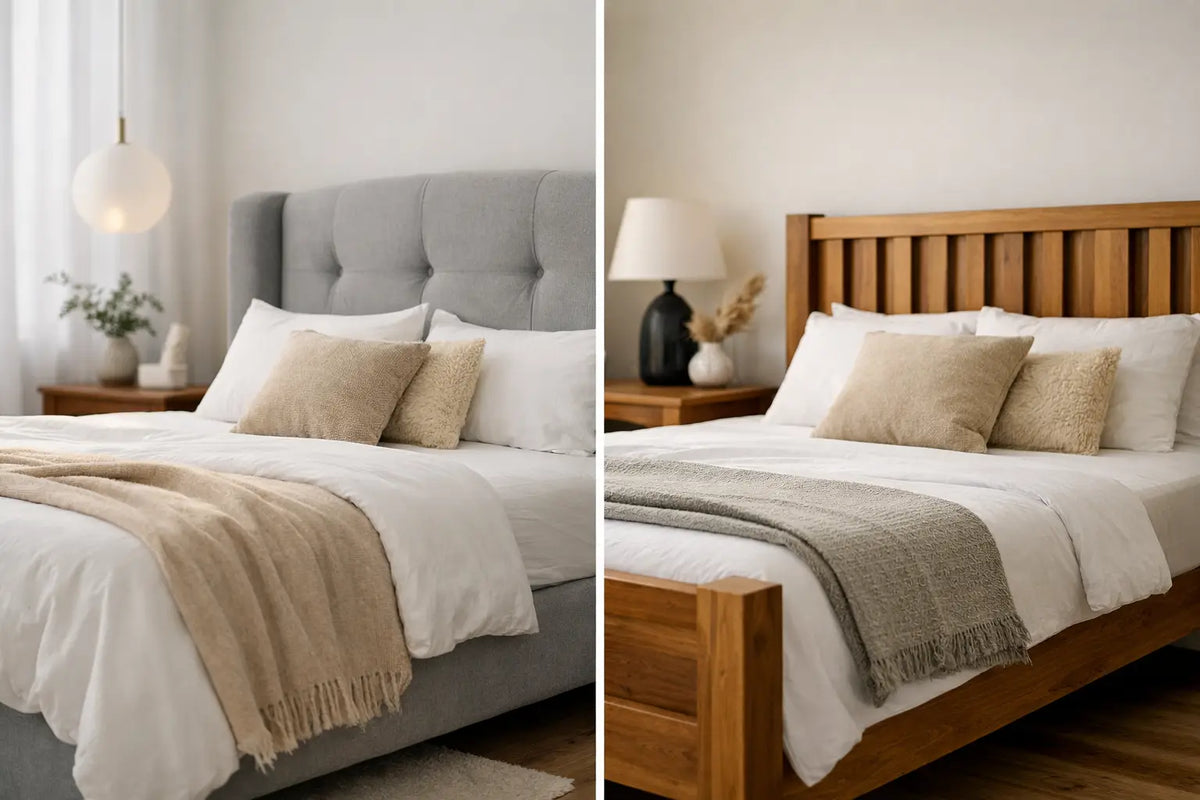
A bed is rarely just a bed. It sets the visual tone of the room, affects how comfortably you settle in with a book, and can determine whether spare linens have an elegant home or occupy valuable cupboard space. When considering an upholstered bed versus wooden frame, the right choice comes down to the atmosphere you want to create, the way you use your bedroom, and the details you are prepared to care for over time.
For some, the clean grain and defined silhouette of timber feel timeless. For others, a generous upholstered headboard, selected in a fabric and colour that complements the wider scheme, creates the sense of a private hotel suite. Both can be exceptional pieces of furniture. The distinction lies in their character and practical advantages.
Upholstered bed versus wooden frame: the essential difference
An upholstered bed frame is built around a supportive internal structure, then finished with padded foam, fibre or other comfort layers and a chosen fabric. The headboard may be gently curved, deeply buttoned, vertically fluted or tailored with a clean, contemporary border. This construction brings softness, scale and a more decorative presence to the bedroom.
A wooden frame typically showcases its material rather than concealing it. Oak, ash, walnut-effect finishes, painted timber and other woods offer visible grain, crisp edges and a more architectural feel. Some designs include a wooden headboard, while others use a lower profile that leaves the wall above the bed open for artwork or panelling.
Neither is universally superior. A wooden frame can be beautifully enduring in a pared-back, traditional or mid-century interior. An upholstered design can make a room feel more considered and cocooning, particularly when a tall headboard is used to anchor the space. The choice is ultimately about the experience you want each evening and morning.
Comfort is about more than the mattress
Your mattress carries the greatest responsibility for sleep support, pressure relief and temperature regulation. Yet the bed frame influences comfort in quieter, everyday ways.
An upholstered headboard provides a forgiving surface for sitting up. If you enjoy a leisurely Sunday morning with coffee and the papers, read in bed, or use the bedroom as a calm place to catch up on messages, padding makes a meaningful difference. It also offers a softer backdrop in family homes, where sharp corners can feel less desirable.
Wooden headboards are firm by nature. Cushions can make them comfortable for occasional sitting, but they rarely offer the same supported, inviting feel as a padded upholstered design. This need not be a drawback if you prefer a minimal bedroom or tend to use your bed solely for sleep. A simple wooden frame can allow the mattress, bedding and surrounding joinery to take centre stage.
Do consider height as well as material. A generously proportioned upholstered headboard can make a standard ceiling feel more impressive, while a low wooden frame can preserve a sense of openness in a compact room. In either case, check that the headboard height works with bedside tables, wall lights and any artwork planned above it.
Style, texture and the luxury of personal choice
Wood brings natural variation that no manufactured finish can fully replicate. It pairs particularly well with linen bedding, warm neutral walls, antique pieces and rooms where you want a more grounded, organic quality. Darker wood can look wonderfully sophisticated against pale plaster or stone, while lighter oak tends to lend itself to relaxed, contemporary interiors.
Upholstery gives you a broader decorative palette. A soft boucle can create a tactile, modern retreat; velvet brings depth and evening glamour; woven linen-look fabrics feel tailored and understated. Choosing the fabric also enables the bed to relate precisely to curtains, carpets, painted woodwork and occasional seating. This is especially valuable in a principal bedroom where the bed is the largest item in view.
Colour deserves the same consideration. A neutral upholstered bed offers flexibility as a room evolves, but neutral does not have to mean plain. Oatmeal, pebble, mushroom, warm grey and soft stone each behave differently in changing British light. A richer navy, forest green or chocolate can give a spacious room a confident focal point, particularly when balanced with crisp white bedding and considered bedside lighting.
For a truly tailored result, fabric swatches are worth seeing in the bedroom itself. Place them beside the flooring and existing paintwork in daylight and lamplight. A fabric that looks restrained online can reveal a warmer undertone at home, while a shade that appears bold on a screen may feel beautifully balanced once surrounded by the rest of the room.
Storage can change the decision
If storage is limited, an upholstered bed often has a practical advantage. Ottoman storage beds use the area beneath the mattress as a substantial concealed compartment, typically accessed with assisted lifting mechanisms. It is an elegant solution for seasonal duvets, spare pillows, luggage, guest bedding and items that do not need daily access.
A divan base can also offer useful drawer storage, although you should allow enough clearance for drawers to open comfortably beside bedside cabinets or walls. In a narrow bedroom, an ottoman opening can make better use of the footprint because it lifts upwards rather than extending into the room.
Wooden frames are more commonly open beneath the mattress platform. This can create an airy appearance and provides easy access for under-bed baskets, but it is not always the most polished option. Visible storage requires disciplined organisation, and loose boxes can undermine an otherwise elegant bedroom. Some wooden designs do incorporate drawers, so assess the specific construction rather than assuming all timber frames are storage-free.
Maintenance: what each material asks of you
An upholstered bed needs light, regular attention rather than complicated care. Vacuum the fabric gently with an upholstery attachment to remove dust, particularly around buttons, seams and winged edges. Treat spills promptly according to the fabric guidance, blotting rather than rubbing, and avoid harsh household cleaners that may mark or alter the pile.
For households with young children, pets that climb onto the bed, or a preference for very low-maintenance furniture, a tightly woven, durable upholstery fabric in a mid-tone can be more forgiving than pale velvet. That said, a well-chosen upholstered bed is entirely practical for daily life. The key is selecting a fabric that suits how the room is actually used, not only how it will look on installation day.
Wooden frames are straightforward to dust and tend to show less concern around everyday marks. However, timber is not maintenance-free. Direct sunlight can alter its tone over time, changes in humidity can affect natural wood, and knocks may leave dents or scratches. A quality wooden frame ages with character, but that lived-in patina is either a virtue or a concern depending on your preference.
Both styles benefit from periodic checks of fittings and slats. A bed should feel secure and quiet, with the mattress supported evenly. This matters just as much as the look of the frame, particularly when investing in a higher-quality mattress designed to deliver years of restorative sleep.
Consider proportion before committing
The most beautiful bed can feel wrong if its proportions do not respect the room. Measure the full external dimensions, not merely the mattress size. Upholstered wings, thick side rails and statement headboards can add significant width and height. Allow enough circulation space to move comfortably around the bed and open wardrobes, drawers and doors without compromise.
In a compact bedroom, a wooden frame with slender rails may preserve valuable visual and physical space. Alternatively, an upholstered ottoman bed can be the more intelligent choice if it lets you remove a bulky chest of drawers or surplus storage furniture elsewhere in the room.
For larger bedrooms, an upholstered bed often has the scale to hold its own. A king or super king with a tall, beautifully finished headboard can establish the luxurious focal point that a generous room needs. Pair it with a mattress that suits your preferred comfort level, rather than letting appearance dictate the sleep system beneath.
Which bed is right for your home?
Choose a wooden frame when you are drawn to honest materials, crisp lines and a lighter visual footprint. It is a particularly natural fit for rooms with strong architectural details, beautiful flooring or a restrained interior scheme where texture comes from timber, wool and linen.
Choose an upholstered bed when you want the bedroom to feel softer, more enveloping and more individual. It is ideal for anyone who values comfortable sitting support, wants a statement headboard, or needs integrated storage without sacrificing a polished finish. Made-to-order upholstery also gives you the freedom to create a piece that belongs to your home rather than one that simply fits within it.
The most satisfying choice is often the one that solves two needs at once: a bed that makes the room look complete and makes bedtime feel like a genuine retreat. Take time with the fabric, dimensions, storage format and mattress pairing, and your bedroom can become a haven that feels considered long after the first night.
Share:
Latex Versus Wool: Which Mattress Feel Suits You?
Boutique Hotel Bed Upgrade Example for Better Stays