
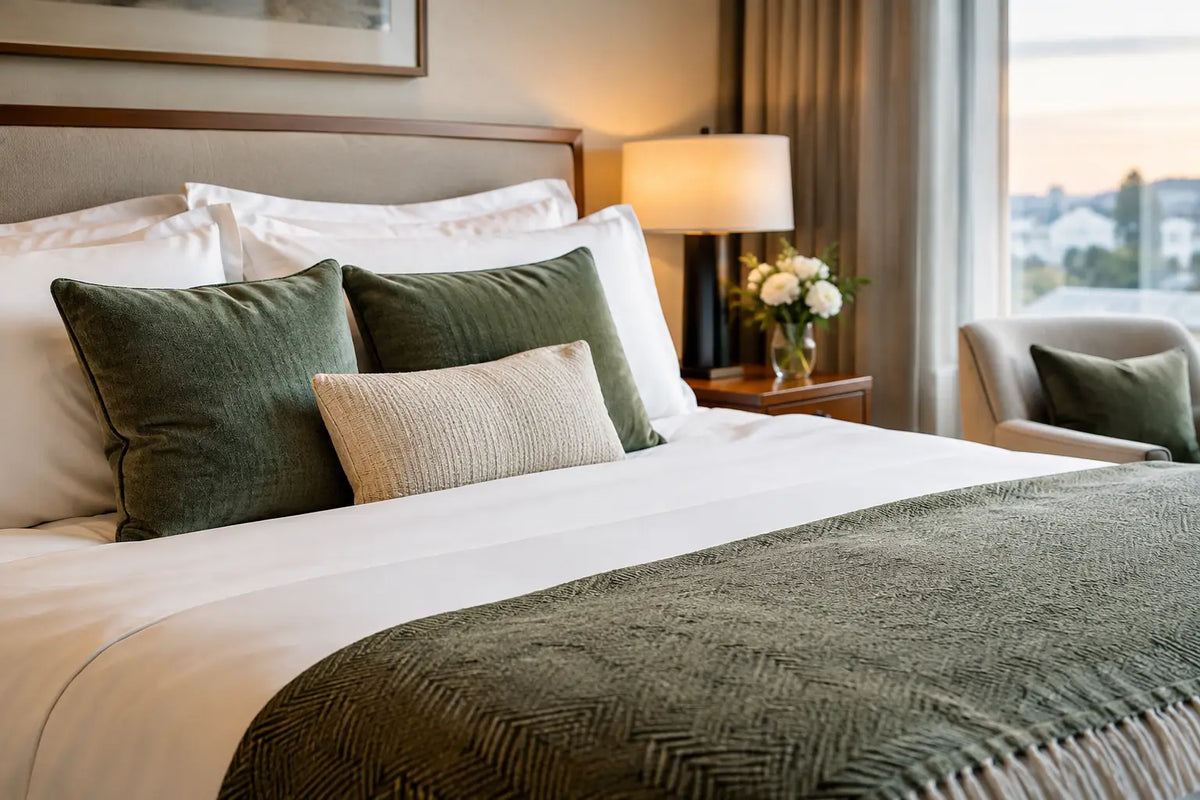
A guest may not remember the exact shade of velvet on arrival, yet they will remember whether the room made them exhale. Boutique hotel bedrooms earn their reputation in that first, quiet moment: the bed looks inviting, the lighting is flattering, the room feels considered rather than overfilled, and every surface suggests rest.
For independent hotels, serviced accommodation and design-led retreats, the bedroom is not simply a place to sleep. It is the most personal part of the stay and often the detail that determines whether a guest books again, leaves a glowing review, or recommends the property to someone else. Creating that feeling calls for more than an attractive headboard. It requires proportion, durability and a sincere understanding of how people sleep.
What Makes Boutique Hotel Bedrooms Feel Different?
The distinction is rarely about excess. A truly luxurious room has a clear point of view, with a bed that anchors the scheme and materials that feel rewarding at close range. Boutique design gives guests the sense that someone has made decisions specifically for this room, rather than furnishing it from a standard specification.
That usually starts with a generous, beautifully upholstered bed. A deep-buttoned, channel-stitched or softly panelled headboard introduces texture and height, while the fabric provides an opportunity to carry the hotel’s character into each room. A warm neutral boucle may suit a calm coastal property; a tailored velvet in forest green, navy or oxblood can lend a city townhouse more drama. The right choice depends on the light, the architecture and the level of maintenance the property can support.
Comfort must carry equal weight. Guests may forgive a modestly sized bathroom more readily than a disappointing mattress. The aim is a sleep surface that feels welcoming immediately but supports the body throughout the night, accommodating a wide range of preferences without feeling overly firm or overly soft.
Begin With the Bed, Not the Accessories
It is tempting to begin a bedroom scheme with lamps, art or cushions. In hospitality, that order is usually backwards. The bed is both the visual centrepiece and the item used most intensively, so its dimensions, construction and placement should guide every decision around it.
A king size bed is widely expected in premium rooms, but an emperor bed can create a memorable sense of indulgence where the footprint permits. That said, a larger bed is not automatically the better choice. Guests need enough room to walk around it comfortably, open luggage and move between the bed and the bathroom without turning sideways. In compact rooms, a well-proportioned king with a wall-mounted headboard can feel more generous than an emperor bed that overwhelms the space.
The headboard deserves particular care. It frames the bed in photographs, cushions the guest who wants to read, and helps establish acoustic softness in rooms with hard floors or high ceilings. Full-width upholstered panels can make a narrow room look deliberately designed, while a statement headboard with refined wings delivers a more traditional five-star mood. Consider whether it will be cleaned regularly, whether bedside sockets sit comfortably alongside it, and whether it gives housekeeping clear access around the bed.
For properties that require a tailored specification, made-to-order upholstery offers a valuable advantage. The fabric, height, bed size, storage arrangement and headboard profile can be chosen around the room rather than forcing the room to accommodate an off-the-shelf design. Hyder Living’s contract approach is particularly suited to this level of considered customisation, combining British-made beds with practical hospitality requirements.
Specify a Mattress for Real Guest Comfort
Hotel mattresses have an unusually difficult task. They must suit different body weights, sleeping positions and expectations, while withstanding frequent use and retaining their shape. The best choice is often a medium or medium-firm tension with responsive pocket springs, which can offer support without the unyielding feel some guests associate with firm mattresses.
Pocket springs respond individually, helping to reduce movement transfer for couples and offering more targeted support than a basic open-coil construction. Layers of wool, cotton or quality fibres can improve breathability and create that gently cushioned finish guests associate with a well-run hotel. Vents, handles and a well-made border may seem like small details, but they make a mattress easier for staff to care for and can extend its usable life.
There is no single perfect specification. A mattress designed for a country retreat with cooler rooms might favour natural wool for temperature regulation, while a warm urban property may prioritise highly breathable fillings and a cooler sleep surface. A dual-sided mattress can offer excellent value where regular turning is realistic for the housekeeping team. If that maintenance routine cannot be maintained, a high-quality single-sided option may be the more sensible operational decision.
A mattress protector is a modest addition with a significant role. It protects the investment from spills and everyday moisture while allowing the mattress to remain fresh and presentable for longer. Choose one that is breathable and discreet, rather than a crinkly layer that undermines the feeling of luxury.
Build Quiet Luxury Through Layers
The most successful rooms feel composed, not staged. Bedding should have weight, softness and visual depth, but it should also be straightforward for staff to launder, replace and remake to a consistent standard. Crisp cotton bedding is a dependable foundation, softened with a textured throw, a tailored bed runner or a pair of accent cushions rather than a crowded display of decorative pillows.
Think in layers of touch. The upholstered headboard offers warmth; the mattress topper adds a little cloud-like comfort; the duvet provides insulation; and the bedding gives the guest a clean, inviting surface. A topper can be particularly useful when refreshing an existing mattress programme, although it should enhance a supportive mattress rather than disguise one that has reached the end of its serviceable life.
Lighting deserves the same restraint. Bedside lamps or reading lights should be easy to operate from the pillow and soft enough for evening use. Include a warm ambient source, focused reading light and practical illumination around wardrobes or a dressing area. Cool, harsh light can flatten even the most beautiful scheme, whereas layered warm lighting makes a room feel calm after a late arrival.
Make Storage Work Without Announcing It
Guests arrive with cases, coats, chargers, shopping bags and, increasingly, the expectation of a room that remains uncluttered throughout their stay. Good storage is therefore a luxury, not a convenience to be added later.
Ottoman storage beds can be exceptionally useful in suites, aparthotels and longer-stay rooms, providing a discreet place for spare linens or seasonal bedding. They are less appropriate where daily access would disrupt housekeeping routines, or where the bed base needs to be moved frequently. In those settings, a divan base with integrated drawers may be more practical, provided drawer positions do not conflict with bedside furniture or room circulation.
The goal is for the guest to see calm rather than storage solutions. Concealed functionality protects the visual clarity of the room, keeps replacement items close to hand and reduces pressure on already limited cupboards.
Design for Housekeeping as Carefully as for Guests
A room can look exquisite on opening day and become frustrating within a month if every choice complicates cleaning, maintenance or linen changes. Boutique hospitality is sustained by the teams behind the scenes, so operational detail is part of the luxury proposition.
Select upholstery with a suitable durability rating and a finish that can tolerate regular care. Consider darker or softly patterned fabrics on bed bases that are likely to encounter luggage marks, while reserving paler, more delicate tones for headboards positioned away from daily contact. Ensure there is sufficient clearance for vacuuming and that beds are stable, quiet and easy to access from both sides.
It is also wise to standardise the underlying bed and mattress specification across comparable room categories, even when colours or headboard treatments vary. This simplifies ordering, replacement and staff training while preserving the individual character guests expect from a boutique property.
The Finishing Touch Is a Feeling of Care
The finest boutique hotel bedrooms do not demand attention through ornament alone. They create confidence: a supportive mattress, a generous bed, a fabric that feels considered beneath the fingertips, and enough space for the guest to settle in without thinking about what is missing.
When every decision serves both comfort and the realities of guest use, the room becomes more than photogenic. It becomes the kind of place guests are reluctant to leave in the morning - and quietly hope to return to.
Share:
What Upholstered Bed Buyer Reviews Reveal