
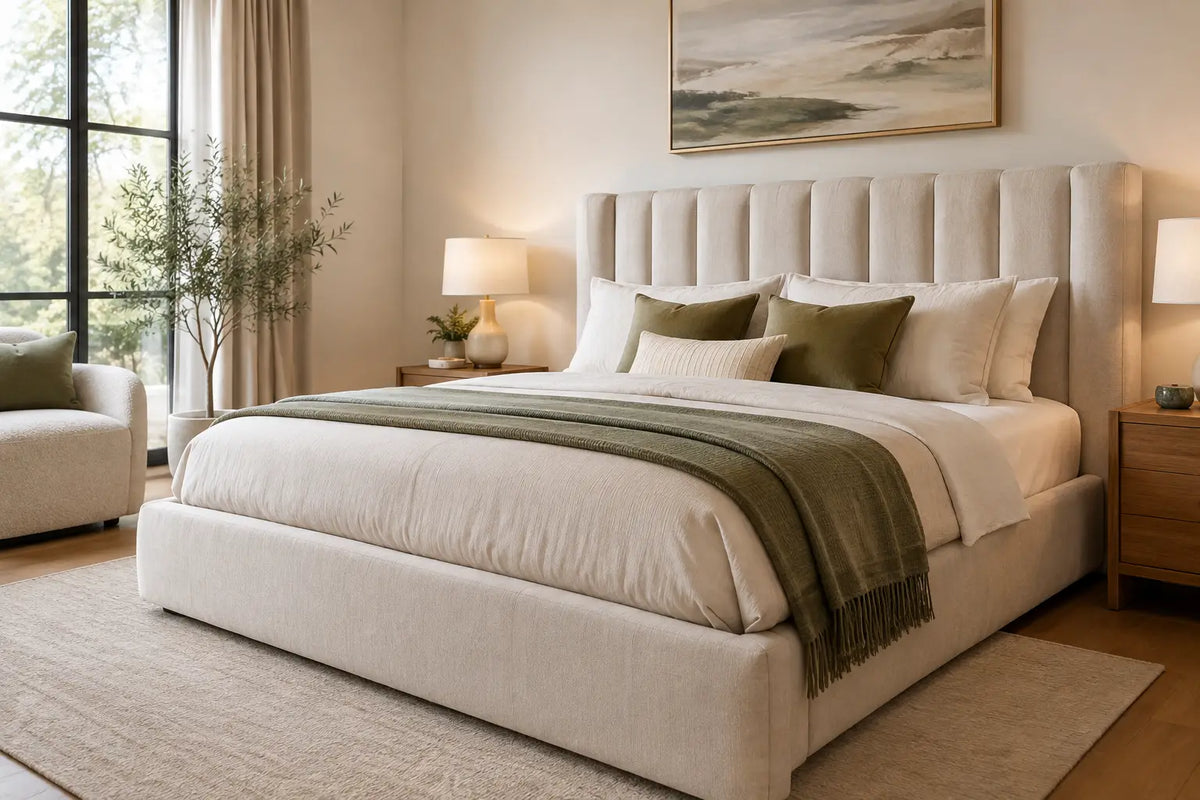
A bed can occupy more visual space than any other piece in the room, yet it is often chosen last. Designer beds reverse that approach. They establish the bedroom’s proportion, mood and comfort from the outset, bringing together considered upholstery, a beautifully resolved headboard and the practical details that make nightly life feel easier.
For a home with a carefully assembled interior, the right bed should not feel like a standard size dressed in a fashionable fabric. It should feel considered in every direction: the height of the headboard against the ceiling line, the depth of the frame within the room, the softness of the upholstery, and the mattress support beneath it. That is where a made-to-order approach earns its place.
What separates designer beds from ordinary bed frames?
The difference is not simply a deeper buttoned headboard or a more dramatic silhouette. A genuinely well-designed bed considers how it looks, how it functions and how it will live in your home over years rather than seasons.
A strong visual design begins with proportion. In a generous principal bedroom, a super king or emperor bed with a tall, panelled headboard can create a composed, hotel-inspired focal point. In a more compact room, an elegant low-foot-end frame or a neatly scaled winged headboard can offer presence without making the space feel crowded. There is no single correct style. The most successful choice depends on room dimensions, ceiling height, window positions and the balance of furniture around the bed.
Then there is tactility. Upholstered beds introduce warmth that timber or metal frames cannot always provide. A soft velvet may bring depth and evening glamour; linen-look fabric can feel lighter and more relaxed; boucle offers texture with a contemporary edge. The right choice should work with the room’s natural light and how the space is used. A pale fabric can make a darker bedroom feel more open, while a rich neutral, such as stone, taupe or charcoal, can lend calm and permanence.
Craftsmanship matters just as much as appearance. A thoughtfully made upholstered frame should have a stable structure, carefully aligned seams, supportive padding and upholstery applied with a clean, consistent finish. These elements are not always dramatic at first glance, but they define how refined the bed feels every day.
Choosing designer beds around your room, not a showroom
A bed may look spectacular in a large display setting but feel overwhelming at home if its dimensions have not been assessed properly. Before choosing a style, measure more than the mattress area. Account for the full width of the headboard, the projection of any wings, the depth of the footboard and the clearance needed to walk comfortably around the bed.
Aim for enough space to open drawers, access wardrobes and make the bed without continually brushing against furniture. In smaller bedrooms, ottoman storage can be especially valuable because it uses the footprint you already have. Rather than adding another chest or under-bed boxes, the entire mattress platform lifts to reveal a generous concealed storage area.
This is also where your habits matter. Ottoman storage is excellent for seasonal bedding, spare duvets, luggage and items that do not need daily access. If you prefer to reach for things frequently, bedside tables or a drawer unit may remain more convenient. A well-planned bedroom rarely relies on one solution alone.
For households where storage is a priority, consider the opening direction early. End-opening ottomans suit many room layouts, while side-opening designs can be more practical where the foot of the bed sits close to a wall or furniture. It is a small decision that can make a substantial difference to daily use.
Let the headboard set the tone
The headboard is often the defining feature of a designer bed. It frames the sleep space and gives the room its architectural rhythm. Tall vertical panels draw the eye upward and work particularly well in rooms with higher ceilings. Wide channel detailing has a softer, more modern character, while deep buttoning brings a traditional sense of opulence.
Wall-panel headboards offer a particularly tailored finish. Extending the upholstered surface beyond the width of the bed can make a room feel more generous and intentional, especially when the panels sit behind floating bedside tables. The effect is luxurious, but it should be balanced with the room’s scale. In a smaller setting, narrower panels or a simpler silhouette may achieve the same sense of polish with less visual weight.
Comfort deserves attention here, too. If evenings are often spent reading, watching television or enjoying a quiet cup of tea in bed, choose a generously padded headboard with enough height above the pillows to provide proper support. A headboard should be as pleasing to lean against as it is to look at.
Fabric, colour and finish: the details that make it yours
The appeal of a bespoke bed lies in the ability to create something that belongs naturally in your home. Fabric swatches are invaluable for this reason. View them in morning and evening light, place them beside your wall colour and flooring, and compare them with curtains, rugs and existing upholstery. A fabric that appears warm beige under showroom lighting can reveal cooler undertones in a north-facing room.
For a bedroom intended as a serene retreat, restrained shades tend to have lasting appeal. Soft greys, warm creams, mushroom tones and muted blues offer flexibility when you change bed linen or accessories. More expressive colours can be equally successful when they are chosen with confidence. A deep forest green, midnight blue or burnt ochre upholstered bed can anchor an otherwise quiet scheme and turn the room into a genuinely personal space.
Practicality need not compromise luxury. Families, pet owners and anyone who enjoys breakfast in bed may prefer a durable, forgiving weave over a delicate pile fabric. Conversely, in a formal guest suite or a principal bedroom with lower day-to-day wear, sumptuous velvet can be a wonderful choice. There is a trade-off between visual drama and maintenance, and the best fabric is the one that suits how you actually live.
Do not overlook the mattress beneath the design
Even the most beautiful frame cannot deliver restorative sleep without a mattress suited to your body and preferences. Consider the bed as a complete sleep system rather than two unrelated purchases.
Pocket springs are popular because each spring responds more independently, helping to reduce movement transfer between partners. The appropriate tension is personal: a firmer feel may suit those who prefer more resistance, while a medium tension can offer a balanced compromise for many couples. Body weight, sleep position and personal comfort all influence the right choice, so no label can replace lying on a mattress and assessing how it supports you.
Natural fillings such as wool can help with temperature regulation, while breathable cotton covers and well-ventilated construction support a fresher sleep surface. Mattress toppers can add a final layer of sumptuousness or refine the feel of an existing mattress, but they cannot correct a mattress that no longer provides adequate support.
Choose the correct mattress depth for your bed frame as well. A very deep mattress can change the visual balance of a low profile bed or reduce the apparent height of a headboard. It can also affect how easily fitted sheets sit. Small technical details such as these are often what distinguish a bedroom that looks good from one that feels expertly resolved.
A considered purchase deserves considered service
A designer bed is not an impulse purchase, particularly when it is being made in your selected fabric, size and configuration. The process should feel reassuring from the first swatch to delivery day. Clear dimensions, knowledgeable guidance on storage mechanisms and candid advice on mattress comfort are part of the luxury, not extras.
British-made, configurable pieces also offer the advantage of designing for the realities of your home rather than adapting your home to an off-the-shelf product. At Hyder Living, this means the opportunity to shape a bed around your preferred upholstery, headboard style, sleeping arrangement and storage needs, with the thoughtful attention expected of a five-star experience.
Give yourself time with the decision. Stand back from the fabric, test the scale with masking tape on the floor if needed, and think about the room on an ordinary Tuesday morning as much as on its most polished day. The right bed will bring a sense of order to the bedroom, invite you to slow down at night, and make waking up in your own home feel quietly exceptional.
Share:
Can Upholstered Beds Suit Allergies at Home?
Luxury Sleep Sanctuary Design for Better Rest