
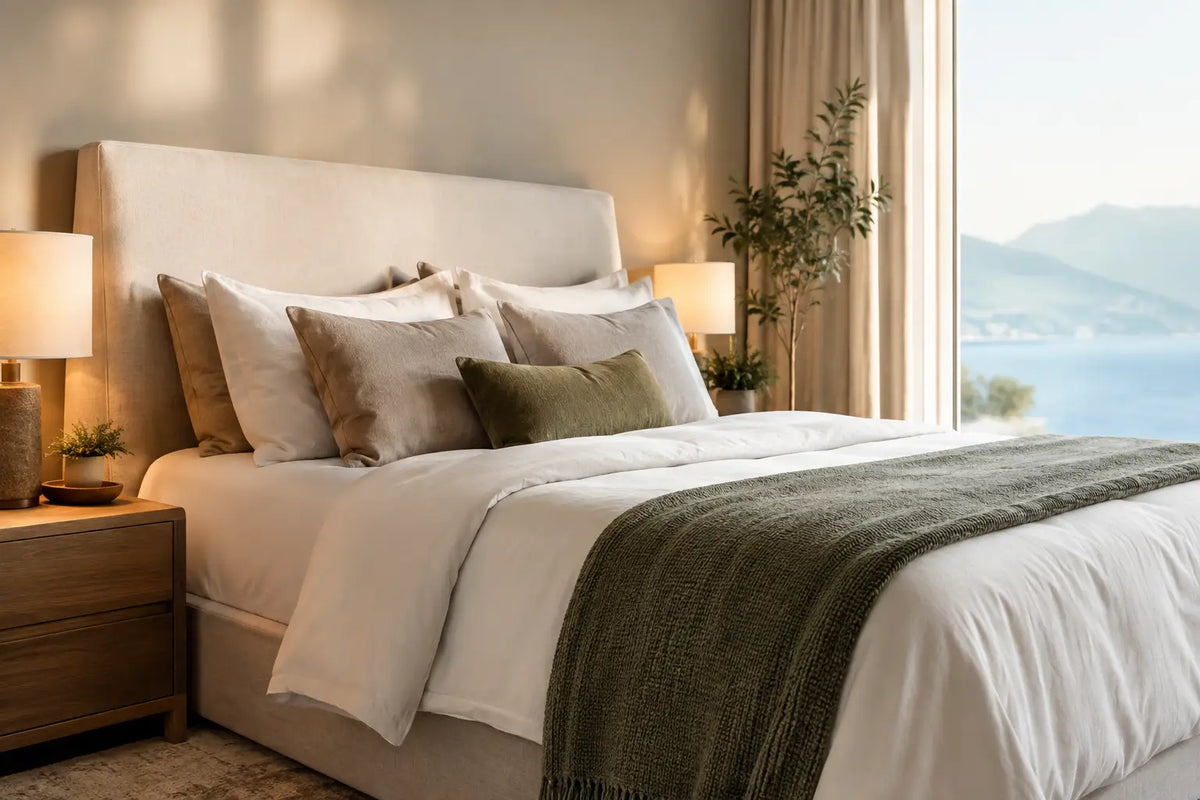
A beautiful bedroom can still fall short if it does not support genuine rest. Luxury sleep sanctuary design begins with a more personal question: what would make it easier for you to switch off, feel cocooned and wake refreshed? The answer is rarely one statement piece. It is the thoughtful relationship between the bed, mattress, light, texture, temperature and order within the room.
For some homes, that means a quietly tailored upholstered bed in a soft neutral fabric. For others, it is a dramatic wall-panel headboard, a generous super-king sleep surface and every charging cable, spare throw and suitcase tucked out of sight. True luxury is not excess for its own sake. It is comfort that feels effortless, night after night.
Start with the bed, not the decoration
The bed is both the visual anchor and the working heart of a sleep sanctuary. Before choosing bedside lamps or artwork, consider proportion. A bed that is too small can feel insubstantial in a large principal bedroom, while an emperor bed in a compact room may compromise circulation and make the space feel crowded.
Allow enough room to walk comfortably around both sides and at the foot of the bed. This is particularly valuable where partners keep different schedules, or where the bedroom is intended to have the composed ease of a five-star suite. A king-size or super-king bed often gives a more luxurious sense of scale, but only when the surrounding room can accommodate it gracefully.
An upholstered frame brings softness to the room before any accessories are added. Deep buttoning, fluting and clean-lined channel detailing each create a different mood. A tall winged headboard can lend traditional grandeur, while broad vertical panels feel architectural and contemporary. The most successful choice is one that relates to the ceiling height, window placement and existing furnishings rather than simply following a passing trend.
Made-to-order furniture offers a distinct advantage here. Selecting the dimensions, headboard height, fabric and storage format allows the bed to belong to the room, rather than asking the room to accommodate a standard design. At Hyder Living, this level of configuration is considered part of the service: an opulent result should still work beautifully for everyday life.
Build luxury sleep sanctuary design around support
A striking bed deserves an equally considered mattress. Appearance may set the atmosphere, but mattress comfort determines whether the sanctuary earns its name.
Pocket springs remain an excellent choice for many sleepers because each spring can respond more independently to movement. This can be especially appealing for couples, as one person turning in the night is less likely to disturb the other. The ideal spring count is not a guarantee of comfort by itself, however. Tension, upholstery layers and the sleeper's body weight all matter.
Natural fillings such as wool can help with temperature regulation and create a more breathable sleeping environment. Wool is valued for its ability to help manage moisture across the seasons, while cotton covers offer a familiar, fresh feel. Recycled polyester layers can provide resilient comfort and are often used within carefully constructed mattress upholstery. There is no single best filling for every household. Those who sleep warm may prioritise breathability, while those who prefer a plusher feel may favour deeper comfort layers.
Consider whether a mattress should be dual-sided or no-turn. A dual-sided model may benefit from regular turning and rotating, helping distribute wear over time. A no-turn mattress is convenient and may still need rotating from head to foot. The correct care routine is a small but meaningful part of protecting a premium sleep investment.
A mattress topper can add a final layer of cushioning, but it should refine a supportive mattress rather than rescue one that no longer suits your needs. Likewise, a quality protector helps preserve the mattress beneath without making the bed feel stiff or overly warm. Choose breathable materials wherever possible.
Create a headboard that changes the whole room
The headboard is often the first feature seen from the doorway, and it has an outsized influence on the room's character. It also makes bedtime more comfortable for readers, late-night film watchers and anyone who enjoys a quiet morning with tea and the papers.
For a calm, enveloping scheme, consider an upholstered headboard that extends wider than the bed. Wall-panel headboards can create a tailored, hotel-inspired backdrop while bringing visual width to the room. Their effect is particularly persuasive in rooms with high ceilings or a large blank wall behind the bed.
Fabric selection deserves time. Bouclé brings tactile depth and a contemporary softness, though its textured surface may be less practical in a household with young children or pets. Velvet offers richness and depth of colour, especially under low evening light, but will show pile movement. Woven linens and linen-look fabrics feel relaxed and refined, often working well with natural timber, stone and muted painted walls.
Requesting fabric swatches before committing is not a minor detail. View them in the bedroom during morning daylight, afternoon shade and lamplight. A warm grey can become cool beside north-facing light; an ivory may reveal a yellow undertone near cream paint. This quieter stage of decision-making prevents expensive compromises later.
Make the room quieter, darker and more deliberate
A sanctuary should not ask you to ignore visual clutter. It should remove it. Ottoman storage beds are especially valuable where wardrobes are limited, allowing seasonal bedding, luggage or spare pillows to be stored neatly beneath the mattress. The right storage choice depends on access around the bed and what you intend to keep inside. Lift-up ottoman storage makes excellent use of the full base, while drawer storage can be practical where the room layout permits drawers to open freely.
Keep surfaces purposeful. A bedside table may hold a book, a carafe of water and a lamp, but it need not become a holding area for paperwork, chargers and laundry. Consider concealed cable management and give everyday items a proper place. Order is not about making a bedroom look untouched. It is about making rest feel uncomplicated.
Light deserves equal attention. Layered lighting is more comfortable than one central ceiling fitting. Soft bedside lamps provide intimacy and practicality, while a dimmable ceiling light helps when dressing or changing linens. Avoid exposed cool-white bulbs in a bedroom intended for winding down. Warmer light creates a gentler transition towards sleep and flatters upholstery, timber and textured walls.
Blackout curtains or lined blinds can be transformative, particularly in urban homes or rooms facing early sunrise. They need not make the scheme heavy. Full-length curtains in a tactile fabric can make the room feel taller and more finished, while a discreet blackout lining handles the practical task.
Choose a palette you can live with at night
The most luxurious bedroom palettes are often restrained, but they are not necessarily pale. Deep olive, ink blue, mushroom, tobacco, aubergine and warm taupe can all feel restful when balanced with layered neutrals. The key is to avoid competing focal points. If the headboard is richly coloured, let the bedding and walls provide a quieter frame.
Bedding is where comfort becomes visible. Start with breathable sheets, then add a duvet suited to your preferred warmth and finish with a bedspread or throw that brings weight and texture. Two or three well-chosen cushions are usually enough. An over-styled bed can look impressive in a photograph but become tiresome when it takes ten minutes to dismantle each evening.
Texture creates the sense of generosity that colour alone cannot achieve. Combine smooth cotton, a lightly quilted coverlet, a wool throw and one tactile cushion rather than using every available finish at once. This approach feels polished without appearing staged.
Design for your particular rhythm
A luxury bedroom should reflect the way you actually use it. If you read in bed, prioritise a supportive headboard and adjustable bedside lighting. If you travel frequently, generous hidden storage may matter more than extra furniture. If one partner sleeps warmer than the other, separate duvets or carefully chosen bedding layers may be a more intelligent solution than simply lowering the heating.
Families may need durable fabrics and easily maintained mattress protection. In a guest room, a versatile medium-tension mattress and thoughtful bedside essentials can make visitors feel genuinely cared for. For hospitality settings, the priorities broaden to include longevity, guest comfort, room layout and the ability to maintain a consistently premium presentation.
The finest sleep sanctuary is not defined by a prescribed look. It is the room that feels quietly prepared for you: the mattress supports you, the headboard invites you to settle in, the lighting softens the day and nothing unnecessary asks for your attention. When every choice serves that feeling, bedtime becomes one of the most considered moments in the home.
Share:
Designer Beds That Make Bedrooms Feel Bespoke
British Furniture Craftsmanship for Better Bedrooms