
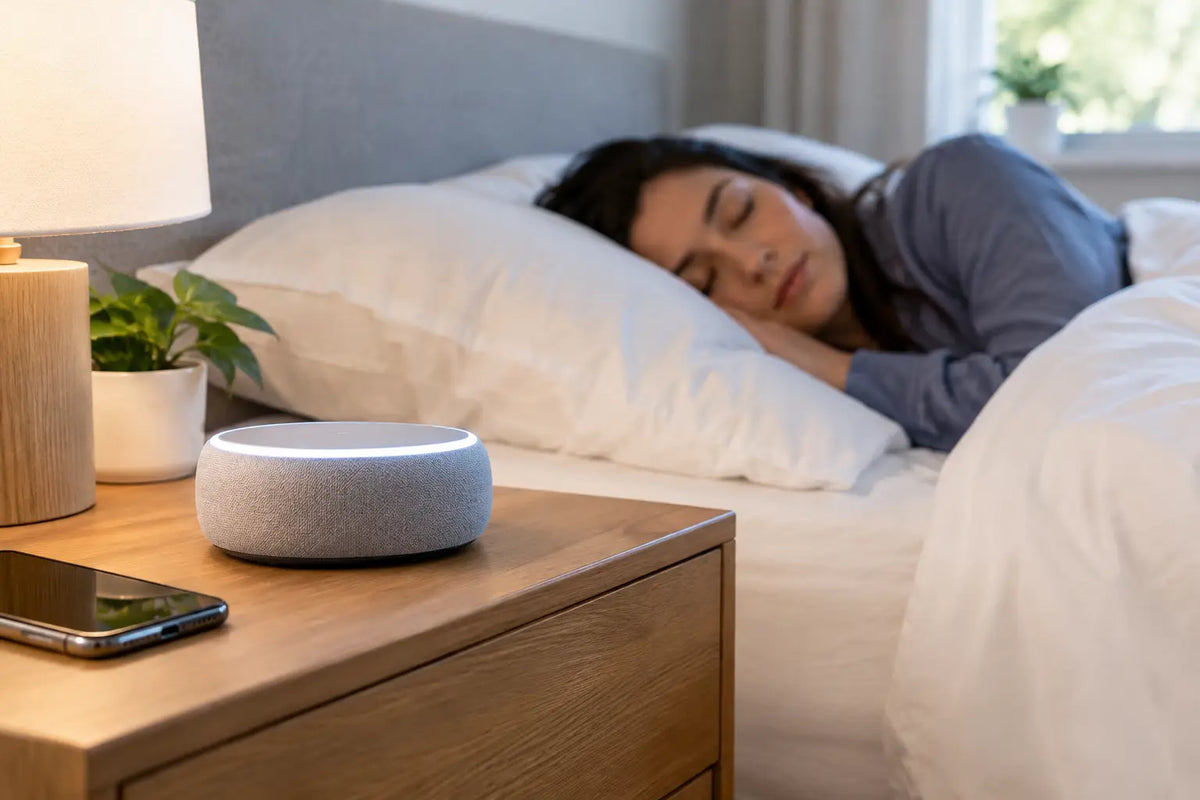
A sleep score of 84 can feel reassuring. A graph showing frequent wake-ups can feel rather less so. Yet sleep technology is most valuable when it helps you make a better decision about comfort, routine or environment - not when it turns a private sanctuary into another source of performance pressure.
For a beautifully considered bedroom, technology should sit quietly in the background. The foundations remain wonderfully tactile: a properly supportive mattress, a bed frame with reassuring strength, breathable bedding and a room designed for stillness. The right intelligent features can refine that experience, particularly for people whose sleep is affected by warmth, noise, irregular routines or a partner with different needs. But no app can compensate for a mattress that no longer supports your body, or a bedroom that simply does not invite you to unwind.
What Sleep Technology Can Genuinely Improve
The most useful sleep technology tends to solve a particular friction. Perhaps you wake too warm at 3am, struggle to establish a reliable bedtime, or want a clearer picture of whether a new mattress is helping. Its role is to provide gentle support and useful information, rather than to make every night feel like a test.
Wearables and bedside trackers usually estimate sleep stages, movement, heart rate and overnight interruptions. Their figures are not a clinical diagnosis, and they can vary between devices. Still, patterns over several weeks may be illuminating. If your data consistently suggests restless nights, for example, consider the practical context: room temperature, alcohol, late meals, stress, bedding weight, a partner’s movement, or whether your mattress feels uneven or unsupportive.
Smart alarms can also be helpful for those with demanding schedules. Rather than pulling you from deep sleep at a fixed minute, some aim to wake you during a lighter phase within a chosen window. The difference may be modest, but a gentler wake-up can make early mornings feel less abrupt.
The principle is simple: choose technology that answers a question you actually have. If you already wake refreshed and fall asleep easily, more data may add very little to your life.
Start With the Sleep System, Not the Screen
A luxury bed is not merely the visual centrepiece of a room. It is the structure beneath thousands of hours of rest each year. Before investing in connected devices, assess the physical elements that directly carry and regulate your body.
Mattress support and pressure relief
Your mattress should keep your spine in a natural, settled position while allowing shoulders and hips enough pressure relief. The ideal feel depends on body shape, sleeping position and personal preference. A side sleeper may appreciate more cushioning at the shoulder, while someone who sleeps on their front often needs a flatter, more controlled surface. Couples may also benefit from pocket springs, which respond independently and can reduce the sensation of movement travelling across the bed.
There is no universally correct firmness. A sumptuously soft mattress that leaves you unsupported is not luxurious after a fortnight, while an overly firm one can create pressure points and restless turning. Materials matter too. Natural fillings such as wool can offer breathable comfort and temperature management, while carefully engineered comfort layers can provide a more consistent feel. The finest choice is the one that suits your body rather than a label promising a single ideal.
Temperature, bedding and airflow
Overheating is one of the most common reasons people seek sleep gadgets. Temperature-regulating mattress systems, cooling pads and climate-controlled covers can be useful, especially for those who naturally sleep warm or share a bed with someone whose preferred temperature differs significantly.
However, begin with the layers already closest to you. A mattress with breathable fillings, a protector that does not trap heat, and quality cotton or natural-fibre bedding can make a noticeable difference. Avoid placing a dense, non-breathable topper on a mattress and expecting a cooling device to correct the result. Technology performs best when it complements well-chosen materials.
The bed frame beneath it all
A mattress needs a stable, suitable foundation. A well-built upholstered bed, divan or bed frame provides the visual presence expected of a considered interior, but it also supports the mattress throughout its lifespan. Check that the base type is appropriate for the mattress, the slats are secure where applicable, and the overall construction is free from movement or noise.
For smaller bedrooms, an ottoman storage bed can remove clutter from sight, helping the room feel calmer before sleep. This is not sleep technology in the digital sense, but it is intelligent bedroom design. A quiet, ordered space often does more for an evening routine than another notification on a mobile phone.
Smart Beds: Impressive, but Not Always Essential
Smart beds may incorporate adjustable positioning, under-bed lighting, massage settings, sleep tracking or individual climate control. For certain households, these features are genuinely worthwhile. Adjustable head and foot positions can be especially appealing for reading in bed, easing the discomfort of occasional reflux, or creating a more comfortable resting position. Discreet under-bed lighting is a thoughtful addition for night-time trips without flooding the room with bright overhead light.
The trade-off is complexity. More mechanisms mean more components to consider, and not every feature will become part of your everyday routine. An adjustable base may also affect the type of mattress required, so compatibility should be confirmed before purchase. For a bedroom with a strong design brief, consider how power cables, controls and technical elements will be accommodated without compromising the clean, upholstered finish you have selected.
A bespoke approach is often preferable to buying every available feature at once. Choose the functions that suit how you live, then make sure the bed still feels timeless when the technology is switched off.
The Bedroom Technology Worth Keeping Out
Some technology has no place beside the pillow. Mobile phones are the usual culprit. Their light, messages and endless potential for distraction can undermine even the most elegant wind-down routine. If you use your mobile phone for an alarm, set the alarm and leave it across the room, ideally outside the bedroom altogether.
Televisions are more dependent on personal habits. A TV bed offers a beautifully concealed solution for those who enjoy a film at the end of the day and want the screen completely out of view afterwards. It is a polished choice when designed around your routine rather than used as an invitation to keep watching late into the night. The distinction matters: a room can be indulgent without becoming overstimulating.
Be equally selective with bright clock displays, work laptops and chargers with harsh indicator lights. The best technology in a bedroom is often the least visually demanding.
How to Choose Sleep Technology Without Overbuying
Start by identifying the experience you want to improve. If you wake hot, explore breathable bedding and temperature support. If you are curious about your habits, use a tracker for a limited period and look for broad trends rather than chasing nightly scores. If you read, recover or relax in bed, an adjustable base may deserve serious consideration.
Then consider longevity. Ask whether the technology can be serviced, whether it requires a subscription, how it is controlled, and what happens if its app changes or ceases to be supported. A luxury purchase should continue to feel considered years from now, not become an awkward reminder of a short-lived trend.
It is also wise to protect the quiet character of the room. Select warm, dimmable lighting, hide cables where possible and prioritise controls that are intuitive in low light. A bedroom should never feel like a control room.
For those creating a made-to-order scheme, this is where expert guidance is valuable. At Hyder Living, the conversation can begin with the practical realities of your space - your preferred bed size, storage needs, fabric choice and desired mattress feel - before considering which technical touches will truly enhance the finished room.
Let Comfort Remain the Main Event
Sleep data can be useful, and smart features can be wonderfully convenient. But restorative rest is still built on fundamentals: a mattress with the right support, a bed made with care, breathable layers, darkness, a comfortable temperature and a routine that allows the day to settle.
Choose sleep technology with the same discernment you would bring to a fine fabric or a tailored headboard. It should make your bedroom feel more personal, more effortless and more peaceful - then quietly disappear while you sleep.
Share:
How to Assess Mattress Quality Before You Buy
How to Design a Guest Bedroom for Five-Star Comfort