
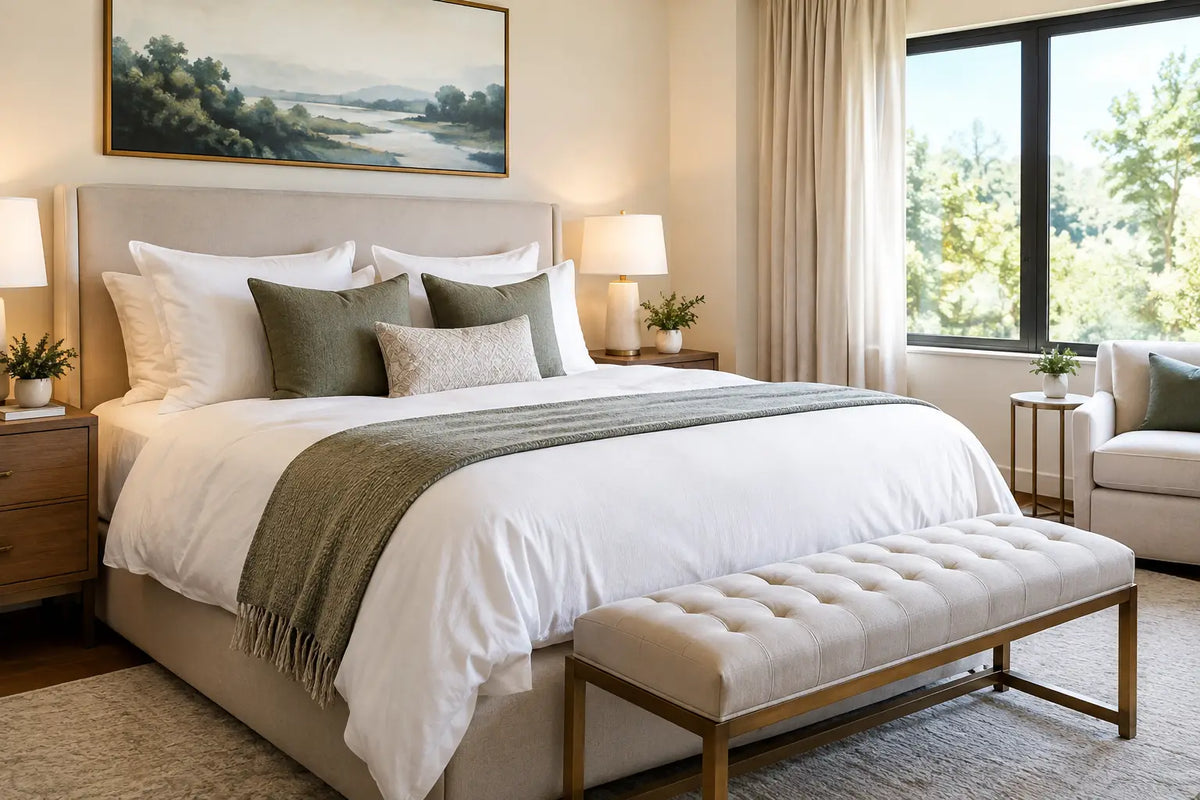
A guest bedroom is more than a spare room with a bed placed against the wall. It is the part of your home that quietly says, “we have been expecting you”. Knowing how to design a guest bedroom well means balancing the ease of a boutique hotel suite with the warmth and character of a personal home - giving visitors everything they need without making the room feel overfilled or overly formal.
The most memorable guest rooms are considered at every level: a bed that promises restorative sleep, lighting that feels flattering rather than harsh, and enough surface space for the small rituals of arriving and settling in. Start with comfort, then build the room around it.
Begin with the bed, not the empty corners
The bed sets the visual scale of the room and determines whether guests genuinely rest well. If space allows, a king-size bed creates an especially generous impression, while a double is a refined and practical choice for most guest rooms. In a compact room, a small double can work beautifully, provided there is enough clearance to move around it comfortably.
Avoid selecting a bed solely by its footprint. Consider how often the room will host couples, adult children or friends staying for a weekend. A larger bed may be the right decision in a room used regularly, whereas a day bed, trundle bed or neatly designed guest bed can offer welcome flexibility in a study or occasional-use room.
An upholstered bed frame brings softness and presence to a guest bedroom, especially when chosen in a textured neutral fabric such as oatmeal, stone, warm grey or a muted taupe. A tall headboard can create the feeling of a finished suite, but it should remain proportionate to the ceiling height and room width. In rooms with lower ceilings, a gently curved or medium-height upholstered headboard often feels more elegant than an imposing panelled design.
For a truly tailored result, consider a made-to-order bed in a fabric that echoes the room’s curtains, accent chair or adjoining dressing area. Complimentary fabric swatches are invaluable here. View them in the guest room at different times of day, rather than choosing under showroom or kitchen lighting alone.
Choose a mattress guests will look forward to sleeping on
A beautiful bed is only half the invitation. Guests will remember how the room made them feel in the morning, and that is where mattress quality matters.
A medium or medium-firm mattress is usually the most accommodating choice for a guest bedroom, particularly if you welcome a variety of visitors. Pocket springs are an excellent foundation because they respond independently to the body, offering considered support without the rigid feel some guests associate with a firmer mattress. Natural comfort layers, breathable fillings and a well-made mattress protector help the bed remain fresh, comfortable and ready for use.
There is a trade-off between a highly specialised mattress and one that suits most people. Your own bed can be selected around your precise sleep position and preferences; a guest mattress should be adaptable. If you prefer a firmer feel, a quality mattress topper gives you the option to soften the surface for guests without changing the underlying support.
Dress the bed as you would in a considered hotel room: crisp fitted sheets, a breathable duvet and pillows with a choice of loft. Two pillows per person feel generous, but do not need to create an impractical mountain at the head of the bed. A lightweight throw folded across the lower third adds texture and gives guests an extra layer on cooler evenings.
Design a guest bedroom around real arrival habits
A guest rarely arrives carrying only an overnight bag. They need somewhere to place a case, hang a jacket, charge a mobile phone, set down a glass of water and put on shoes without perching on the edge of the bed.
Where space permits, provide a luggage bench or upholstered ottoman at the foot of the bed. An ottoman storage bed is particularly valuable in a room that must work hard, allowing spare bedding, pillows and seasonal throws to be stored discreetly beneath the mattress. The room remains calm, while essentials are exactly where they are needed.
A bedside table on each side of a double or king-size bed is ideal, although a single table is preferable to two cramped pieces. Look for a design with a drawer or shelf so the top can stay clear. A small carafe, drinking glass, reading lamp and a discreet charging point offer the kind of thoughtful ease associated with five-star hospitality.
Guests also need proper hanging space. A wardrobe is welcome, but an open rail with quality hangers can be equally useful in a smaller room. Leave a little empty drawer space if you have a chest of drawers. This is a small gesture that makes a longer stay feel far less temporary.
Create lighting that works from morning to midnight
One central ceiling light rarely creates a relaxing bedroom. Layering light gives your guest control over the atmosphere, whether they are reading before bed, getting ready for dinner or waking early without wanting to flood the room with brightness.
Start with ambient light from a ceiling fitting or soft wall lights. Then add bedside lamps at a comfortable reading height, ideally with individual switches within easy reach. A small table lamp on a dressing table, console or chest of drawers adds a warm pool of light and makes the room feel occupied even when it is not in use.
Choose warm white bulbs rather than cool, blue-toned light. They flatter fabrics, make upholstered furniture feel richer and help the room retain a restful quality after dark. If blackout curtains are not suitable for the scheme, combine lined curtains with a discreet blind so guests can manage both privacy and daylight.
Add personality, but leave room for guests
The temptation in a guest bedroom is to use it as a home for surplus furniture, family photographs and decorative pieces that have nowhere else to go. This can make the room feel more like storage than sanctuary.
Instead, choose a restrained, welcoming scheme. A framed landscape, a sculptural vase, a favourite book or two and a tactile cushion are enough to establish character. Keep surfaces deliberately clear. The room should feel styled, not occupied by someone else’s belongings.
Colour works best when it promotes rest. Soft mineral shades, mushroom tones, gentle greens and muted blues are naturally calming, while deeper accents such as forest green, navy or oxblood can add drama through cushions, a headboard or curtains. If you favour a more opulent aesthetic, layer tonal fabrics rather than introducing too many competing colours: velvet, linen-look upholstery, wool and cotton can all sit together beautifully.
A large mirror is often more useful than additional artwork, especially in a smaller room. Positioned to catch natural light, it can make the space feel brighter and provides an essential practical amenity for guests dressing for an occasion.
Include the details that make a stay effortless
Hospitality is often felt in the details guests do not have to ask for. A small tray with Wi-Fi information, a spare mobile phone charger, tissues and a note explaining how the heating or window fittings work can prevent the awkwardness of searching or calling downstairs.
If you often host family or friends, keep a simple reserve of useful items in a bedside drawer or storage ottoman:
- A spare blanket and an additional pillow
- A universal charging cable or plug adaptor
- Still and sparkling water glasses
- A small selection of herbal tea or coffee sachets
- A laundry bag and a fresh towel set
Make the layout feel generous, whatever the room size
A guest bedroom should allow someone to walk from the door to the bed without navigating a tight obstacle course. Aim for clear circulation around at least one side of the bed, and avoid placing large furniture directly opposite the entrance where it may make the room feel visually blocked.
In a narrow room, place the bed centrally on the longest wall if possible and use wall-mounted lights to free bedside-table space. In a larger room, do not feel compelled to fill every corner. A single occasional chair with a small side table can create a peaceful reading spot, but only when it does not compromise the openness of the layout.
For homes with multipurpose spaces, consider furniture that earns its place. An ottoman bed, slim wardrobe, wall-mounted headboard and bedside tables with drawers can deliver a luxurious experience without consuming the room. Hyder Living’s made-to-order approach is particularly suited to these rooms, where fabric, dimensions, headboard style and storage need to feel intentional rather than standardised.
The final test is simple: spend ten minutes in the room as if you were the guest. Sit on the bed, reach for the lamp, place a bag down, look for a charging point and imagine getting dressed there. The most gracious guest bedroom is not defined by how much it contains, but by how naturally every detail allows someone to feel at ease.
Share:
Sleep Technology That Belongs in Your Bedroom
Which Mattress Suits Heavier Sleepers Best?