
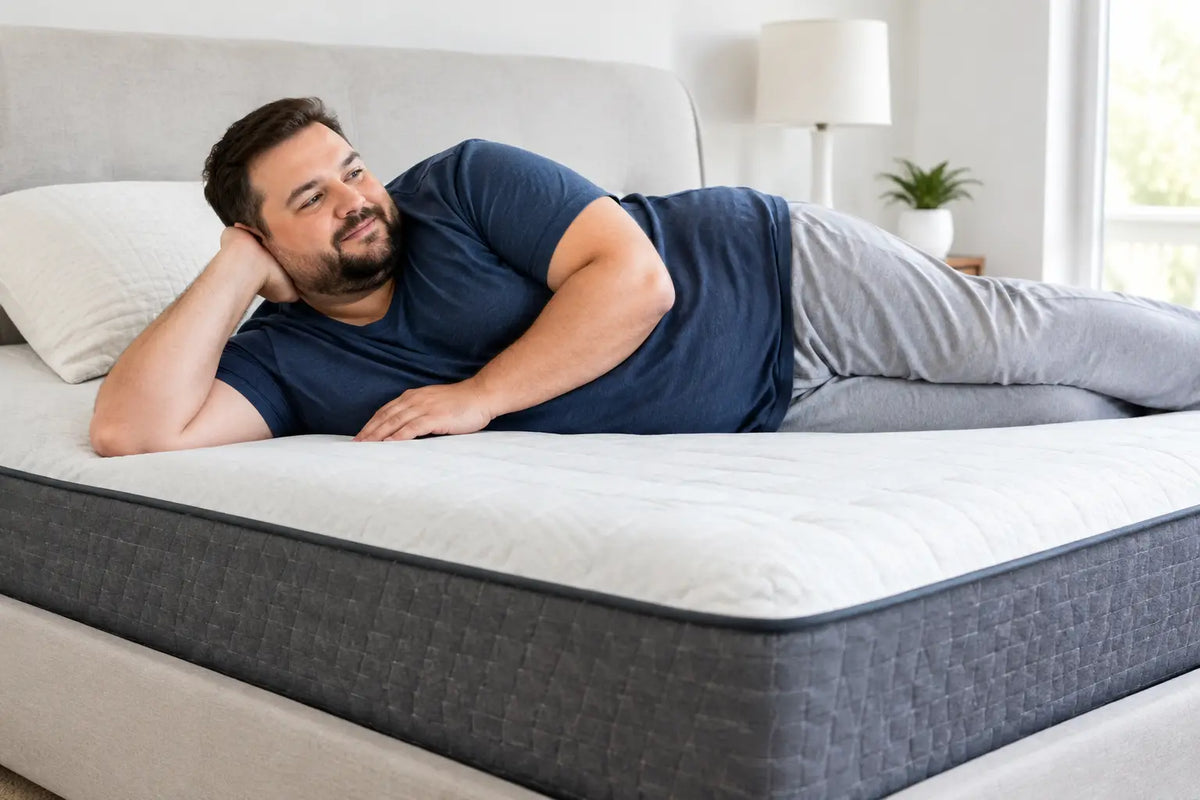
A mattress can feel beautifully plush for the first few minutes, then reveal its weaknesses as the night goes on. For those asking which mattress suits heavier sleepers, the answer is rarely the softest or the most heavily advertised option. The right choice should hold the body in a natural sleeping position, distribute pressure comfortably and retain its composure night after night.
A well-considered sleep system is an investment in restorative rest. It should feel generously comfortable without allowing the hips, shoulders or lower back to sink too deeply. For many sleepers, this means looking beyond a simple firmness label and considering the mattress’s spring system, fillings, depth, edge support and the bed beneath it.
Which mattress suits heavier sleepers most comfortably?
For heavier adults, a medium-firm to firm pocket-sprung mattress is often the most dependable starting point. Pocket springs work independently, responding to the body more precisely than a traditional connected spring unit. This helps reduce the rolling-together sensation for couples and gives more targeted support around the hips and lumbar region.
That said, firm should never mean unforgiving. A very hard mattress with too little comfort upholstery can create pressure around the shoulders and hips, particularly for side sleepers. The more luxurious approach is usually a supportive spring core paired with substantial, resilient comfort layers. This delivers the composed feel many people associate with a well-appointed hotel bed: supportive underneath, inviting on the surface.
The ideal specification depends on how you sleep. A back sleeper may appreciate a firmer, flatter feel that prevents the pelvis from dipping. A side sleeper may prefer medium-firm support with deeper wool, cotton, latex or quality fibre layers to cushion the shoulder. Stomach sleeping places particular demand on the lower back, so a firmer model is commonly the wiser choice.
Begin with the spring system
The spring unit carries the greatest share of the workload. It is the foundation of how a mattress supports body weight, responds to movement and performs over time.
Pocket springs offer tailored support
Pocket springs are individually housed in fabric pockets rather than wired together. Each spring can compress according to the pressure placed upon it, helping the mattress accommodate different body shapes and sleeping positions. For couples with a noticeable difference in weight, this independent response can make a considerable difference to comfort.
Spring count matters, but it is not the whole story. More springs can provide a more refined response, particularly in larger king and super king sizes, yet spring gauge, mattress depth and the quality of the fillings are equally significant. A high spring count with thin, low-density upholstery may not feel as supportive or enduring as a thoughtfully built mattress with fewer, stronger springs and generous natural layers.
Look for a resilient, deeper construction
A deeper mattress often allows room for more substantial upholstery and a more effective support system. This does not mean choosing depth for its own sake, but a slim mattress can be more prone to reaching its limit under regular load. A quality design should recover well when you change position and should not leave you feeling as though you are sleeping in a hollow.
For a particularly supportive feel, some sleepers prefer a mattress with firmer perimeter support. Reinforced edges can make the full width of the bed more usable, help when sitting to dress and create a more composed finish at the side of the mattress. This is especially valuable when sharing a bed or selecting a generous bed frame with a statement headboard.
Choose comfort fillings that recover well
The upper layers shape how a mattress feels against the body. They are also where the difference between short-lived softness and lasting comfort becomes apparent.
Natural fillings such as wool, cotton and hair are prized for their breathability, moisture management and ability to create a luxurious, cushioned feel. Wool is particularly useful for sleepers who run warm, as it helps regulate temperature across the seasons. It can settle naturally with use, so regular rotation and light airing are part of caring for a traditionally upholstered mattress.
Latex can be an excellent option for heavier sleepers seeking pressure relief without excessive sink. It has a buoyant, responsive quality, gently contouring to the body while helping the sleeper move and turn with ease. It also tends to be more breathable than dense, slow-response foam.
Memory foam can suit some people, especially when used as one element within a supportive hybrid construction. However, a thick layer of very soft foam may allow deeper sinking and can retain warmth. If you love the close, pressure-relieving sensation of foam, seek a model with a substantial pocket-spring base, temperature-conscious materials and a firmer overall feel.
Firmness is personal, not a measurement of quality
Mattress firmness descriptions are useful guides, but they are not universal standards. A medium mattress may feel firm to a lighter person and comparatively soft to a heavier person. This is why body weight, body shape and sleeping position deserve more attention than the label alone.
As a general guide, sleepers carrying more weight often find medium-firm or firm mattresses more comfortable and supportive. Yet a broad-shouldered side sleeper, for example, may need enough cushioning to avoid pressure and numbness through the arm. In this case, a medium-firm pocket-sprung mattress with deep natural upholstery can provide a more elegant balance than an extra-firm design.
When possible, lie on a mattress in your usual sleeping position for more than a few moments. Notice whether your hips feel supported, whether your spine feels level and whether your shoulders can settle without strain. You should feel held up by the mattress, not perched on top of it, and certainly not swallowed by it.
Size and the bed base deserve equal attention
A larger sleep surface can transform comfort, especially for couples. A king size gives each person more room to turn without disturbing the other, while a super king can bring the spacious ease of a luxury suite to the bedroom. More width also allows the body to settle naturally rather than remaining tense at the edge of the bed.
The base should be suitable for the mattress and assembled on a level floor. A divan base generally offers a stable, even foundation, while a slatted bed frame needs correctly spaced, secure slats with appropriate centre support. Weak or widely spaced slats can compromise a mattress’s feel and longevity, regardless of how impressive its construction may be.
For upholstered ottoman beds and statement frames, it is worth checking the mattress weight and depth alongside the bed’s design. A generously deep mattress can look wonderfully opulent against a tall, upholstered headboard, but it should not sit so high that it affects comfort when getting in and out of bed.
Care helps your mattress perform at its best
Even a superb mattress benefits from considered care. Rotate it as recommended by its maker to encourage even wear. If it is dual-sided, turn it as well. Use a breathable mattress protector to guard against spills and everyday moisture without trapping heat, and allow the bed to air when changing linens.
Avoid folding, bending or repeatedly sitting in the same spot on the edge. These habits place concentrated strain on the upholstery and spring system. A mattress is designed to support a resting body across its surface, not to serve as occasional seating.
Hyder Living’s concierge-style approach can help you consider the full picture: your preferred sleep position, desired feel, bed size, room proportions and the level of upholstery that suits your interior. The most satisfying choice is one that supports your body as thoughtfully as it complements your bedroom.
The finest mattress for a heavier sleeper is not simply the firmest one. It is the one that feels calm, supportive and beautifully balanced from the moment you settle down until morning.
Share:
How to Design a Guest Bedroom for Five-Star Comfort