
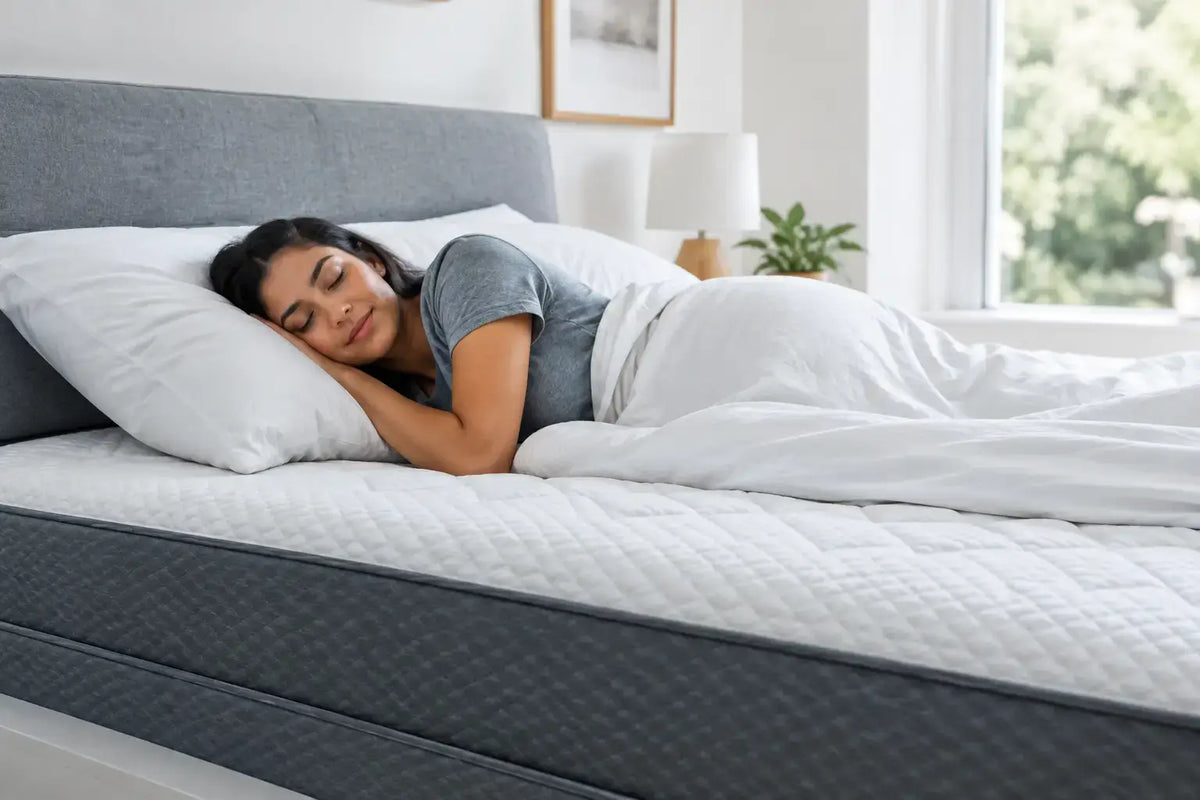
A combination sleeper does not stay politely in one position until morning. You may begin on your side, turn onto your back during the night, and wake briefly on your front. The best mattresses for combination sleepers make those changes feel effortless, while still giving the body the composed, well-supported comfort expected from a beautifully appointed bedroom.
The challenge is balance. A mattress that feels wonderfully cushioned on the shoulder can be too slow or too soft to turn on with ease. One that is highly firm and responsive may make movement simple, yet leave pressure points feeling less than indulged. The right choice is usually a medium to medium-firm mattress with responsive internal support, thoughtful comfort layers and enough stability to keep your spine well aligned in more than one sleeping position.
What combination sleepers need from a mattress
Movement changes the demands placed on a mattress. Side sleeping benefits from pressure relief around the shoulders and hips. Back sleeping generally needs even support beneath the lumbar region, while front sleeping calls for a flatter, more controlled surface that prevents the pelvis from dropping too deeply. A mattress for mixed positions must reconcile all three.
Responsiveness is therefore central. When you change position, the surface should adjust promptly rather than allowing you to feel held in a deep impression. This does not mean the mattress should feel hard. It means its comfort layers should recover quickly, and its core should provide a stable platform for easy movement.
Look also for consistent support across the full sleeping area. Couples, particularly those choosing king size, super king or emperor dimensions, often value a mattress that has a calm, supportive feel at the edges as well as the centre. It makes the entire bed feel more generous and helps when one sleeper moves or rises earlier than the other.
The best mattresses for combination sleepers: key features
Pocket springs for responsive, individual support
A quality pocket-sprung mattress is often an excellent starting point for a combination sleeper. Each spring works more independently than a traditional open-coil unit, allowing the mattress to respond to the contours and movements of your body. This can help maintain support as you move from your side to your back, rather than creating one broad, uniform surface beneath you.
Pocket springs can also be particularly appealing for partners with different sleep habits. Better independent response may reduce the sensation of movement travelling across the bed, although no mattress removes all disturbance entirely. The spring count matters, but it is not a complete measure of quality. Spring tension, wire gauge, zoning, upholstery layers and the overall build have just as much bearing on how the mattress feels.
Medium or medium-firm tension
For most people who regularly alternate positions, medium or medium-firm tension offers the most versatile starting point. It provides enough give for side sleeping while retaining the steadiness that back and front sleepers usually need. Those with a lighter build may find medium tension sufficiently supportive, whereas a heavier sleeper or someone who spends considerable time on their front may prefer medium-firm.
Body shape, not simply body weight, influences the decision. Broad shoulders can need more surface cushioning when side sleeping, while a pronounced hip area may require careful support to avoid the spine tilting. If you share a bed, choosing a tension that suits the larger or more support-needing sleeper is often sensible, then using a premium topper to introduce a little extra softness for the other person where required.
Comfort layers that relieve pressure without trapping you
Natural fillings such as wool, cotton and cashmere blends can create a refined, breathable comfort layer with a gently yielding feel. Wool is valued for helping with temperature regulation and can offer buoyant cushioning, rather than the deeply enveloping sensation some sleepers find restrictive.
Memory foam can be comfortable for combination sleepers, but the formulation and depth are crucial. A thick, slow-response foam layer may make turning feel laborious, particularly if you sleep warm. A thinner layer of more responsive foam, paired with springs or other supportive materials, can offer pressure relief with less of that stuck-in-one-place feeling.
Latex is another material worth considering. It tends to have a naturally springy response, adapts quickly when you move and can be a good choice for those who want pressure relief without the deep contour of traditional memory foam. The trade-off is that latex mattresses may feel more buoyant and less plush than a deeply upholstered natural-fibre design.
Breathability for uninterrupted comfort
Combination sleepers create more friction and movement against the mattress surface, and temperature can become an issue as the night progresses. Breathable covers, ventilated construction and natural moisture-managing fillings all help maintain a more settled sleep climate. A mattress that sleeps cooler is not only more comfortable; it can reduce the restless repositioning that comes from overheating.
If you are especially warm at night, be cautious with very deep all-foam mattresses. They can be exceptionally pressure-relieving, but their heat retention varies widely by construction. Pocket springs, breathable wool layers and a well-ventilated mattress border are often reassuring features for a more temperate feel.
Match the mattress to your most common position
The ideal mattress is not always the one that attempts to cater equally to every possible position. Consider where you spend the greatest share of the night.
If you are mainly a side sleeper who occasionally turns onto your back, prioritise pressure relief over an ultra-firm feel. A medium pocket-sprung mattress with generous upholstery can protect the shoulder and hip while retaining enough response to move easily.
If you sleep on your back and side in roughly equal measure, medium-firm is frequently the sweet spot. Seek a supportive spring unit and comfort layers that cushion rather than swallow the body. This creates a poised, balanced surface that feels comfortable in either position.
If you spend any meaningful time sleeping on your front, take alignment seriously. Excessive softness can allow the hips to sink, placing strain on the lower back. A medium-firm or firmer mattress with a flatter, responsive top is normally the wiser direction, even if you add a breathable mattress protector or lightly padded topper for a more luxurious finish.
Do not overlook the bed beneath the mattress
Even an exceptional mattress can feel different when paired with an unsuitable base. A sprung divan can introduce a little additional give, while a firm platform-top divan or a well-made slatted bed frame may create a more controlled feel. The spacing and condition of slats matter, especially with foam or latex mattresses, which need appropriate, even support and airflow beneath them.
For a tailored bedroom, the base is also an opportunity to bring practical elegance into the room. An upholstered ottoman storage bed can provide discreet space for linens, while a statement headboard and carefully selected fabric create the quiet sense of opulence that makes bedtime feel like a retreat. When specifying a made-to-order bed, confirm the mattress depth and overall bed height so getting in and out remains comfortable.
How to test a mattress properly
A brief sit on the edge of a mattress tells you very little. When trying a mattress, lie in the positions you naturally adopt at home. Spend several minutes on your side, then turn onto your back and, if relevant, your front. Notice whether turning requires effort, whether your shoulder feels compressed and whether your lower back is supported without being pushed upward.
Pay attention to your pillow as well. A mattress may feel wrong when the real issue is an unsuitable pillow height. Side sleeping often requires more loft to fill the space between shoulder and neck, while front sleeping generally calls for a thinner pillow to avoid lifting the head too high. A well-chosen mattress and pillow should work together to keep the neck and spine in a relaxed, neutral line.
For an online purchase, seek clear details about tension, fillings, spring construction, depth, care requirements and the recommended base. A concierge-style conversation before ordering can be particularly worthwhile if you are selecting a bespoke bed and mattress together. At Hyder Living, this considered approach helps create a sleep space that is as personal in comfort as it is in design.
Care that protects long-term comfort
A combination sleeper places wear across more of the surface than someone who sleeps in one fixed position, but regular care still matters. Use a quality mattress protector to guard against spills and body oils without compromising breathability. Rotate the mattress according to its care guidance, usually head to toe at regular intervals, and only flip it where the design is explicitly double-sided.
Give a new mattress time to settle. It can take several weeks for both the materials and your body to adjust, particularly when moving from an overly soft or worn mattress to one with more appropriate support. Persistent discomfort, however, should not be dismissed as an adjustment period.
The finest choice is the one that lets you move naturally, supports you quietly and looks entirely at home within your bedroom scheme. Choose for the way you truly sleep, not the position you think you should hold, and your bed becomes a more restorative place to return to each evening.
Share:
Hotel Bed Standards That Create Five-Star Sleep
Why Do Mattresses Smell New? What It Means