
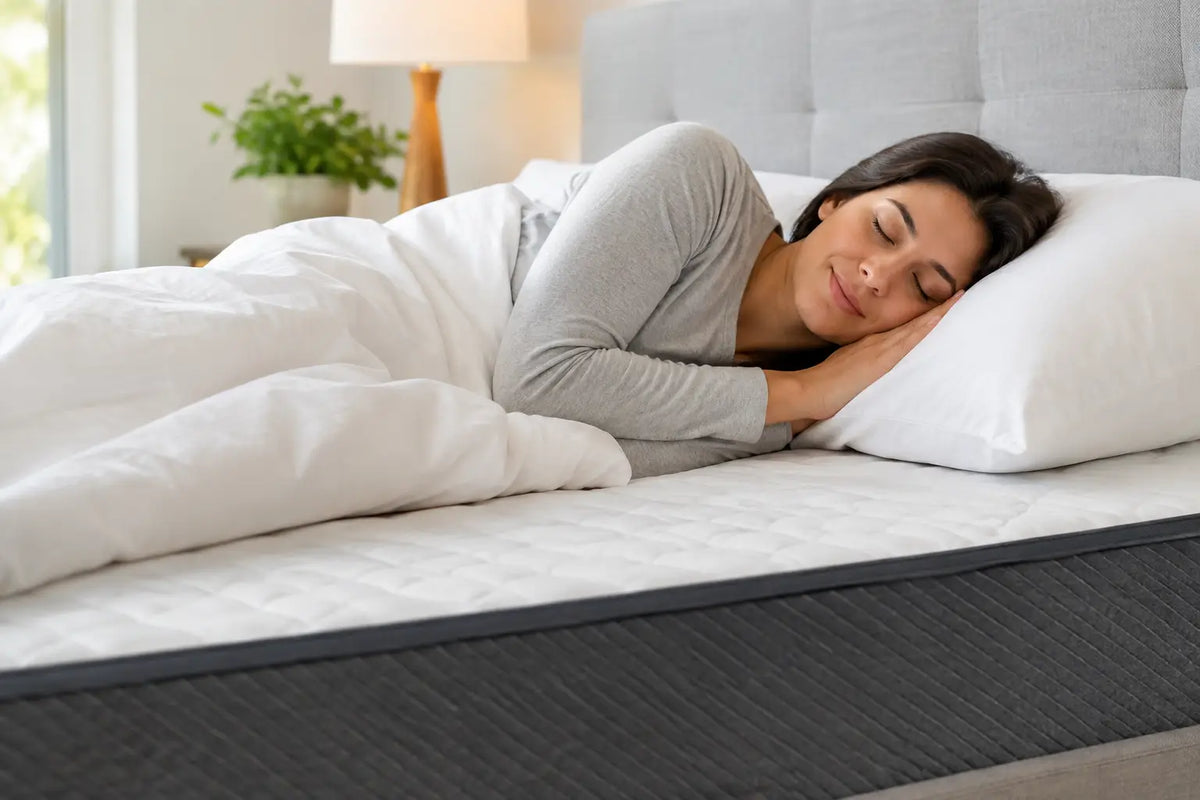
Your shoulder should settle into the mattress, not brace against it. For those who sleep on their side, that small distinction can decide whether morning begins feeling restored or with a stiff neck, a tender hip and an arm that has gone numb overnight. The finest side sleeper mattresses balance generous pressure relief with composed, dependable support, creating the feeling of being gently held rather than sinking without direction.
Side sleeping is one of the most common positions, yet it places a particular set of demands on a sleep surface. The body is supported over a narrower contact area than when lying on the back, with the shoulder and hip carrying much of the load. A well-chosen mattress allows those prominent areas to settle while maintaining support through the waist, so the spine can remain comfortably aligned.
Why Side Sleepers Need a Different Balance
When you lie on your side, your spine should form a relatively straight line from neck to lower back. If a mattress is too firm, the shoulder cannot sink in far enough. The resulting upward pressure can push the neck out of alignment, particularly if your pillow is not high enough to compensate. It may also create uncomfortable pressure at the hip.
A mattress that is too soft brings a different problem. The hip, being heavier, may sink too deeply while the waist receives little support. Over time, this can leave the lower back feeling strained and make turning in the night more difficult.
The aim is not simply a soft mattress. It is targeted cushioning above a stable core. Pocket springs, carefully selected comfort fillings and thoughtful zoning can work together to let the shoulder and hip settle naturally while supporting the middle of the body. This is where comfort becomes personal rather than a label on a product page.
Choosing Firmness for Your Build and Preference
Many side sleepers find a medium or medium-soft feel most welcoming, but firmness should never be selected by sleeping position alone. Body weight, body shape, whether you share the bed, and the feel you find relaxing all matter.
A lighter person may not compress a medium-firm mattress enough to access its comfort layers. What feels reassuringly supportive to one sleeper can feel unyielding to another. In this instance, a softer comfort layer or a medium feel may allow the shoulder and hip to settle more effectively.
Those with a heavier build often need more substance beneath the comfort layers to prevent excessive sinkage. A medium-firm or firm pocket-sprung mattress can provide the necessary stability, provided it still includes enough pressure-relieving upholstery at the surface. Firm need not mean hard. A beautifully made mattress can feel supportive, cushioned and luxurious at once.
Couples should consider the difference between their individual needs. If one partner prefers a softer feel and the other values firmer support, a mattress with responsive pocket springs and a substantial comfort layer can offer a useful middle ground. For markedly different preferences, two mattresses in one bed frame or a split tension arrangement may be the more refined solution, particularly in larger sizes.
Consider Your Existing Sleep Signals
Your body often offers useful clues. Shoulder soreness, tingling arms or a tendency to wake repeatedly to change position can indicate excessive surface firmness. Lower-back discomfort, a feeling of being trapped in the bed, or difficulty changing position may suggest that the mattress is allowing the pelvis to sink too far.
These signs are not always caused by the mattress alone. A tired pillow, an unsuitable bed base and even a change in routine can affect sleep. Still, if the symptoms are consistent and your mattress is visibly worn, it is sensible to reassess the whole sleep system rather than merely adding another cushion on top.
Materials That Add Comfort Without Losing Support
The comfort layer is especially significant for side sleepers. Natural wool is valued for its breathable, resilient character and its ability to help regulate temperature across changing seasons. It creates a gently cushioned feel without the clammy sensation some sleepers experience with less breathable materials.
Cotton contributes softness and airflow, while layered fibres can provide a plush, welcoming surface. Memory foam is often chosen for its close contouring around the shoulder and hip. It can be an excellent option for pressure relief, although some people prefer a more responsive feel and easier movement than a deep foam cradle provides.
Latex offers another appealing route. It has a buoyant, springy response and can contour without the slow recovery associated with traditional memory foam. For side sleepers who turn frequently or enjoy a cooler, more lifted sensation, this can be particularly comfortable.
The spring unit beneath these materials matters just as much. Individually nested pocket springs respond locally to your weight, rather than moving as one large unit. This helps the shoulder and hip settle independently and can reduce movement transfer when sharing a bed. A well-built pocket-sprung mattress is also an elegant choice for couples who value both support and undisturbed sleep.
Do Not Overlook the Mattress Depth
A deeper mattress often allows room for more generous upholstery, but depth alone is not proof of quality. The calibre, density and arrangement of each layer matter far more than a dramatic profile. That said, side sleepers commonly appreciate a mattress with enough depth to provide genuine cushioning before they reach the firmer support beneath.
Check that your fitted sheets can accommodate the finished depth, particularly if you choose a mattress topper. A topper can add a final layer of sumptuousness, but it should enhance an already supportive mattress, not attempt to correct one that is too worn or fundamentally unsuitable.
Your Pillow Is Part of the Equation
Even the most carefully selected mattress cannot fully compensate for a pillow that leaves the head tilted upwards or dropping towards the mattress. Side sleepers generally need a pillow with sufficient loft to fill the space between the shoulder and neck. The precise height depends on shoulder width, mattress softness and personal preference.
A softer mattress lets the shoulder sink further in, so a slightly lower pillow may be appropriate. On a firmer mattress, the shoulder remains higher and a loftier pillow often feels more natural. Adjustable-fill pillows can be useful when refining this balance, especially after changing to a new mattress.
There is also comfort in placing a pillow between the knees. It can help keep the hips more level and reduce the feeling of the upper leg pulling the pelvis forwards. This is a simple adjustment, yet for many dedicated side sleepers it makes the whole position feel calmer and more supported.
Choose the Right Size for Freer Movement
Side sleepers tend to shift from one side to the other through the night. A larger mattress gives room to make those movements without feeling confined, and it becomes particularly valuable when sharing a bed. A king size offers welcome personal space for many couples, while a super king provides an even more indulgent sleep surface where the room allows.
The bed itself should support the mattress correctly. A solid platform, suitable slatted base or divan foundation can all work beautifully when matched to the mattress specification. Slats that are too widely spaced may compromise support over time, while an uneven or ageing base can alter the feel of an otherwise excellent mattress.
For a made-to-order bedroom, it is worth considering mattress depth, bed height and headboard proportion together. The most inviting room is not only visually opulent - it is arranged around the ease of getting in, settling down and waking well.
How to Test a Mattress Properly
If you can try a mattress before deciding, lie in your usual side-sleeping position for more than a hurried minute. Let your shoulder settle and notice whether your waist feels supported rather than suspended. Pay attention to the hip, which should be cushioned but not allowed to drop heavily.
When purchasing online, study the construction rather than relying only on terms such as plush or luxury. Look for details on spring type, filling layers, care guidance and the intended feel. A considered conversation about your build, usual sleeping position, existing bed base and any comfort concerns is often more valuable than a generic firmness recommendation.
At Hyder Living, this level of detail is part of creating a sleep space that feels considered from every angle, from the mattress beneath you to the upholstered bed that frames the room.
A mattress should make side sleeping feel effortless: your shoulder relaxed, your hips settled, your spine supported and the room quiet enough to forget the day. Give yourself time to choose that balance well, and each evening can feel less like a routine and more like a return to comfort.
Share:
Slatted Base vs Solid Base: Which Suits You?
How to Assess Mattress Quality Before You Buy