
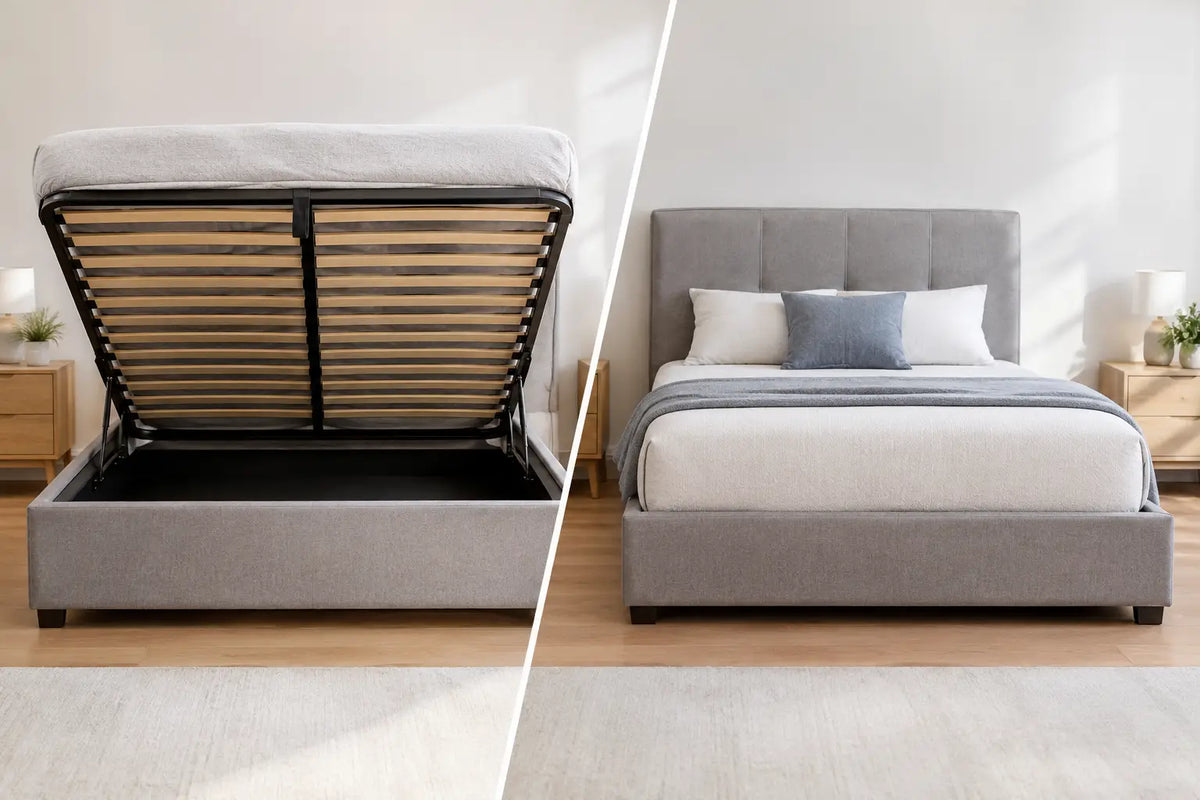
The base beneath your mattress is rarely the first detail considered when designing a beautiful bedroom. Yet the choice of a slatted base vs solid base can subtly change how your mattress feels, how well it breathes and how it performs over the years. For a bed chosen as the centrepiece of a restful, carefully considered room, it deserves more than an afterthought.
There is no universally superior answer. A slatted base brings responsive support and generous ventilation, while a solid base delivers a firmer, more stable platform. The right choice depends on your mattress, preferred feel, bedroom conditions and the style of bed you have in mind.
Slatted base vs solid base: the essential difference
A slatted base is formed from individual wooden slats set across the bed frame. The gaps between them allow air to circulate beneath the mattress. In many premium bed frames, the slats sit in side rails or flexible holders, creating a supportive surface with a little measured give.
A solid base, sometimes called a platform base or board base, uses a continuous panel beneath the mattress. Divan beds commonly have a solid foundation, usually formed from a timber frame with a board or sprung top, then finished in upholstery. It creates an even surface with no gaps and very little flex.
Both can provide excellent support when properly made. What matters is the quality of the construction, the spacing of slats where applicable, the central support system on larger beds and whether the base is suitable for the mattress placed upon it.
Why a slatted base feels different
A slatted base has a slightly more responsive character. Each slat supports the mattress independently, which can introduce a gentle degree of flex under body weight. This may make a mattress feel fractionally softer and more accommodating, particularly when paired with a pocket sprung or hybrid design.
The other notable advantage is airflow. Mattresses absorb a small amount of moisture during sleep, even in a well-ventilated bedroom. Open space between the slats helps that moisture dissipate, supporting a fresher sleep environment and helping to protect the mattress materials over time. This is particularly welcome for foam-containing mattresses, which can retain more warmth than traditional spring constructions.
A slatted frame is often a natural partner for an upholstered bed frame or an ottoman bed, where an elegant silhouette and practical ventilation are equally desirable. It also gives the bed a lighter visual and physical construction than a solid divan base, which can be useful in rooms where flexibility of placement matters.
The details that make slats dependable
Not all slatted bases are equal. Widely spaced, thin or poorly secured slats can place unnecessary pressure on a mattress and may feel less stable. A well-designed base uses strong timber slats, secure fittings and sensible spacing so the mattress remains evenly supported.
For king size, super king and emperor beds, a centre rail with additional support legs is especially important. It reduces the chance of sagging across the middle and ensures each sleeper enjoys balanced support. If you are selecting a heavier mattress with deep natural fillings or multiple spring layers, confirm the bed’s weight capacity and mattress guidance before ordering.
Slats can also require occasional attention. Check that they are seated correctly after moving the bed and tighten frame fixings as part of routine care. These small measures preserve the quiet, settled feel expected from a luxury sleep space.
When a solid base is the better choice
A solid base offers a firmer, more grounded feel because it does not flex with the mattress. If you prefer your mattress to perform exactly as designed, without extra movement from the foundation beneath it, this can be reassuring. It is a popular choice for people who enjoy a more stable sleep surface or who have selected a mattress at the firmer end of the comfort scale.
It can also suit certain mattress types particularly well. Some foam mattresses, for example, benefit from a flat, evenly supportive base, provided the manufacturer permits this arrangement. A solid platform prevents the mattress from dipping into gaps and can create a very consistent feel from edge to edge.
Divan bases are valued for this practical stability, as well as their discreet storage options. Drawer configurations or ottoman storage can be invaluable in a polished bedroom where linens, seasonal bedding and spare pillows need a home without compromising the visual calm of the room.
A solid base may be especially appealing in hospitality settings too. Its consistent surface and resilient structure can offer straightforward, dependable support for mattresses designed for frequent guest use.
Airflow needs more consideration
The principal trade-off with a solid base is reduced ventilation underneath the mattress. This does not mean it is an unsuitable choice, but it does call for conscientious mattress care. Lift bedding back regularly to allow the mattress to air, avoid placing it in a persistently damp room and follow the manufacturer’s rotation instructions.
A breathable mattress protector can help safeguard the surface without trapping unnecessary heat. If your mattress is double-sided, turning and rotating it as directed will also encourage even wear and help maintain its comfort. For a solid upholstered divan base, the fabric finish and internal construction should be of a quality that supports circulation as far as possible.
Match the base to your mattress, not just the bed style
The mattress should lead the decision. A pocket sprung mattress generally works beautifully on either a high-quality slatted base or a firm solid base. On slats, it may feel a touch more yielding; on a solid foundation, it may feel more direct and structured.
Memory foam and hybrid mattresses need careful consideration. Their manufacturers often specify maximum slat spacing, as gaps that are too wide can compromise support and potentially affect a warranty. A solid base can be an excellent option, but airflow should be given due attention, particularly in warmer bedrooms or for sleepers who naturally sleep hot.
Latex mattresses are heavy, naturally responsive and often benefit from ventilation. A closely spaced slatted base is frequently well suited, although the individual mattress specification remains the authority. Natural-filled mattresses, including those with wool, cotton or cashmere layers, can also benefit from airflow and should always sit on a foundation designed to carry their weight evenly.
Never assume that a premium mattress will compensate for an unsuitable base. Even the most beautifully upholstered headboard and finest sleep surface cannot perform at their best without the right foundation beneath.
Consider comfort, movement and everyday living
Your preferred sleep feel is personal. If you enjoy a softly responsive sensation, a slatted base may add the final degree of cushioning you appreciate. If you value a firm, anchored surface with minimal flex, a solid base is likely to feel more composed.
Couples should also consider movement. A sturdy solid base can feel exceptionally stable, though a well-made slatted frame with strong central reinforcement also performs admirably. More significant than the base alone is the mattress construction: individually pocketed springs and considered comfort layers are often more effective at limiting disturbance from a partner changing position.
Think about the room itself as well. In a bedroom with limited ventilation, a slatted base offers a useful circulation advantage. In a compact space where storage is at a premium, a solid divan or ottoman foundation may be the more elegant solution. A bed should serve the architecture of your life, not simply occupy the available floor space.
Craftsmanship is the deciding factor
Whether you choose slats or a solid platform, inspect the specification with the same care you would give to fabric, headboard height or mattress comfort. Look for durable materials, a reinforced structure on larger sizes and a base rated appropriately for the mattress and its users. A made-to-order bed should feel considered in every hidden detail, not only in the upholstery visible from the doorway.
At Hyder Living, this is why the conversation around a bed begins with how you sleep and live, then moves through size, storage, finish and support. A refined bedroom is not built from isolated choices. It is created when each element works quietly with the next.
Before finalising your bed, place your chosen mattress specification beside the base details and ask how the combination will feel after a full night’s rest. That one considered question can lead you to a foundation that keeps your mattress fresh, your bedroom composed and your sleep genuinely restorative.
Share:
Mattress Fillings Guide for Better Sleep