
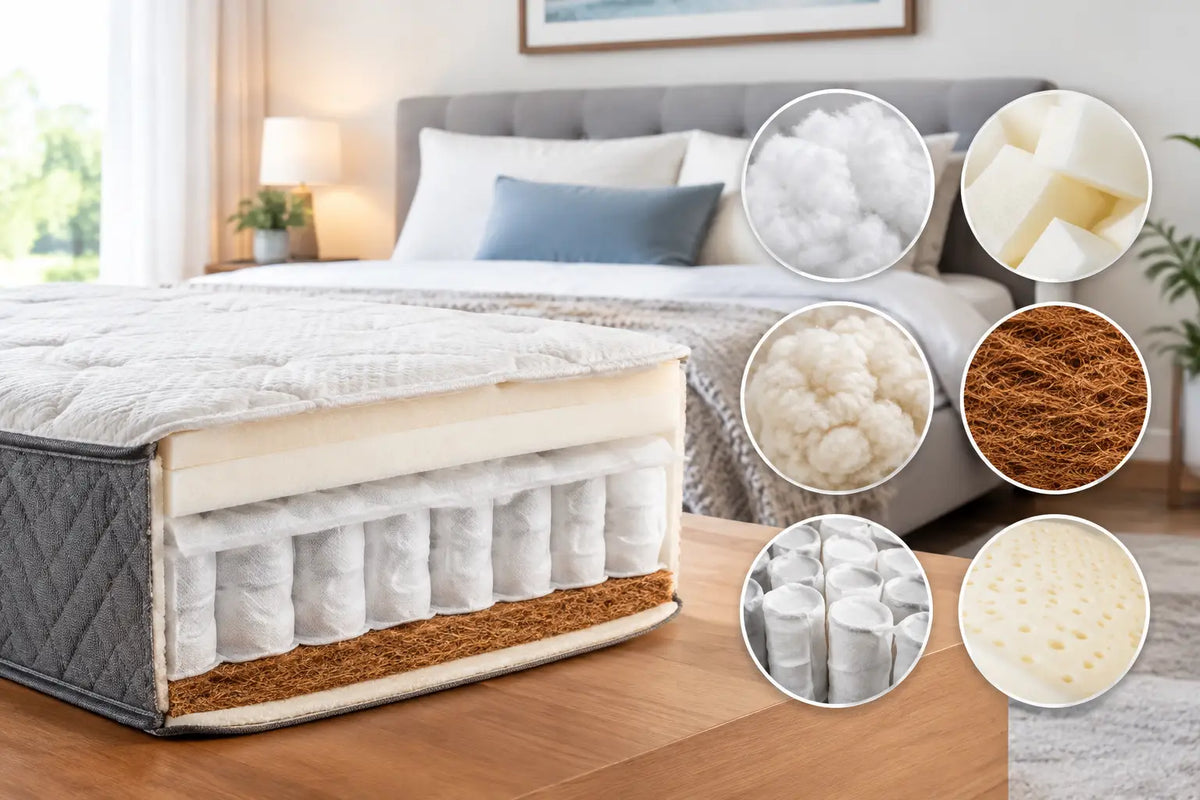
The feel of a beautifully made bed is often attributed to its springs, yet the layers above them do much of the work you notice each night. They influence whether the surface feels softly cushioning or reassuringly firm, whether warmth builds beneath the duvet, and how fresh the mattress feels over years of use. This mattress fillings guide looks beneath the cover, so you can choose a sleep surface with the comfort, temperature balance and longevity your bedroom deserves.
What mattress fillings actually do
Mattress fillings are the comfort layers placed around, above or between the support system. In a pocket sprung mattress, the springs respond to pressure and help support your body, while fillings refine the sensation: plushness at the shoulders, pressure relief at the hips, breathability and the overall first impression when you lie down.
A generous filling count alone does not guarantee a superior mattress. Quality depends on the type of material, its density or weight, how it is layered, and the construction that holds it in place. Natural fibres can offer exceptional moisture control, for example, while a high-density foam may provide consistent contouring. The most considered mattresses combine materials for a reason rather than simply adding more of them.
It is also useful to separate comfort from support. A mattress can feel wonderfully soft initially but lack the supportive core needed to keep your spine in a comfortable, neutral position. Equally, a supportive mattress need not feel hard. The right filling package creates a refined, cushioned welcome without compromising the support beneath.
Mattress fillings guide: the principal materials
Wool
Wool is one of the most prized natural mattress fillings, particularly in British-made mattresses. Its fine, springy fibres create a gently resilient layer that recovers well after pressure. Rather than the close, enveloping feel associated with foam, wool tends to offer a breathable, lightly buoyant comfort.
Its greatest virtue is temperature regulation. Wool can absorb moisture vapour and release it gradually, helping the sleep surface feel drier and more balanced through changing seasons. It provides welcome insulation in winter without necessarily feeling stifling in warmer weather. The precise feel varies according to the type and quantity of wool used, but it is especially appealing for those who prefer a naturally fresh sleep environment.
Natural wool fillings may settle as they bed in, particularly in traditionally tufted, double-sided mattresses. This is normal and often part of the character of a handmade mattress. Regular turning, where specified by the manufacturer, helps distribute wear and preserve comfort.
Cotton
Cotton delivers a clean, soft and breathable feel. It is often used alongside wool to bring lightness to a mattress filling blend, and can be particularly pleasant for sleepers who value a crisp, less insulated surface. Cotton readily absorbs moisture, which contributes to a comfortable night, although it does not have wool's natural springiness or ability to regulate temperature across such a broad range.
In a well-designed mattress, cotton is rarely expected to do everything alone. It works beautifully as part of a layered construction, adding softness and ventilation alongside more resilient fibres or a supportive spring unit.
Latex
Latex is valued for responsive pressure relief. Unlike memory foam, which slowly moulds around the body, latex has an immediate, gently springing response. It can cushion prominent pressure points while making it easier to change position, an advantage for combination sleepers who move through the night.
Natural latex, derived from rubber tree sap, is often chosen for its durability and breathable open-cell structure. It has a distinctive buoyant feel: supportive, elastic and less sink-in than many foams. Latex can be an excellent choice for couples, too, as it offers comfort without an excessively unstable surface.
Do check how latex is described. Some mattresses contain natural latex, while others use a blend or synthetic latex. Neither is automatically unsuitable, but the specification should be clear so that you know what you are paying for.
Memory foam
Memory foam is designed to soften in response to warmth and pressure, contouring closely to the body's shape. This can create outstanding pressure relief around shoulders and hips, particularly for side sleepers. It also tends to reduce the sensation of movement across the bed, which can be useful where partners have different sleep schedules.
The trade-off is that traditional memory foam can retain more warmth and create a more enveloping sensation than natural fibres or latex. Modern formulations may incorporate cooling gels, perforations or more open-cell structures to improve airflow, but the underlying feel remains close and body-hugging. If you prefer to sleep on, rather than in, your mattress, a wool-rich or latex comfort layer may suit you better.
Density matters here. Higher-density memory foam can be more durable and supportive, while a low-density layer may feel soft at first but lose its performance more quickly. A good specification should indicate more than simply the presence of memory foam.
Polyester and recycled fibre fillings
Polyester fibres are widely used in mattresses because they are light, soft and cost-effective. Recycled polyester fillings can also make practical use of recovered materials, and are commonly combined with natural fibres or foam layers. They can provide a pleasingly plush initial feel and are often useful in quilted comfort layers.
On their own, polyester fibres generally do not offer the temperature regulation, resilience or longevity of premium natural fillings. That need not rule them out. In the right proportion, they can contribute softness and value within a thoughtfully engineered mattress. The key is to assess the whole construction rather than judging one component in isolation.
Cashmere, silk and other luxury fibres
Cashmere, silk, alpaca and similar fibres are usually found in more luxurious mattress constructions, often blended with wool. These materials can bring exceptional softness, fine temperature regulation and a beautifully elevated feel. They are not a substitute for a sound support system, but they can make a noticeable difference to the surface comfort and seasonal versatility of a premium mattress.
Such fillings are most rewarding for buyers who value natural materials and are prepared to follow care guidance. A mattress containing fine fibres deserves a breathable protector, proper ventilation and the recommended rotation or turning routine.
Choosing fillings for your sleeping style
Your preferred sleep position gives a useful starting point, but body weight, bedroom temperature and personal taste deserve equal consideration. Side sleepers often appreciate pressure-relieving layers such as latex or memory foam, balanced by sufficient underlying support to prevent the hips sinking too deeply. Back sleepers commonly benefit from a medium to medium-firm feel with resilient fillings that support the lumbar area without leaving it unsupported.
Front sleepers usually need a more controlled, firmer comfort layer. Excessive cushioning can allow the pelvis to dip, placing the lower back in an uncomfortable position. A firmer pocket spring core with wool, cotton or a modest layer of responsive latex can provide a more level sleep surface.
For those who sleep warm, breathable natural fibres are often the elegant answer. Wool, cotton and open-cell latex encourage airflow and manage moisture more effectively than dense, close-fitting foam. If you are often cold, a deeper wool blend or memory foam may feel especially inviting, though your duvet and bedroom temperature will still shape the result.
Look beyond the top layer
A mattress label may highlight a luxurious fibre, but its placement and amount are crucial. A thin layer of cashmere within a largely synthetic construction will not perform like a mattress built with substantial natural comfort layers. Ask about the spring type, the depth of each comfort layer, whether the mattress is single- or double-sided, and whether it is hand-tufted or quilted.
Hand tufting anchors fillings through the mattress, helping maintain a taut, supportive structure. Quilting produces a smoother, often softer surface and can suit foam-based or modern hybrid designs. Neither method is universally better: tufting often appeals to those seeking a traditional, more structured feel, while quilting can give a more immediately plush finish.
Double-sided mattresses are designed to be turned and can offer excellent longevity, particularly where natural fillings are used. No-turn designs are convenient and can perform beautifully, but they should be rotated regularly if advised. Handles are generally intended for positioning the mattress rather than lifting its full weight, and side vents help air circulate through the internal layers.
A considered choice for the bedroom
A mattress should complement the rest of your bed, not merely fit inside it. The upholstery, headboard and proportions may create the visual sense of calm, but the mattress determines how restorative that sanctuary feels at midnight and at dawn. For a made-to-order bedroom, it is worth allowing the same care for the unseen layers as you would for fabric, colour and storage.
At Hyder Living, the most satisfying choices begin with an honest conversation about how you sleep, not a race towards the softest or most expensive specification. Consider how warm you run, whether you share the bed, how you prefer to move at night and how much maintenance you are happy to undertake. When those details are right, the result is not simply a handsome bed, but a sleep experience that feels quietly exceptional every evening.
Share:
Coil Versus Pocket Springs: Which Mattress Suits You?