
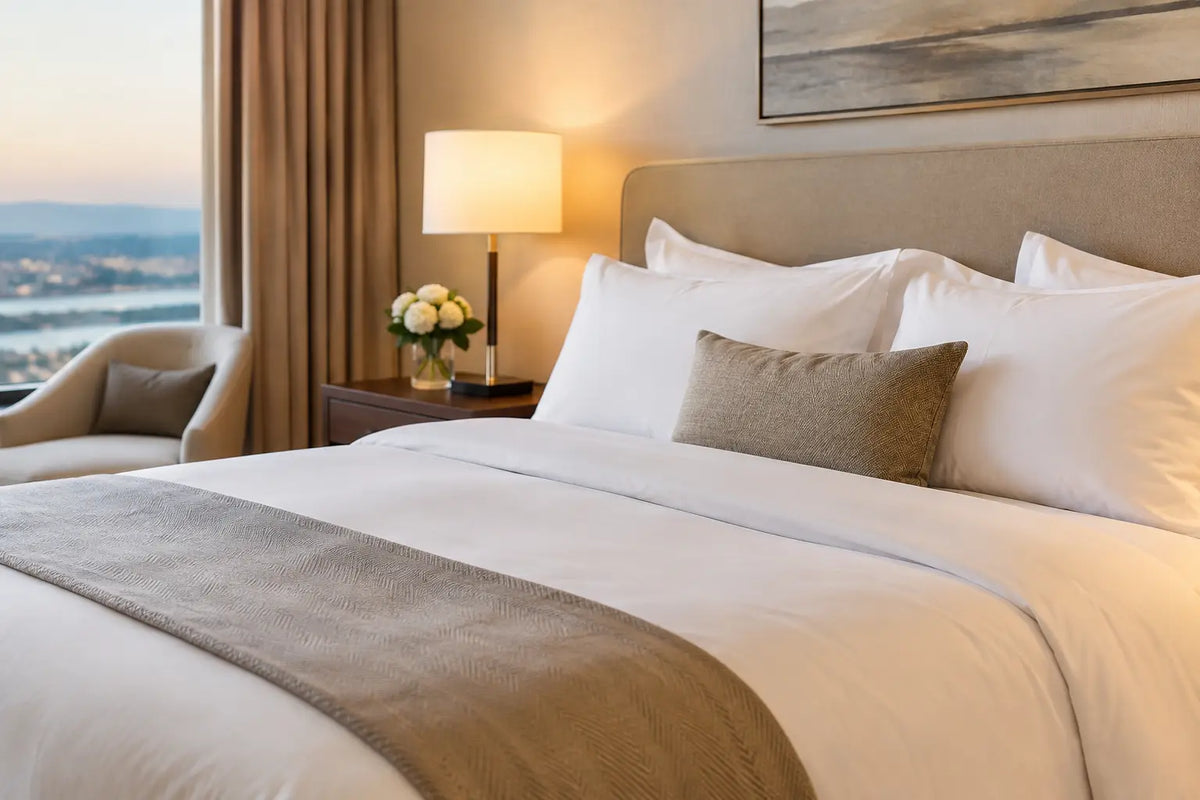
The finest hotel room rarely feels memorable because of one dramatic feature. It is the quiet confidence of a beautifully upholstered bed, crisp layered bedding, gentle lighting and the sense that every detail has been considered for your comfort. Hotel inspired interiors bring that same restorative feeling into the home, turning the bedroom from a place to sleep into a private retreat designed around you.
The aim is not to recreate a generic suite. A home should feel more personal than that. Instead, borrow the principles that make an exceptional hotel bedroom so inviting: generous proportions, tactile materials, disciplined styling and a sleep system that feels as considered as the room around it.
What Makes Hotel Inspired Interiors Feel So Luxurious?
Luxury hospitality is built on ease. The furniture looks refined, but it also performs beautifully. A tall headboard offers a comfortable place to read; a deeply supportive mattress encourages proper rest; concealed storage keeps the room calm rather than crowded.
This balance matters particularly in a bedroom. A statement bed that overwhelms the space, or beautiful bedding that feels impractical to care for, will not deliver the lasting pleasure of a well-designed room. The most successful hotel inspired interiors are generous without being overdone, and practical without looking functional.
Scale is often the first distinction. Hotels favour beds that look substantial because they give the room a focal point and create an immediate impression of comfort. At home, this may mean choosing a king size or super king bed where room dimensions allow, rather than defaulting to the smallest practical size. Leave enough circulation space around the bed, however. Opulence should never make a room difficult to move through.
Start With the Bed, Not the Accessories
In a hotel suite, the bed is the experience. Everything else supports it. The same approach creates a more convincing result at home, especially when investing in a made-to-order upholstered bed that can be tailored to the room.
Choose the silhouette before selecting a colour. A floor-standing, winged headboard brings architectural presence and suits traditional townhouses, period homes and more formal schemes. Clean-lined wall panels offer a quieter, contemporary alternative, while a gently curved headboard can soften rooms with strong angles or large windows.
Headboard height deserves more attention than it usually receives. A low design can make a compact bedroom feel wider, while a higher upholstered headboard draws the eye upwards and lends a ceiling-height room a more enveloping feel. If bedside tables sit against the headboard, consider their height too. The relationship between these elements is what makes a room look professionally composed rather than simply furnished.
Fabric should be selected with both atmosphere and everyday life in mind. Velvet gives immediate depth and glamour, particularly in jewel tones, warm neutrals and smoky blue-grey shades. Linen-look weaves feel relaxed and tailored, while textured bouclé can introduce softness to a more contemporary setting. In a family home or a room used daily by pets, a durable, easy-care upholstery may be the wiser choice. A luxurious room should be lived in, not protected from life.
Complimentary fabric swatches are valuable here because colour shifts considerably between daylight, evening lamps and the warmer cast of bedside lighting. View samples against existing flooring, curtains and paint before committing. The right shade will tie a room together; the wrong undertone can make even premium upholstery feel disconnected.
Build a Sleep System Worthy of a Suite
A five-star appearance only goes so far if the mattress does not support genuinely restorative sleep. Hotels understand that guests judge a stay partly by how well they slept, which is why the mattress, topper and bedding should be considered as one system.
Start with the support level that suits your body and sleeping position. Pocket springs are popular because each spring responds more independently, helping to reduce movement transfer when sharing a bed. Those who sleep warm may appreciate breathable natural fillings, ventilation features or a mattress with a cooler sleep surface. A mattress topper can add a more sumptuous finish, but it should refine the feel of a suitable mattress rather than compensate for one that no longer offers proper support.
There is no universal answer to whether soft, medium or firm is best. Body weight, preferred sleep position and personal comfort all matter. Side sleepers often need enough cushioning at the shoulder and hip, while back and front sleepers may prefer a more stable surface. If a mattress is dual-sided, regular turning and rotating can help distribute wear and preserve its comfort over time.
Finish the bed with layers that feel inviting rather than over-styled. Begin with a mattress protector that safeguards the mattress without compromising breathability. Then use quality fitted sheets, a duvet appropriate to the season and pillows chosen for sleeping rather than purely for display. A bedspread or quilt folded across the lower third adds that considered hotel finish, while two or three decorative cushions are usually enough. An overfilled pillow arrangement can look impressive in photographs but becomes tiresome at bedtime.
Add Storage Without Sacrificing Serenity
The most restful hotel rooms are visually calm. At home, that calm is often achieved through intelligent storage rather than minimal possessions. Ottoman storage beds are particularly effective in bedrooms where wardrobes are limited or seasonal bedding needs a discreet home.
A lift-up ottoman base provides a large, accessible storage area beneath the entire mattress platform, making it useful for duvets, spare pillows and luggage. Drawer divans may suit those who prefer compartmentalised storage, although they require clearance at the sides or foot of the bed. The right option depends on your layout. In a narrow room, opening drawers may be awkward, whereas an ottoman can make better use of the footprint already occupied by the bed.
Keep surfaces edited as well. A bedside table needs enough room for a lamp, a book and a glass of water, not a collection of cables, paperwork and unopened parcels. Consider cable management and integrated charging at the planning stage, so technology is available but not visually dominant.
Use Lighting to Create a Softer Evening Ritual
Overhead lighting alone is rarely flattering and almost never relaxing. Hotel bedrooms feel composed because their lighting is layered: practical ambient light for entering the room, focused light for reading and lower-level light that encourages the body to slow down.
Place matching bedside lamps at a height that illuminates a book without casting harsh shadows. Wall lights can free up table space and make a tailored headboard look even more intentional. For an especially polished finish, use warm bulbs and fit dimmers where possible. Cooler, brighter light has its place in dressing areas, but the sleep zone benefits from a gentler glow.
Mirrors can also support the scheme, particularly opposite a window or near a lamp, where they reflect light and add depth. Avoid treating them as an afterthought. Their frame finish should relate to the room's other materials, whether that is antique brass, dark timber, soft black or upholstered texture.
Introduce Personality With Restraint
A hotel room is designed to appeal to many people. Your bedroom has the advantage of being entirely yours. This is where hotel inspired interiors should become more individual: a framed piece collected on holiday, a cherished ceramic object, a favourite scent or a chair upholstered in a contrasting fabric.
The key is to give each choice room to breathe. Repeat a small palette of materials and tones across the room, then introduce contrast through texture. For example, pair a warm stone-coloured upholstered bed with walnut furniture, ivory bedding, aged brass lighting and a patterned wool rug. The result has depth without visual noise.
Curtains should be generous enough to frame the window properly and, where sleep quality is a priority, lined or blackout fabric is a worthwhile consideration. The difference is especially noticeable in summer, in city locations and for anyone sensitive to early morning light. Sheer curtains can retain softness during the day, with blackout layers providing privacy and darkness at night.
A Bedroom That Welcomes You Back
The appeal of hotel inspired interiors is not about mimicking a lobby or filling a room with expensive-looking objects. It is about the pleasure of returning each evening to a bed tailored to your space, a mattress selected for your comfort and a room that asks nothing of you except to rest.
For those creating a fully bespoke bedroom, Hyder Living’s British-made upholstered beds, storage options and headboard designs allow the details to be chosen with that level of care. Select the proportions, fabric and practical features that suit the way you live, then let the room become a quieter, more comforting part of every day.
The most luxurious finishing touch is simple: make the bed beautifully, lower the lights and give yourself a bedroom that feels as considered on an ordinary Tuesday as it does at the start of a special stay.
Share:
How to Rotate a Mattress for Lasting Comfort
Are TV Beds Safe? A Luxury Buyer’s Guide