
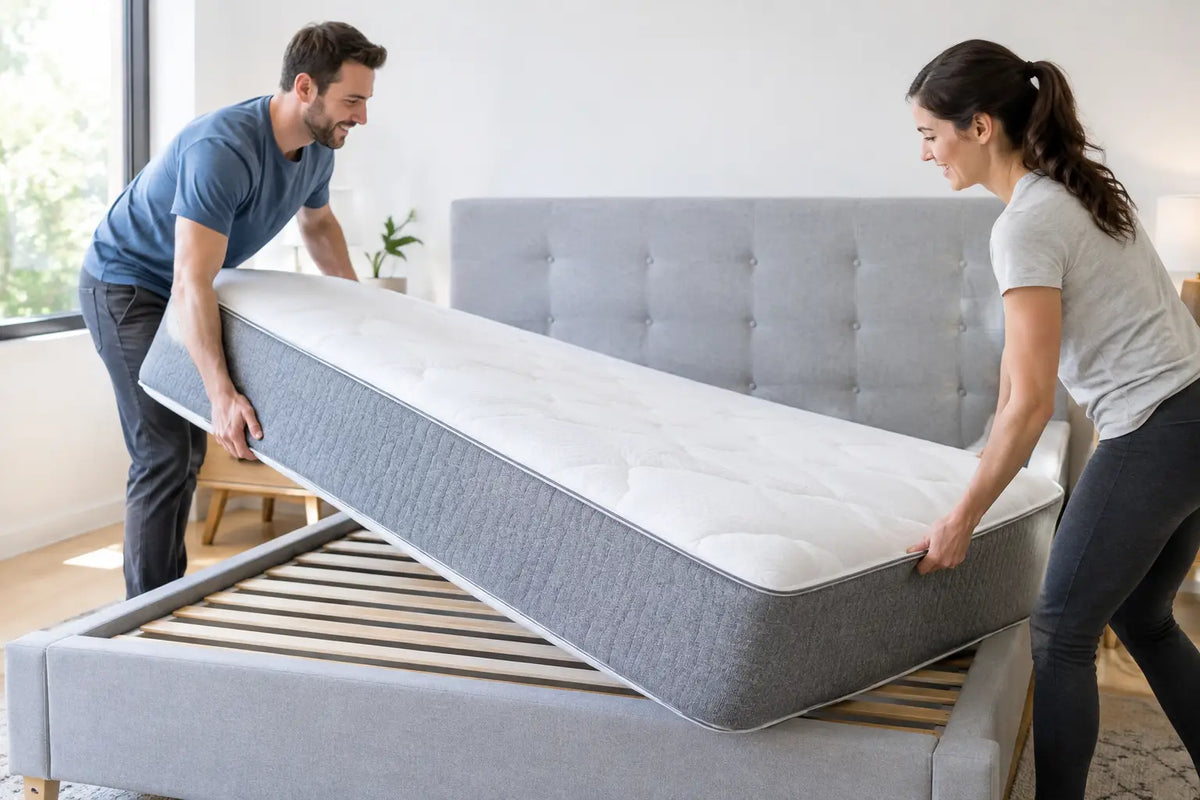
A finely made mattress should feel inviting long after the first night. Knowing how to rotate a mattress is one of the simplest ways to protect that feeling, helping its comfort layers settle more evenly beneath the areas that carry the most weight: shoulders, hips and lower back. It takes only a few minutes, yet it can make a meaningful difference to the poise, support and longevity of your sleep space.
Rotation is not a cure for a worn-out mattress, nor should it replace selecting the right tension and construction from the outset. It is, however, a thoughtful part of mattress care - particularly for generous king, super king and emperor beds, where each side of the mattress may receive noticeably different use.
What rotating a mattress actually means
To rotate a mattress, turn it through 180 degrees on the bed base so that the end which was at the headboard moves to the foot of the bed. The sleeping surface remains facing upwards. Your pillows will then rest on what was previously the foot end of the mattress.
This differs from flipping. Flipping turns the mattress over, placing its underside on top. Many modern mattresses are single-sided, with carefully engineered comfort layers designed only for the upper surface. These should be rotated, not flipped. A double-sided mattress may be designed to be both rotated and flipped, allowing you to use either sleeping surface.
The distinction matters. Flipping a no-turn mattress can place springs, foundation materials or firmer support layers against your body, compromising comfort and potentially affecting the mattress. Before moving anything, check the care label, product card or manufacturer guidance. If there is a label stating “no turn”, it means rotate only.
How to rotate a mattress safely
For a single or small double mattress, rotation is usually a straightforward two-person task, although one person may manage if the mattress is light and the room allows. For king size and larger mattresses, particularly those with deep natural fillings or a substantial pocket-spring count, ask someone to help. This protects both the mattress edge and your back.
Start by removing bedding, mattress topper and protector. This is an ideal moment to air the bed for a short while and inspect the protector for signs that it needs washing or replacing. If your bed has an upholstered headboard, take care not to catch the mattress piping or handles against the fabric.
Stand at either side of the bed and gently slide the mattress away from the headboard. Lift rather than drag where possible, using the side handles only to position the mattress, not to carry its full weight. On a divan or ottoman storage bed, make sure the base is fully closed and stable before you begin. If you have a slatted bed frame, check that no slats have lifted or shifted.
Turn the mattress 90 degrees first, then carefully guide it around to complete the 180-degree turn. In a compact bedroom, it may be easier to lift the mattress slightly on its side while your helper pivots the other end. Once it is centred on the base, make certain that all edges sit evenly and that the mattress has not overhung one side.
Replace your protector, topper and bedding. If you use a topper, rotate it at the same time unless its own care instructions say otherwise. Keeping both elements aligned helps prevent one area of the bed feeling disproportionately compressed.
When should you rotate your mattress?
For the first year, rotating every three months is a sensible rhythm for many mattresses. During this settling-in period, upholstery fillings and comfort layers adapt to your sleeping position. Thereafter, every three to six months is usually suitable, depending on the mattress construction, how often it is used and the combined weight of those sleeping on it.
A guest-room mattress may only need attention twice a year if it sees occasional use. A mattress in a principal bedroom, by contrast, benefits from a more regular schedule. If one partner is considerably heavier than the other, or one side of the bed is used more often, a quarterly rotation is especially worthwhile.
An easy approach is to make it part of the seasonal bedroom refresh: once in spring, once in summer, once in autumn and once in winter. Put a discreet reminder in your diary rather than relying on memory. Premium sleep should feel effortless, and a small routine removes the guesswork.
There are exceptions. Always follow the instructions supplied with your particular mattress. Some specialist designs, including certain zoned or layered mattresses, may have a prescribed orientation. In these cases, rotating in the wrong direction could alter the intended support beneath your shoulders and hips.
Why mattress rotation preserves comfort
Even the most beautifully made mattress experiences concentrated pressure night after night. Most people settle into familiar positions, and those positions create gradual compression in the same areas. Rotation redistributes that use, giving the head and foot ends alternating periods of recovery.
Pocket springs are designed to respond independently to movement and weight, while layers such as wool, cotton, latex, memory foam or recycled fibres contribute cushioning and temperature regulation. These materials behave differently over time. Natural upholstery can settle and benefit from regular care; foam may show a gentle body impression as it conforms; and a deep pillow top may need more attentive rotation than a firmer, flatter design.
A few shallow impressions are not necessarily a concern. They are often a normal sign that comfort materials are responding to your body. What deserves attention is a pronounced dip, a loss of support, noisy springs, or an uneven feel that remains after rotation. In that situation, inspect the bed base as well as the mattress. A bowed slat, weakened centre rail or uneven divan platform can affect how any mattress performs.
Rotation, flipping and mattress type
The right routine depends on the mattress you own. Single-sided mattresses commonly include foam, hybrid and many pillow-top designs. Their top surface is the designated comfort side, so rotate them head to foot only.
Double-sided mattresses offer sleeping surfaces on both sides. Traditional hand-tufted models with layered fillings are often made this way, although construction varies. They may require both rotation and flipping, normally on an alternating schedule. For example, you might rotate at three months, flip at six months, rotate again at nine months and flip again at 12 months. Follow the specific guidance rather than assuming every double-sided mattress has the same needs.
Mattresses with zoned support require particular care. If the design has a clearly marked head and foot end, do not rotate it unless the manufacturer confirms that it is suitable. The zoning may be intended to support particular parts of the body in a fixed position.
Small details that make a difference
A mattress protector is not merely an accessory. It provides a valuable barrier against everyday moisture, skin oils and accidental spills, all of which can affect hygiene and the condition of upholstery layers. Choose one that is breathable and correctly fitted, especially if your mattress has a deep profile. An ill-fitting protector can bunch beneath the sheet and detract from the polished feel of the bed.
Keep the mattress supported by an appropriate base. A sprung or solid divan should be level and structurally sound, while slatted frames need slats that are secure and suitably spaced for the mattress type. Ventilation also matters. Allow the bed to breathe after stripping it, avoid placing the mattress directly on the floor, and do not routinely fold or bend it to move it through a room.
If your mattress is new, allow it time to settle before judging its final feel. The first few weeks are an adjustment period for both the materials and your body. Regular rotation from the beginning gives the mattress the best opportunity to wear evenly without interrupting its intended comfort.
When rotation is no longer enough
Rotating can prolong a mattress’s useful life, but it cannot restore materials that have reached the end of their working life. Consider professional advice if you notice a persistent hollow, visible damage, sagging edges, or a marked change in sleep quality. Waking with stiffness that eases elsewhere, or feeling your partner’s movements more sharply than before, can also indicate that support has diminished.
Do not overlook the base beneath it. A mattress and bed frame work as one sleep system, and even exceptional upholstery cannot perform at its best on inadequate support. For upholstered beds and divans, a quick check of fixings, feet and centre support during your rotation routine is a quiet but worthwhile act of care.
A well-kept bed has a particular pleasure: fresh linen, an even sleeping surface and the reassuring sense that every detail has been considered. Rotate your mattress before comfort begins to feel compromised, and your bedroom remains the composed, restorative retreat it was designed to be.
Share:
Upholstered Beds That Bring Comfort and Presence
Hotel Inspired Interiors for Better Sleep