
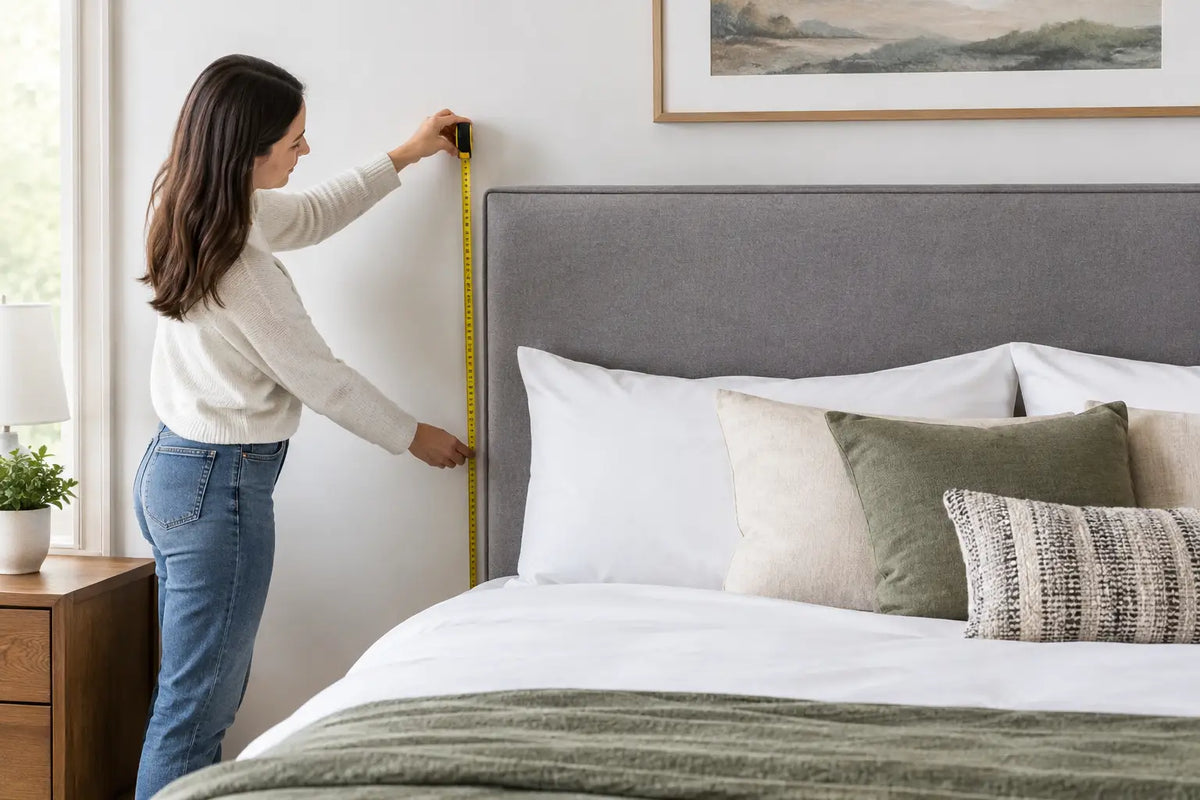
A headboard can make a standard bed feel considered, comforting and quietly grand. Yet a beautiful upholstery fabric or elegant buttoned finish will not compensate for the wrong proportions. Knowing how to select headboard height means looking beyond the bed itself, taking account of your ceiling, mattress depth, wall space and the atmosphere you would like to create.
The right choice should feel intentional when you enter the room: neither a small detail lost against a generous wall nor an imposing feature that makes the bedroom feel compressed. For a made-to-order bed, it is worth giving this decision the same attention as fabric, colour and mattress comfort.
Start with the room, not the bed
Headboard height is measured from the floor to the highest point of the headboard, not from the top of the mattress. This distinction matters, particularly with deeper mattresses, mattress toppers and upholstered divans, all of which can raise the sleeping surface noticeably.
Begin by measuring your ceiling height and the clear wall behind the bed. Then note anything that will share that wall, such as a window, picture light, coving, wall panelling or artwork. A headboard should sit comfortably within this architecture rather than competing with it.
In many UK homes with standard ceiling heights, a floor-to-top headboard height of around 120cm to 140cm gives a refined, versatile look. It offers presence above the pillows without overwhelming the room. Higher ceilings, period proportions and larger bedrooms can comfortably carry a 150cm to 180cm statement headboard, especially when it is generously winged, deeply upholstered or designed as a panelled wall feature.
Lower headboards, often around 90cm to 110cm overall, suit rooms where calm restraint is the priority. They can also be a thoughtful choice beneath a low window or in a loft room with sloping ceilings. The trade-off is visual impact: a low headboard provides a neat finishing line, while a tall one establishes the bed as the focal point.
How to select headboard height by bed size
A headboard should relate to the width and scale of the bed. As beds become wider, the surrounding upholstery needs more vertical presence to avoid looking undersized.
For a double bed, a medium-height headboard is often the most balanced option. It brings softness and character without making a compact guest room or principal bedroom feel too full. A king size bed has a broader footprint and can take a more substantial design, particularly if the room has space around both sides for bedside tables and a clear walking route.
Super king and emperor beds invite bolder proportions. In a larger bedroom, a tall headboard can lend a boutique-hotel sense of arrival, framing the bed and drawing the eye upwards. That said, width alone is not permission to go taller. An emperor bed in a low-ceilinged room may look more elegant with a broad, horizontally detailed headboard than an exceptionally high one.
Consider the visual weight of the design, too. A slim, gently curved headboard in a pale linen-style upholstery can be taller without feeling heavy. A deeply buttoned, thickly padded headboard in a dark velvet has more presence at the same height. Neither approach is superior - the room determines which feels composed.
Allow for your mattress and pillows
The practical portion of the headboard begins above the top of the mattress. Aim for enough visible upholstery to frame your pillows and support you when sitting up with a book or morning tea. Around 55cm to 75cm above the mattress is comfortable for many households, though taller options create a more dramatic backdrop.
Measure with your chosen mattress in mind. A substantial pocket-sprung mattress with a topper can sit much higher than a thinner model, reducing the amount of headboard on show. If you are still deciding on your mattress, allow for its finished depth rather than working from the divan base alone.
Decide what you want the headboard to do
A headboard has both a practical and decorative role. Clarifying which matters most will guide the height naturally.
If you like to sit in bed to read, watch television or work occasionally, choose an upholstered headboard with a generous amount of visible height above the mattress. A padded, supportive design feels more inviting than a minimal wooden or metal profile, and a taller back gives cushions somewhere to rest rather than slide.
If the aim is to introduce softness to a contemporary room, a medium-height upholstered headboard in a textural bouclé, woven fabric or relaxed neutral may be all that is needed. In a room with striking wallpaper, ornate lighting or a view worth preserving, a restrained height lets those elements breathe.
For a bedroom intended to feel particularly opulent, a tall, channel-stitched, fluted or buttoned headboard can create a sense of ceremony. It works especially well behind a king or super king bed, where the wider silhouette has enough scale to support the design. Extending upholstery into wall panels can make the wall feel tailored, but it needs careful planning around sockets, switches and bedside lighting.
Check the surrounding furniture and sightlines
The bed is rarely viewed in isolation. Stand at the bedroom doorway and assess what you see first. A headboard that rises just above the height of bedside tables usually feels balanced, while one that towers far beyond every other item can look disconnected unless the room has suitably grand proportions.
Bedside table height is particularly useful as a reference point. The top of the table should generally sit close to the top of the mattress, or slightly below it, for easy everyday use. Once this relationship is settled, you can judge whether the headboard gives the bed a pleasing vertical hierarchy.
Also think about lighting. Wall-mounted reading lights and picture lights need clear space above and beside the headboard. If lamps sit on bedside tables, their shades should not disappear against a very tall, visually busy upholstered backdrop. A fabric swatch placed alongside your lighting finishes and wall colour can reveal whether the combination feels layered or overly matched.
In rooms with low windows behind the bed, take exact measurements before committing. You may prefer a low headboard that sits beneath the sill, or a custom design shaped around the window. Covering a window with a headboard can reduce daylight and make access difficult, even if the arrangement initially appears symmetrical.
Choose height according to the style of headboard
The silhouette changes how height is perceived. A simple rectangular headboard reads cleanly and architectural, making it an excellent choice at medium or tall heights. A curved or scalloped top softens the line and can introduce romance without requiring excessive scale.
Winged headboards naturally occupy more visual space because the side returns project forward. They are wonderfully cocooning in a principal bedroom, but a very tall winged style can feel enclosing in a narrow room. If floor space is limited, a straight-backed upholstered design often provides the same luxurious finish with a lighter footprint.
Panelled headboards offer another route. Instead of one oversized piece, vertical or square upholstered panels can be proportioned to the wall and extended to a chosen height. This is particularly effective in new-build bedrooms where the wall is generous but the ceiling is standard, as it delivers a bespoke, considered appearance without making the bed feel oversized.
Avoid the common measuring mistakes
The most frequent mistake is measuring an empty room and forgetting the finished bed height. Always calculate from the floor, with the base, mattress and any topper included. A second is choosing by showroom impression alone. High ceilings and wide display spaces can make a tall headboard appear quieter than it will in a bedroom at home.
It is also wise to mark the proposed height on the wall with low-tack masking tape. Step back from the doorway, sit on the bed position if possible, and view the outline in daylight and evening light. This simple exercise often makes the right proportion immediately apparent.
Finally, do not treat a taller headboard as automatically more luxurious. Luxury lies in proportion, comfort and considered craftsmanship. The best choice is one that feels entirely at ease in the room, supports the way you relax, and complements the mattress and bed base beneath it.
A thoughtfully chosen headboard turns the place where you end each day into a more personal retreat. Take the measurements, request fabric samples if you are considering upholstery, and allow the room to guide the scale. The result should feel less like an addition to the bed and more like the bedroom was designed around it.
Share:
Which Mattress Suits Heavier Sleepers Best?
Serviced Apartment Sleep Case Study: What Works