
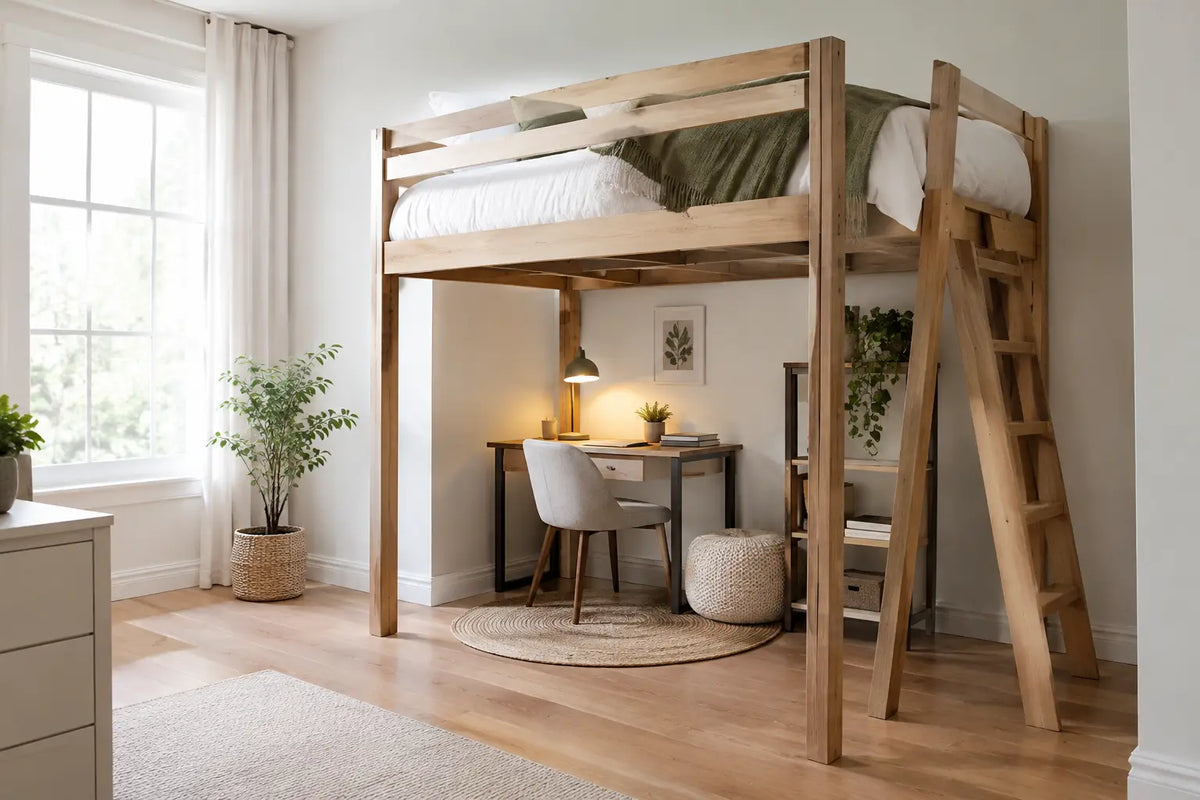
Tall sleeper beds can transform a bedroom where floor space is precious but comfort, character and considered design are non-negotiable. By raising the sleeping area, they create room beneath for storage, a desk, seating or a beautifully organised play space - making them an especially elegant answer for growing families and compact homes.
The appeal is not simply practical. A well-proportioned sleeper bed gives a room architectural presence, drawing the eye upwards and creating the satisfying sense that every part of the space has been designed with purpose. The right choice, however, depends on ceiling height, the person using it, mattress depth and how you would like the space below to work day to day.
Are tall sleeper beds right for your home?
In the UK, the term is often used for high sleeper beds: elevated single beds with an open area below. Unlike a standard cabin bed, which sits at a lower level and may incorporate drawers or a pull-out desk, a tall sleeper creates enough clearance beneath the mattress platform for a more useful zone. This may be a study area for an older child, fitted shelving, a reading nook or wardrobe storage.
They are not limited to children’s rooms, although this is where they are most often at home. A carefully specified elevated bed can also suit a compact guest room, a loft conversion or a city flat where one room needs to serve several purposes. For adults, the emphasis should be on substantial construction, generous headroom, easy access and a mattress with the support expected of a proper night’s sleep rather than an occasional solution.
The key question is not whether the bed fits the floor plan. It is whether the room will still feel calm and comfortable once the bed is in place. Tall furniture can make a low-ceilinged room feel crowded, while a lofty bedroom with good natural light can carry the height beautifully.
Measure the room before choosing tall sleeper beds
A tape measure is the most useful design tool at this stage. Begin with ceiling height, then account for the full bed structure, mattress and a sensible amount of space above the sleeper. Sitting upright in bed should not mean feeling close to the ceiling, and the person using the bed should be able to get in and out without awkwardness.
Also measure the footprint with the ladder or staircase included. A ladder positioned at an angle can occupy more room than expected, while a staircase offers a more substantial, furniture-like look and often incorporates drawers, but requires a wider footprint. Check door swings, window openings, radiators and the path through the room too. A bed that arrives in the correct dimensions can still prove inconvenient if a drawer cannot open fully or a wardrobe becomes difficult to reach.
The clearance below deserves equal attention. For a desk, allow enough height for the user to sit comfortably and enough depth for a chair to move back. For storage, decide what is actually being stored before commissioning shelves or choosing units. Neat rows of books, toy baskets and seasonal bedding all need different proportions. This is where a made-to-order approach can turn an attractive bed into a genuinely useful piece of bedroom furniture.
Consider the room as a whole
High-level sleeping works best when the lower zone has a clear role. An open, undecided area beneath the bed can quickly become a holding place for clutter. In a child’s room, a desk and discreet drawers can establish a focused area for homework and hobbies. In a guest room, closed cabinetry keeps spare linen, luggage and personal items elegantly out of sight.
Lighting is equally important. A pendant hanging close to the bed frame is rarely ideal, particularly in a child’s bedroom. Wall lights, directional reading lights and integrated illumination around a desk tend to be more practical. Position switches where they can be reached from the bed, and ensure there is adequate light for using the ladder safely after dark.
Safety and construction deserve close attention
For younger sleepers, a tall sleeper bed is a piece of furniture that must earn trust through its details. Guard rails should extend sufficiently above the top of the mattress, which is why the recommended maximum mattress depth matters. A mattress that is too deep can reduce the effective safety height of the rails, even when the bed itself is well made.
The ladder should feel secure underfoot, with well-spaced rungs and a firm fixing to the frame. Staircases may be preferable for some children because they offer a steadier ascent and can include handholds, though this does not remove the need for sensible supervision and clear household rules. The sleeping platform, joints and fixings should be designed to withstand everyday movement rather than merely look convincing in a photograph.
Children under six should not use the upper level of a high sleeper or bunk bed. For any bed intended for a child, ask about the relevant safety testing and standards, including BS EN 747 where applicable. It is also wise to follow the manufacturer’s assembly instructions precisely, recheck fixings periodically and avoid allowing the upper bed to become a play platform.
For an adult or guest sleeper, the priorities shift slightly. Weight capacity, frame rigidity, stair comfort and ease of mattress changing become particularly relevant. A tall sleeper that is difficult to make up or lacks enough clearance for a relaxed night’s rest may be less practical than a lower bed with integrated storage.
Choose a mattress that respects the bed’s proportions
A mattress should never be an afterthought. With elevated beds, its depth and weight must work with the frame specification as well as the sleeper’s comfort preferences. A deep, sumptuous mattress may be tempting, but it is unsuitable if it compromises guard rail height or exceeds the frame’s recommended limit.
For children and teenagers, a supportive medium feel is often a sensible starting point, with pocket springs or quality foam layers providing even support as bodies grow. Breathable materials and a well-ventilated base help the sleep environment feel fresher, especially when the bed is positioned high in a warm room. For guest use, consider a mattress that balances broad appeal with dependable edge support and recovery.
Do not overlook access. A very heavy mattress can be difficult to lift into position on an elevated frame and cumbersome when rotating or changing bedding. Ask how the mattress should be cared for, whether it needs rotating, and whether its handles are intended for positioning rather than carrying its full weight.
Create an elevated bed that still feels refined
Practicality need not result in a room that feels overly functional. The most polished tall sleeper beds treat the structure as part of the interior scheme. Natural timber brings warmth and suits a quieter, enduring look, while painted finishes can be matched to joinery, wall panelling or a favourite accent colour. Upholstered detailing may soften the lines and create a more tailored, luxurious atmosphere, particularly in an older child’s or guest bedroom.
Keep the palette beneath the bed calmer than the sleeping area above. This helps define the zones without making the room visually busy. A textured rug, an upholstered desk chair and concealed storage can make the lower level feel as intentional as the bed itself. For a child who wants a more playful room, colour can be introduced through bedding, artwork and baskets rather than through elements that are difficult to change as tastes evolve.
At Hyder Living, the value of bespoke bedroom furniture lies in these decisions: selecting dimensions, finishes and storage that suit the room, rather than asking the room to accommodate a standard design. Fabric swatches and considered guidance can be particularly helpful when the bed needs to complement existing upholstery, curtains or a carefully planned scheme.
A few final checks before you order
Before committing, confirm the finished external dimensions, required ceiling clearance, mattress depth limit and the position of the ladder or stairs. Establish who will assemble the bed, how it will be delivered into the property and whether the lower area needs power for a lamp, desk or charging point.
It is also worth thinking ahead. A desk for an eight-year-old may need to accommodate a teenager in a few years’ time, while a playful den may eventually become valuable storage. The most successful elevated bed has enough flexibility to remain useful as the household changes.
Choose the height only when it gives the room something meaningful in return. When it provides a restful sleeping platform above and a beautifully useful space below, a tall sleeper bed can make even a modest bedroom feel exceptionally well composed.
Share:
Best Mattress Materials Explained for Better Sleep
How to Prepare Your Bedroom for Bed Delivery