
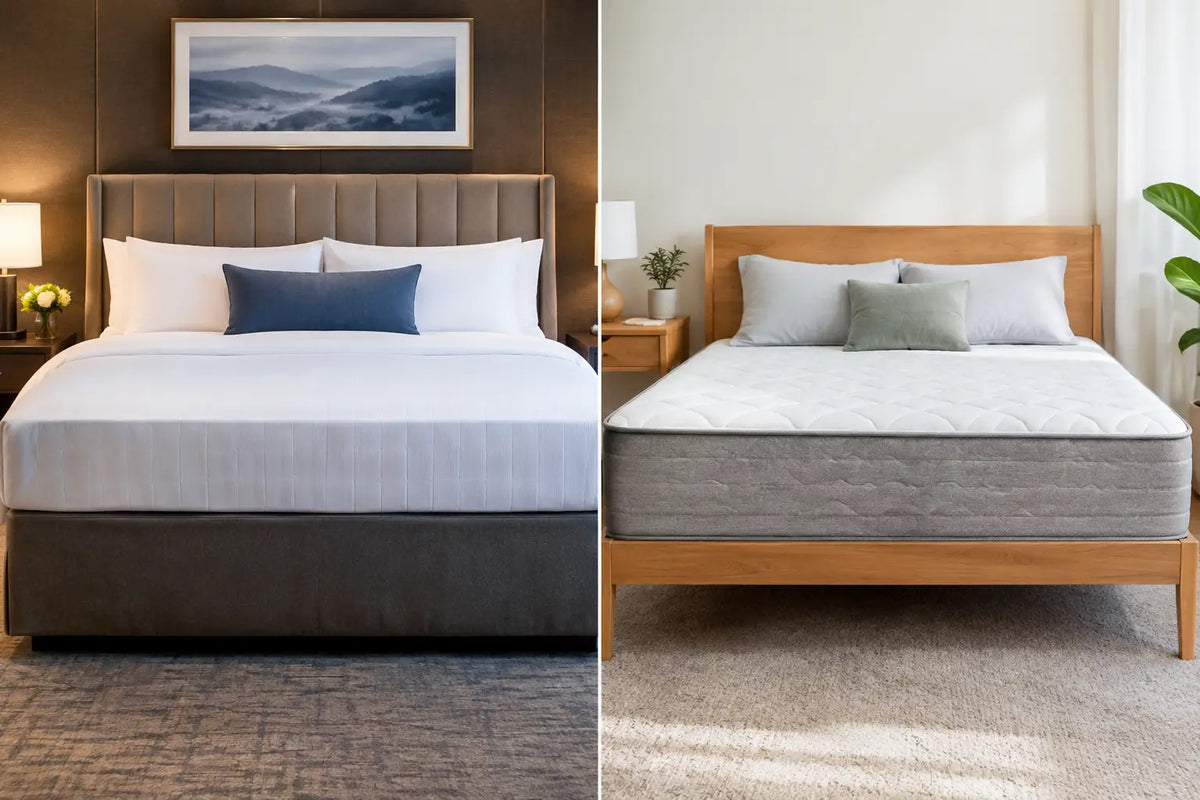
A memorable hotel stay often begins with the moment you sink into the bed. Yet the hotel mattress vs home mattress question is not simply about whether one feels more luxurious than the other. They are made for distinctly different patterns of use. A hotel mattress must welcome a broad range of guests, withstand frequent turnovers and retain its shape under relentless demand. Your mattress at home has one very personal brief: to support your body, sleep style and preferred feeling of comfort, night after night.
The finest bedrooms borrow the considered ease of a five-star suite without treating comfort as a one-size-fits-all exercise. Understanding the construction behind each option makes it far easier to choose well.
Hotel Mattress vs Home Mattress: The Core Difference
A hotel mattress is usually specified for versatility and resilience. Guests arrive with different weights, sleeping positions and expectations, so hotels commonly favour a medium or medium-firm feel that feels reassuringly supportive to most people. The aim is immediate comfort with enough underlying stability that the mattress still performs after heavy, repeated use.
A home mattress can be far more individual. If you are a side sleeper with sensitive shoulders, a deeper comfort layer may be the right choice. If you sleep on your front or back, or prefer a more buoyant, supported surface, a firmer spring tension may suit you better. Couples may also need to consider differing body weights, motion transfer and temperature preferences - details a hotel specification cannot fully tailor to every guest.
Neither approach is inherently superior. A contract-quality hotel mattress can be an excellent choice for a guest room, rental property or household that values a supportive, familiar feel. For a principal bedroom, however, personal comfort should take priority over recreating a hotel sensation exactly.
Built for Turnover or Built for You
The most meaningful distinction is durability under pressure. A hotel bed may be slept on by hundreds of different people each year. Its mattress needs dependable springs, secure edge support, breathable fillings and a cover designed to stand up to regular cleaning and handling. Strong borders matter especially, as guests often sit on the edge while dressing, packing or working.
Many hotel mattresses are paired with a divan base because it provides a stable foundation, a neat upholstered finish and straightforward replacement options for hospitality teams. In a domestic bedroom, the base remains just as significant. A beautiful upholstered bed, ottoman storage bed or divan must provide the correct support for the chosen mattress. Even an exceptional mattress can feel compromised on a worn, uneven or poorly ventilated base.
At home, you also have more freedom to choose natural comfort layers that reflect your preferences. Wool is valued for breathable temperature regulation and a gently cushioning feel. Cotton can add freshness and softness. Carefully selected fibre fillings can offer loft and comfort, while pocket springs respond independently to movement across the mattress. The ideal blend depends on whether you prioritise cooler sleep, a plush welcome, firmer support or easier movement when changing position.
Why hotel mattresses often feel firmer than expected
The cloud-like impression of a hotel bed does not always come from an ultra-soft mattress. It is often created by layers working together: a supportive medium-firm mattress, crisp bedding, a well-fitted mattress protector and, in some cases, a topper. This arrangement offers a polished first impression while keeping the sleeping surface stable enough for a broad mix of guests.
For your own bedroom, a topper can be a thoughtful finishing layer, but it should not be used to correct a mattress that is fundamentally wrong for you. If the springs are no longer supporting your hips and shoulders properly, adding softness on top may disguise the issue briefly rather than solve it.
Comfort Is More Personal at Home
Hotels choose a middle ground because they must. You do not have to.
Your preferred mattress tension should be influenced by your build, sleep position and any pressure points you regularly notice in the morning. A lighter side sleeper may find a very firm surface unyielding around the shoulder and hip. A heavier sleeper may require stronger support to avoid excessive dipping. Couples often do well with pocket-sprung designs because the springs can respond more locally, helping to reduce disturbance when one person turns during the night.
There is also the question of atmosphere. A hotel room is deliberately neutral, designed to feel inviting for a short stay. At home, your bed is part of a larger sanctuary. The scale of the headboard, the texture of the upholstery, the height of the mattress and the drape of the bedding all influence whether the room feels composed and restful. A super king bed with a generously upholstered headboard may create a suitably opulent focal point, but only if it leaves the room enough space to breathe.
This is where made-to-order choices are particularly valuable. Selecting the right bed size, storage format, fabric and mattress depth allows comfort and interior design to feel considered together rather than assembled as separate decisions.
Hygiene and Care: Different Responsibilities
Hotel mattresses are maintained within a disciplined housekeeping routine. Protectors are typically changed and laundered frequently, mattresses are inspected between stays, and a replacement programme may be planned around occupancy levels rather than waiting for visible wear. Hospitality settings may also require mattresses and beds to meet specific contract and fire-safety requirements, depending on the property and use.
At home, care is less intensive but no less worthwhile. A quality mattress protector helps guard against spills, perspiration and everyday marks without changing the feel of the mattress dramatically. Regular airing, sensible vacuuming of the surface and following the manufacturer's guidance on rotating or turning will help preserve comfort and appearance.
Whether a mattress should be turned depends on its construction. Some are dual-sided and designed to be turned as well as rotated, allowing both sides to share the load. Others are single-sided, with comfort layers placed on the upper surface, and should only be rotated head to foot. Handles are useful for positioning, but they should be used gently rather than as lifting straps for the full weight of the mattress.
A well-ventilated bed base is equally important. Moisture naturally released during sleep needs somewhere to disperse. Slatted frames should have suitable spacing and strength, while divan bases should be kept dry and clear of obstruction beneath where possible. These details are discreet, but they protect the investment in your sleep.
Should You Buy a Hotel-Style Mattress for Home?
A hotel-style mattress can be a very sensible choice if you enjoy a balanced, supportive feel and want a dependable option for a guest bedroom. It can also suit households that prefer a mattress which feels familiar to visitors without being overly soft or specialised. For furnished accommodation, choosing a suitably specified contract mattress may offer the resilience and compliance considerations that domestic products are not designed to address.
For your own room, do not let the word “hotel” persuade you to overlook fit. The mattress that felt marvellous after a day of travelling may not be right after six months of sleeping in the same position beside the same partner. Ask how the mattress is sprung, what its comfort layers are made from, whether it is single- or dual-sided, and which base is recommended. Those practical answers are more valuable than a vague promise of luxury.
A premium home mattress should still deliver the qualities people admire in excellent hotels: composure, freshness, supportive comfort and a sense that every detail has been anticipated. It should simply do so with your body and your bedroom at the centre of the specification.
Creating the Five-Star Feeling Without the Compromise
The most convincing hotel-inspired bed is a complete sleep system, not merely a mattress with an attractive label. Begin with a bed base that is correctly proportioned and properly supportive. Choose a mattress that suits your preferred tension, then add breathable bedding and a protector that preserves the surface. Finish with pillows that support your usual sleeping position rather than stacking cushions purely for appearance.
Hyder Living’s approach to bedroom design recognises that indulgence and practicality belong together. The right upholstered bed can bring softness and presence to a room, while a well-chosen mattress provides the quieter luxury you feel every morning.
Give yourself permission to choose the mattress that makes your own room feel better than a hotel room. A holiday bed only has to impress for a few nights; yours should make restorative sleep feel effortless for years to come.
Share:
How to Style a Quiet Luxury Bedroom at Home